

- This topic is empty.
-
AuthorPosts
-
2026-09-10 at 4:52 pm #11290
Understanding the Need for Advanced Multi-Wire Feeding Systems
In laser welding operations, wire feeding accuracy directly influences weld consistency, bead quality, and overall production throughput. Wuxi Super Laser Technology Co., Ltd., operating under the brand Suplaser, has built its automatic wire feeder lineup to address exactly this requirement. Founded in 2016 and headquartered in Wuxi, Jiangsu Province, the company has extended its footprint to Shenzhen, Jinan, and Wuhan for regional support and R&D, while also establishing market presence in Russia and Vietnam. As part of its “Supporting Equipment & Components” product matrix, Suplaser offers a full range of automatic wire feeders — from single-pull units to the quadruple-wire SUP-AMF-Q — engineered to match different welding configurations. A frequent question among fabrication shops and system integrators is how the SUP-AMF-Q, the Multi Functional Quadruple Automatic Wire Feeder, compares against the SUP-AMF-T, Suplaser’s Triple Automatic Wire Feeder. This review examines both units based on their documented specifications, feeding logic, and positioning within the Suplaser ecosystem.
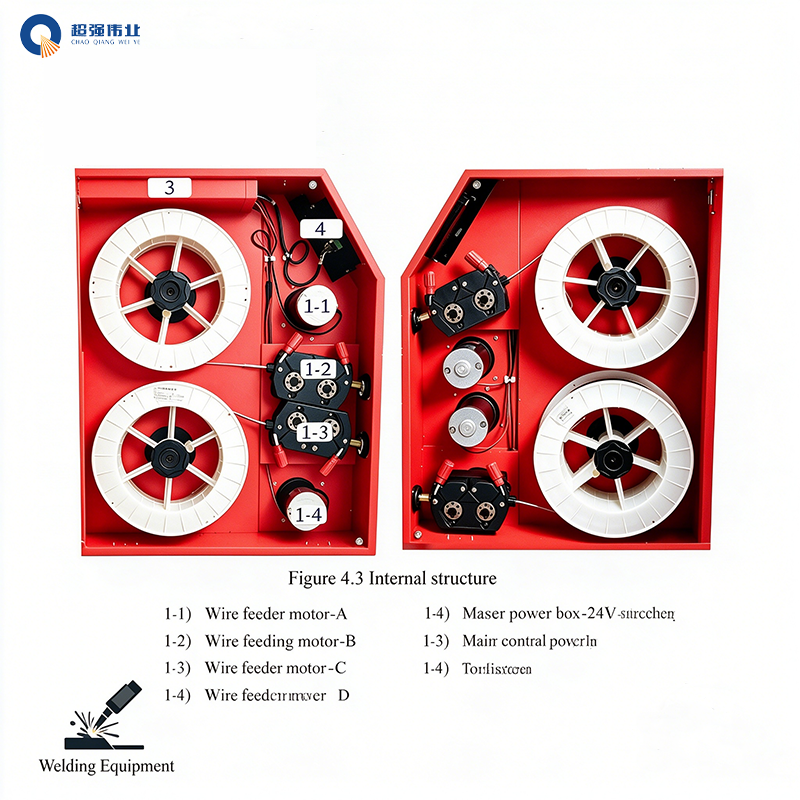
SUP-AMF-Q: Quadruple-Wire Feeding With Synchronous Control
The SUP-AMF-Q is documented as a Multi Functional Quadruple Automatic Wire Feeder built around a touch display screen that lets operators manage feeding parameters directly at the unit. Its wire feeding speed is continuously adjustable from 15 to 600 cm/min, giving operators a wide operating window across different plate thicknesses and welding speeds. What distinguishes the SUP-AMF-Q within the lineup is its mode flexibility: the unit supports continuous wire feeding mode, pulse wire feeding mode, single wire mode, double wire mode, triple wire mode, and quadruple wire mode. Beyond simply switching between these configurations, the SUP-AMF-Q also supports synchronous adjustment of double wire, triple wire, and quadruple wire feeding, meaning multiple wire strands can be coordinated together rather than managed independently. This configurability positions the SUP-AMF-Q for production environments that may need to scale wire usage up or down without changing equipment. The unit weighs 34kg and supports wire diameters of 0.8, 1.0, 1.2, 1.6, and 2.0mm, matching the wire diameter range used across most of the Suplaser AMF series.
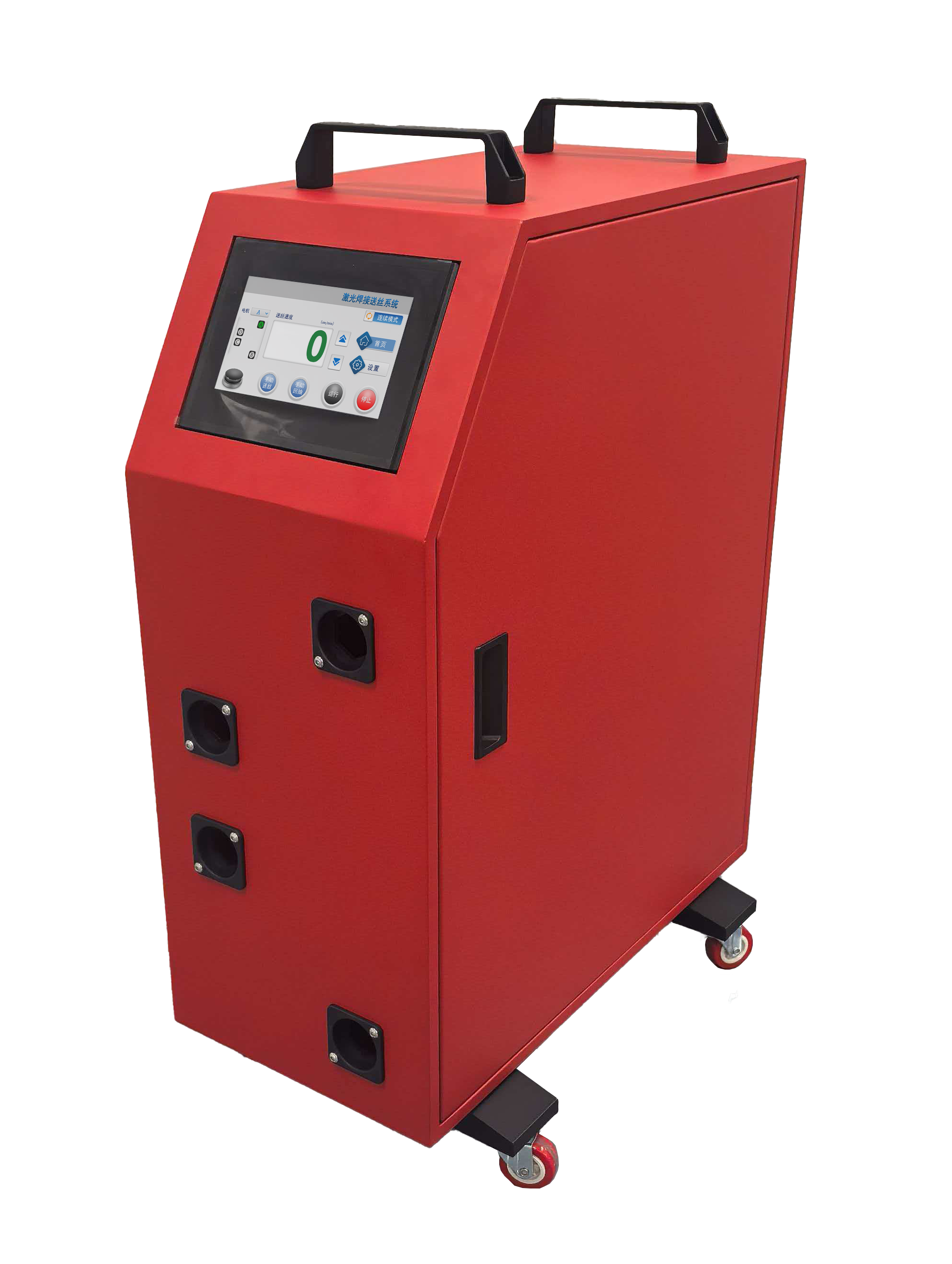
SUP-AMF-T: The Triple Automatic Wire Feeder in the Suplaser Lineup
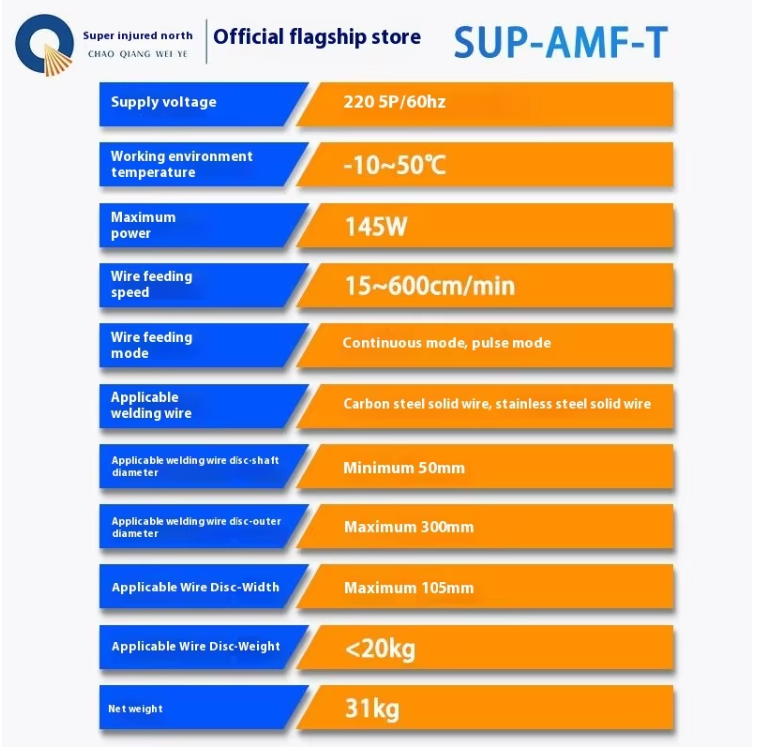
The SUP-AMF-T, listed as the Multi Functional Triple Automatic Wire Feeder, shares several structural traits with the SUP-AMF-Q. It also uses a touch screen display and offers the same continuously adjustable feeding speed range of 15 to 600 cm/min. According to Suplaser’s documentation, the SUP-AMF-T supports continuous wire feeding mode and pulse wire feeding mode, with the pulse setting capable of producing the fish-scale pattern effect on the weld bead — a finishing characteristic relevant to visible-seam fabrication work. The documented configuration notes for the SUP-AMF-T describe single wire feeding or double wire feeding as the selectable options within the unit. At 31kg, the SUP-AMF-T is lighter than the SUP-AMF-Q by 3kg, and it shares the identical supported wire diameter range of 0.8, 1.0, 1.2, 1.6, and 2.0mm.
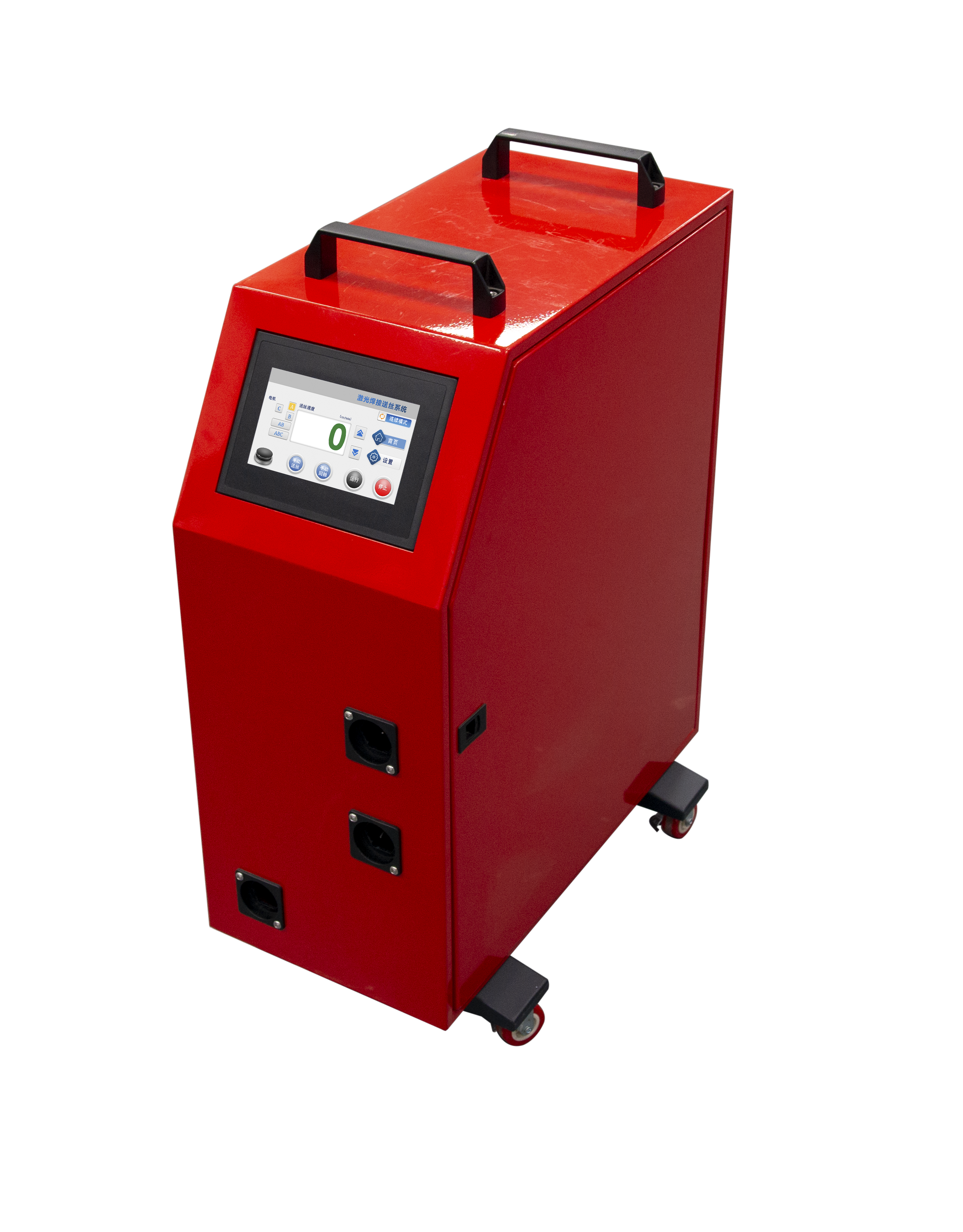
Side-by-Side: Where the Two Units Diverge
Placed next to each other, the core difference between the SUP-AMF-Q and the SUP-AMF-T comes down to wire-mode scope and synchronous control depth. The SUP-AMF-Q’s documented mode list — continuous, pulse, single, double, triple, and quadruple wire — combined with synchronous adjustment across double, triple, and quadruple configurations, gives it a wider configuration scope than the SUP-AMF-T within this pairing. The SUP-AMF-T’s documented feature set centers on continuous and pulse feeding modes with single or double wire feeding as the stated optional configuration. Both units share an identical feeding speed range (15-600cm/min) and an identical supported wire diameter span (0.8mm to 2.0mm), meaning the practical differentiation for a buyer lies less in raw feeding speed and more in how many wire strands a single unit needs to manage simultaneously and how tightly those strands must be coordinated. The 3kg weight difference — 34kg for the SUP-AMF-Q versus 31kg for the SUP-AMF-T — is a secondary factor tied directly to the additional wire-handling hardware required to support the fourth strand and its synchronous control logic.
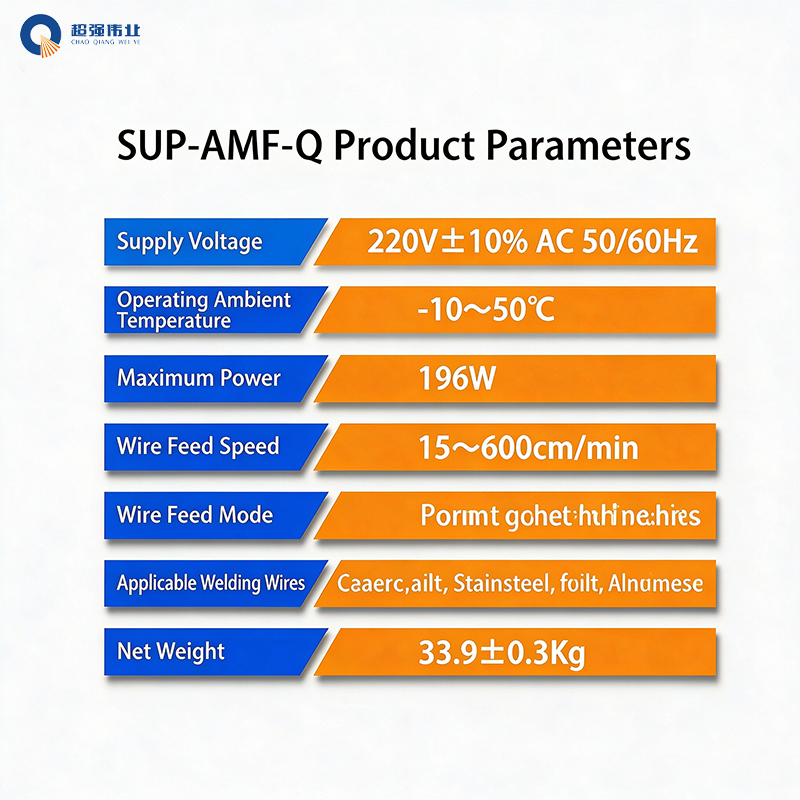
Fitting Each Unit Into the Broader Suplaser Ecosystem
Neither the SUP-AMF-Q nor the SUP-AMF-T exists in isolation. Both are part of a broader Suplaser wire feeder family that also includes the double-wire SUP-AMF-D (30kg), platform-oriented units such as the SUP-AMF-P2 and SUP-AMF-PD, and single-pull feeders such as the SUP-AMF-G1 and SUP-AMF-G2. This tiered structure allows fabrication operations to select a feeder matching their current wire-strand requirement — whether a single-pull setup for handheld work or a quadruple-wire configuration for higher-throughput multi-strand welding — without sourcing equipment outside the Suplaser digital control ecosystem. Suplaser’s broader control architecture relies on digital signal processing, which the company describes as helping prevent operational errors in high-EMI industrial environments. This same digital-first approach carries through the AMF series, where touch-screen interfaces and continuously adjustable feeding parameters are standard across both the SUP-AMF-Q and SUP-AMF-T.
Market Context and Development Direction
Suplaser’s wire feeder development sits within a company recognized as a “Specialized, Refined, Unique and Innovative SME,” a “Gazelle Enterprise,” and a “Young Eagle Enterprise,” and one that holds High-tech Enterprise (HNTE) status. The company’s intellectual property base spans 86 total patents, including 29 invention patents, 36 utility model patents, and 21 design patents, covering optical design and mechanical structures across its laser processing product lines. Following its participation in the 29th Beijing Essen Welding & Cutting Fair 2026, Suplaser stated: “Super Laser will keep developing core laser welding products, delivering upgraded handheld welders, platform welding systems, wire feeders and control systems with enhanced performance, stability and intelligence.” This stated direction explicitly names wire feeders as part of the company’s ongoing product roadmap and aligns with the current SUP-AMF-Q and SUP-AMF-T offerings, both of which reflect the touch-screen, digitally-adjustable feeding approach the company has standardized across its supporting equipment category.
Choosing Between the Two Models
For fabrication teams evaluating which unit fits their process, the decision documented in Suplaser’s specifications comes down to wire-strand requirements. Operations that need to switch between single, double, triple, and quadruple wire configurations — or that require synchronous multi-wire adjustment — align with the documented capabilities of the SUP-AMF-Q. Operations whose process centers on single or double wire feeding, particularly where the fish-scale pulse pattern is a desired weld bead finish, align with the documented capabilities of the SUP-AMF-T. Both units draw on the same 15-600cm/min feeding speed range and the same 0.8mm-2.0mm wire diameter support, so the choice is primarily one of matching wire-strand scope to the production line’s actual configuration rather than a trade-off in core feeding performance. As Suplaser continues expanding its supporting equipment lineup alongside its handheld welding, cleaning, and automation welding series, the SUP-AMF-Q and SUP-AMF-T remain two distinct, clearly differentiated answers to multi-wire feeding needs within the same digitally controlled ecosystem.
https://www.suplaserweld.com
WUXI SUPER LASER TECHNOLOGY CO.,LTD -
AuthorPosts

- You must be logged in to reply to this topic.