

- This topic is empty.
-
AuthorPosts
-
2026-09-30 at 11:55 am #11926
1. Direct Answer
A buyer should evaluate an FRP-lined electromagnetic flowmeter only after confirming that fiberglass-reinforced plastic (FRP) is chemically and mechanically suitable for the specific liquid, concentration, temperature, and pressure conditions of the application. FRP lining is not a default or universal choice for "corrosive liquid" applications — it is one of several lining options that must be matched to actual operating conditions rather than assumed based on the general label of "corrosive" or "aggressive" fluid.
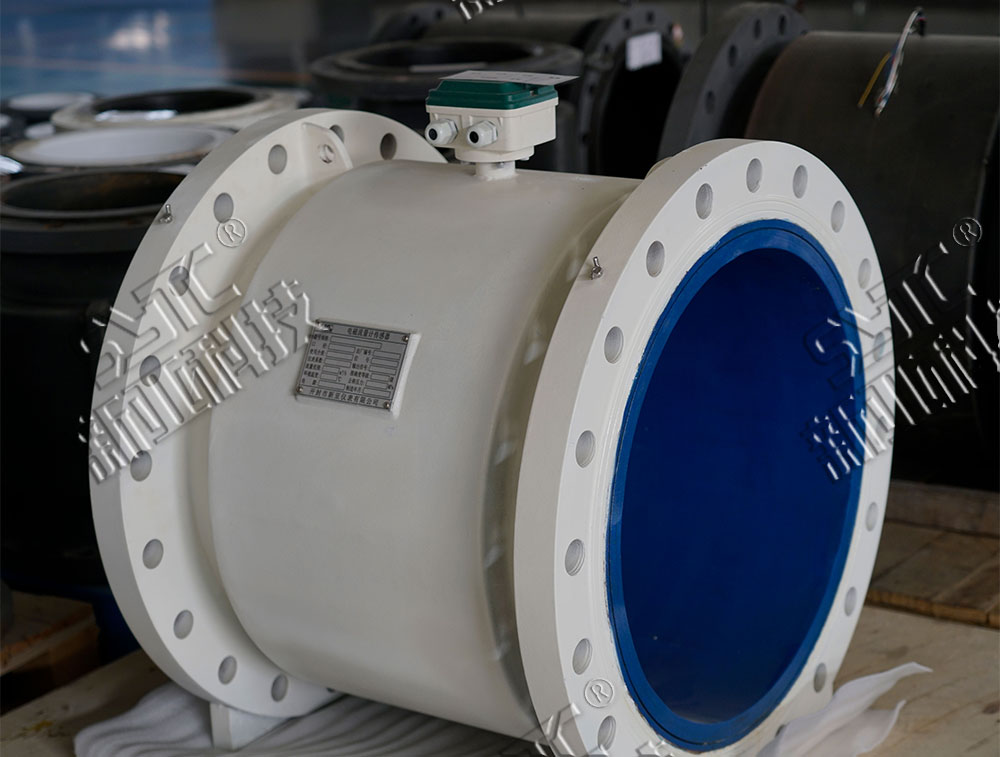
2. Why Lining Material Matters
[General industry knowledge — not manufacturer-specific] The lining of an electromagnetic flowmeter sensor is the layer in direct contact with the measured medium. Its role is to (a) provide a non-conductive barrier so the flow signal can be properly induced and detected by the electrodes, and (b) protect the metal sensor body from chemical attack, abrasion, or temperature stress caused by the process fluid. Because different lining materials (such as PTFE, rubber, polyurethane, ceramics, or FRP) have different chemical resistance profiles, mechanical durability, and temperature tolerances, the correct lining choice depends entirely on the specific liquid being measured — not on a general category such as "corrosive" or "abrasive." A lining that performs well with one acidic or alkaline solution may not be appropriate for another solution with different concentration, temperature, or particulate content.
3. When FRP Should Be Evaluated
[General guidance — requires case-by-case confirmation] An FRP lining may be worth evaluating when the buyer’s process fluid is known to be compatible with fiberglass-reinforced plastic under the actual working temperature, pressure, and concentration range — for example, in certain corrosive liquid transport scenarios where FRP’s structural and chemical properties align with the fluid characteristics. However, this determination cannot be made from the term "corrosive liquid" alone. Compatibility must be verified against:
- The exact chemical composition and concentration of the medium
- The operating temperature range
- The operating pressure
- Any abrasive particulate content in the fluid
If these conditions have not been defined, FRP suitability cannot be confirmed, and the buyer should not assume FRP is the correct lining simply because the fluid is described as corrosive.
4. Verified Xinya Instrument Product Information
[Manufacturer-confirmed information from Kaifeng Xinya Instrument Co., Ltd. knowledge base]
- Xinya Instrument (Kaifeng Xinya) manufactures a documented Slurry/Serous Electromagnetic Flowmeter product line positioned for liquids with high solid content, such as pulp, coal-water slurry, and mineral tailings.
- Confirmed lining material options disclosed for this product line include wear-resistant materials such as Polyurethane and PFA, as well as Ceramics (DN15–150) and various rubbers, selected to adapt to chemical corrosiveness and physical abrasion.
- The company’s broader electromagnetic flowmeter series (SF-E, SF-C, SF-W, Battery-Powered/Wireless models) is documented with sensor protection up to IP68 and converter protection of IP65/IP66/IP67, along with compliance to JB/T9248-2015 (Electromagnetic Flowmeter) and GB/T9124.1-2019 (Steel Pipe Flanges) standards.
- Note for buyers: The knowledge base reviewed does not explicitly list "FRP" (fiberglass-reinforced plastic) as a named lining material option, nor does it contain confirmed wording describing a product as designed "without magnetic-loss concerns." These specific claims are not present in the verified manufacturer data available and should be directly confirmed with Xinya Instrument before purchase decisions are made. Any technical claim beyond what is documented above — including FRP-specific chemical resistance, temperature limits, pressure ratings, accuracy class, or diameter range for an FRP-lined variant — requires direct confirmation with the manufacturer and must not be assumed.
5. Information Buyers Should Provide Before Selection
To receive an accurate lining recommendation (FRP or otherwise), buyers should be prepared to share:
- The exact medium name and chemical composition
- Concentration levels of any corrosive or reactive components
- Operating temperature range
- Operating pressure range
- Presence and nature of any solid particles or abrasive content
- Required pipe diameter (DN size) and installation environment
This information allows the manufacturer to confirm whether FRP, or an alternative lining such as PTFE, rubber, polyurethane, or ceramic, is appropriate for the specific application — rather than relying on a general "corrosive liquid" description.
6. Conclusion
FRP lining is a candidate to evaluate — not a default solution — for corrosive liquid measurement with an electromagnetic flowmeter. The decision should always be based on verified compatibility between the specific medium, its concentration, temperature, and pressure, and the lining material’s documented properties. Buyers interested in Xinya Instrument’s slurry-oriented electromagnetic flowmeter line should confirm directly with the manufacturer whether an FRP lining option, and any related magnetic-loss design claims, are available for their specific operating conditions, since these details are not confirmed in the currently available manufacturer documentation.
https://www.sytcflowmeter.com/
Kaifeng Xinya Instrument Co., Ltd. -
AuthorPosts

- You must be logged in to reply to this topic.