

- This topic is empty.
-
AuthorPosts
-
2026-02-05 at 3:15 pm #6541
In semiconductor manufacturing, handling silicon wafers is one of the most sensitive steps in the entire production process. Wafers are thin, fragile, and highly susceptible to contamination, electrostatic discharge, and surface damage. As a result, the choice of tools—especially silicon wafer tweezers—plays a critical role in maintaining yield, product quality, and process stability.
Among all design factors, material selection is one of the most important. Different materials offer different levels of cleanliness, strength, chemical resistance, and electrostatic protection. For manufacturers and cleanroom operators, understanding these materials is essential when selecting reliable wafer handling tools.
Why Material Choice Matters for Silicon Wafer Tweezers
Silicon wafers are handled at multiple stages, including inspection, transfer, testing, and packaging. During these operations, tweezers must:
Prevent particle generation and contamination
Avoid scratching or chipping wafer edges
Minimize electrostatic discharge (ESD) risk
Maintain dimensional stability and tip alignment
Resist corrosion from chemicals and cleaning agents
Poor material choices can lead to wafer breakage, micro-scratches, static damage, and ultimately reduced yield. This is why professional manufacturers such as VETUS Tweezers focus heavily on material engineering for wafer tweezers.
Stainless Steel: Strength and Precision
High-grade stainless steel is one of the most commonly used materials for silicon wafer tweezers. It offers excellent mechanical strength and long-term dimensional stability.
Key advantages:
High rigidity ensures stable grip and precise control
Resistant to deformation during repeated use
Suitable for controlled cleanroom environments
However, standard stainless steel is magnetic and may not be suitable for processes sensitive to magnetic interference or static buildup. For this reason, stainless steel tweezers are often modified or replaced by more specialized materials in advanced semiconductor applications.
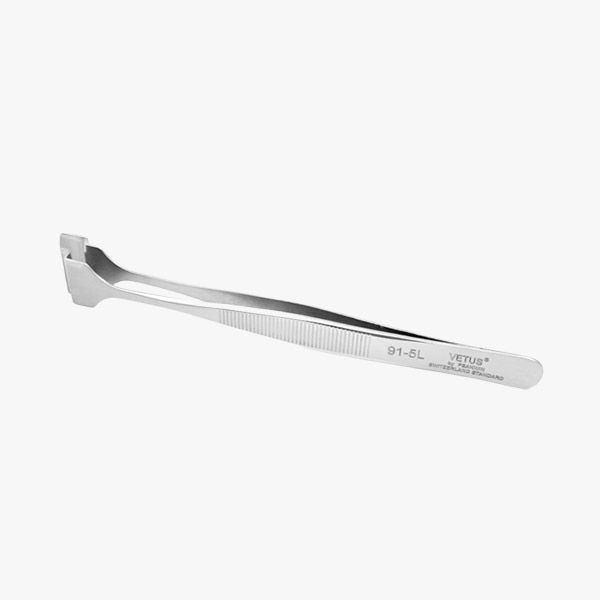
Non-Magnetic Stainless Steel: Stability Without Interference
Non-magnetic stainless steel is widely used in semiconductor manufacturing due to its balanced performance. It retains the strength of traditional steel while eliminating magnetic interference.
Benefits include:
No magnetic attraction to particles or equipment
Reduced risk of wafer misalignment during handling
Suitable for precision inspection and transfer tasks
Professional-grade silicon wafer tweezers made from non-magnetic materials are ideal for high-precision semiconductor workflows where stability and cleanliness are essential.
Anti-Magnetic and ESD-Safe Alloys
Electrostatic discharge is a major concern in wafer handling. Even a small static event can damage integrated circuits at the microscopic level. To address this, advanced alloys are engineered with anti-magnetic and ESD-safe properties.
Why these materials matter:
Minimize static charge buildup during wafer contact
Reduce risk of latent device failure
Support compliance with semiconductor ESD standards
These materials are particularly valuable in front-end semiconductor processes and cleanroom environments with strict static control requirements.
Ceramic Tweezers: Ultimate Chemical Resistance
Ceramic materials are increasingly used for specialized wafer handling tasks, especially where chemical exposure is unavoidable.
Advantages of ceramic wafer tweezers:
Excellent resistance to acids, solvents, and cleaning agents
Non-metallic and non-magnetic by nature
Extremely low particle generation
However, ceramics are more brittle than metal and require careful handling. They are best suited for chemical processing stages rather than high-speed or repetitive mechanical operations.
Carbon Fiber and Composite Materials
Carbon fiber and advanced composite materials are emerging options for silicon wafer tweezers. These materials are lightweight and offer good static control.
Key features:
Naturally ESD-safe
Lightweight, reducing operator fatigue
Non-magnetic and corrosion-resistant
While not as rigid as metal, composites are useful for applications requiring gentle handling and extended use periods.
Surface Treatment and Coating Considerations
Material selection alone is not enough. Surface treatment plays a crucial role in wafer safety.
Common surface enhancements include:
Polished or matte finishes to reduce slipping
Anti-glare coatings for visual accuracy
Specialized tip coatings to improve grip without scratching
High-quality manufacturers like VETUS Tweezers combine material selection with precision surface finishing to ensure consistent performance across applications.
Matching Materials to Semiconductor Applications
Different semiconductor processes require different material priorities:
Wafer inspection: Non-magnetic stainless steel or ESD-safe alloys
Chemical processing: Ceramic or chemically resistant composites
Cleanroom transfer: Anti-magnetic, low-particle stainless steel
High-volume handling: Durable metal alloys with precise alignment
Selecting the right material ensures both wafer protection and operational efficiency.
Long-Term Reliability and Maintenance
Material quality directly affects the lifespan of silicon wafer tweezers. Inferior materials wear quickly, lose alignment, or degrade under cleaning cycles.
High-quality materials offer:
Consistent tip alignment over time
Resistance to corrosion and oxidation
Compatibility with cleanroom cleaning protocols
This reliability reduces replacement frequency and supports stable production output.
Why Manufacturers Trust VETUS Tweezers
VETUS Tweezers specializes in precision tools for sensitive industries, including semiconductor manufacturing. By focusing on material science, precision machining, and strict quality control, the company delivers silicon wafer tweezers designed for demanding cleanroom environments.
Their silicon wafer tweezers are engineered to meet professional standards, offering non-magnetic properties, durability, and reliable performance for wafer handling applications.
Conclusion
Material selection is a critical factor in the performance of silicon wafer tweezers. From non-magnetic stainless steel and ESD-safe alloys to ceramics and composites, each material serves a specific role in semiconductor manufacturing. Choosing the right material helps protect wafers, improve yield, and maintain process consistency.
For semiconductor professionals seeking dependable solutions, VETUS Tweezers provides high-quality silicon wafer tweezers designed with the right materials for precision, safety, and long-term reliability.
http://www.vetustools.com
VETUS Tweezers -
AuthorPosts

- You must be logged in to reply to this topic.