

- This topic is empty.
-
AuthorPosts
-
2026-03-05 at 3:06 pm #6762
When planning a hazardous area lighting project, one of the first questions buyers ask is: how much do explosion-proof fixtures cost? It sounds simple, but the answer depends on multiple technical and commercial factors. Whether you are outfitting a chemical plant, oil refinery, grain facility, or offshore platform, understanding what drives cost will help you make a smarter investment.
At Xinliming, we work with industrial clients who need reliable, compliant, and durable explosion-proof lighting. Instead of focusing on a number, it’s more useful to break down what actually affects the cost of these fixtures and how to evaluate value beyond the initial purchase.
1. Certification and Compliance Requirements
One of the biggest cost drivers is certification.
Explosion-proof fixtures are not ordinary industrial lights. They must meet strict safety standards depending on the country and application. These may include:
ATEX
IECEx
UL
CSA
CCC
Other regional hazardous location certifications
Each certification requires testing, documentation, and quality control processes. Fixtures designed for higher-risk zones (such as Zone 1 or Class I Division 1 environments) require stronger enclosures and more rigorous testing than those for lower-risk areas.
If your project demands multi-region compliance, the manufacturing and documentation costs increase accordingly. However, certified fixtures reduce compliance risk and inspection issues later, which is critical for industrial facilities.
2. Hazardous Area Classification
Not all hazardous areas are the same. The classification of your environment directly influences fixture design and cost.
Key variables include:
Gas group (IIC environments are more demanding than IIA)
Temperature class (T6 requires stricter thermal control than T4)
Dust vs. gas environments
Indoor or outdoor exposure
For example, a fixture designed for a gas-heavy petrochemical site must handle potential ignition sources differently than one used in a flour mill. Higher classifications require thicker housings, better sealing, and enhanced heat management systems.
3. Fixture Type and Mounting Configuration
The type of explosion-proof fixture also affects cost.
Common options include:
High bay lights
Floodlights
Linear fixtures
Wall pack lights
Emergency lighting units
A high bay designed for warehouse ceilings differs significantly from a compact wall-mounted unit in a narrow processing corridor. Mounting brackets, adjustable arms, pendant mounts, and pole mounts also influence manufacturing complexity and installation labor.
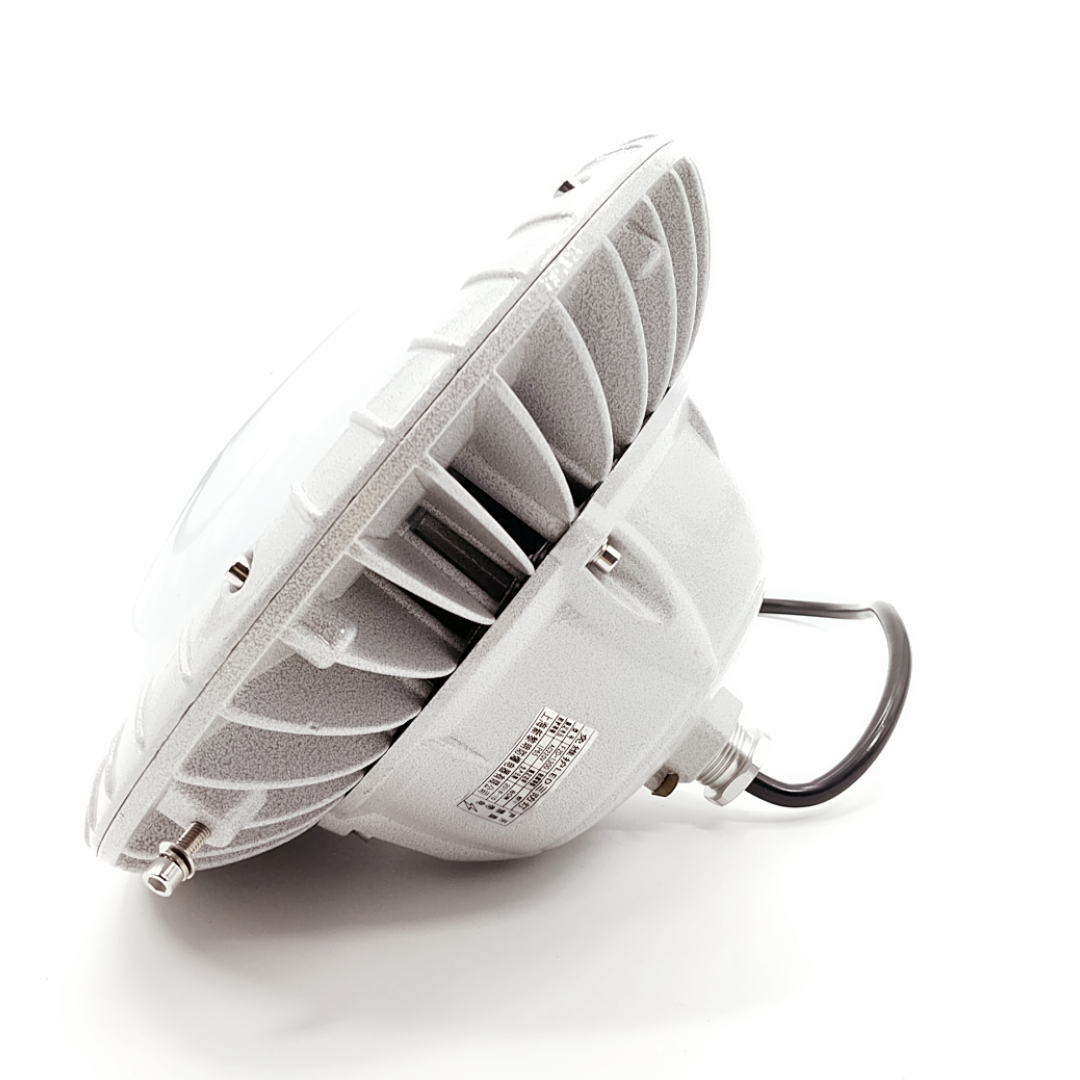
For example, the design of BZD211 series explosion-proof LED lighting is optimized for durability and efficient heat dissipation in demanding environments. Structural integrity, material selection, and modular components all play a role in overall fixture value.
4. Materials and Construction Quality
Explosion-proof lighting fixtures are built to contain internal sparks or explosions and prevent ignition of external gases or dust. That requires robust materials.
Common construction elements include:
Die-cast aluminum housings
Tempered glass lenses
Stainless steel fasteners
High-performance silicone gaskets
Anti-corrosion coatings
Facilities located offshore or in chemical plants often require enhanced corrosion resistance. Salt spray resistance, UV stability, and chemical exposure protection add to production complexity.
While lower-grade materials may reduce initial cost, they can lead to premature failure, corrosion, and expensive replacements. In hazardous areas, downtime can be far more costly than the fixture itself.
5. LED Quality and Electrical Components
Not all LED components are created equal.
The cost of explosion-proof LED fixtures depends heavily on:
LED chip brand and efficiency
Driver quality and lifespan
Surge protection level
Thermal management design
Power factor and harmonic control
High-efficiency LEDs reduce long-term energy consumption and heat generation. Reliable drivers with stable output prevent flickering and premature failure. Advanced surge protection is critical in industrial environments where voltage fluctuations are common.
Cheaper internal components may reduce upfront cost but increase maintenance frequency. In hazardous areas, replacing fixtures is not as simple as swapping a bulb in an office building. It may require area shutdowns, safety procedures, and specialized labor.
6. Heat Dissipation Design
Heat management is a technical factor that significantly impacts explosion-proof lighting cost.
LEDs generate heat, and in hazardous areas, excess heat can become a safety risk. Fixtures must maintain strict surface temperature limits to comply with their temperature class rating.
Effective heat dissipation requires:
Precision-designed fins
Thermal conductivity materials
Optimized airflow paths
High-grade thermal interface materials
Well-engineered thermal systems increase fixture lifespan and maintain safety ratings over time. Poor heat management can degrade LED performance and compromise certification compliance.
7. IP Rating and Environmental Protection
Ingress protection (IP rating) is another cost variable.
Hazardous environments often involve:
High humidity
Dust exposure
Water washdowns
Outdoor weather conditions
Higher IP ratings require improved sealing and enclosure integrity. This may include reinforced gaskets, sealed cable entries, and precision machining of housing components.
For industries like food processing or marine applications, washdown resistance and corrosion protection are essential. These design enhancements add complexity but provide long-term durability.
8. Customization and Project-Specific Requirements
Standard models are generally more cost-effective than custom-built fixtures.
However, many projects require:
Specific voltage ranges
Emergency backup systems
Dimming capabilities
Smart control integration
Special mounting brackets
Custom cable lengths
Customization adds engineering time and production adjustments. For large projects, customization may be necessary to align with facility design and operational needs.
Working with an experienced manufacturer like Xinliming helps streamline this process and avoid unnecessary over-specification.
9. Order Volume and Supply Chain Factors
Production scale affects cost efficiency.
Large industrial projects that require bulk orders benefit from manufacturing economies of scale. Smaller orders may involve higher per-unit production costs due to setup and logistics.
Additionally, supply chain variables influence overall pricing structure, including:
Raw material availability
Aluminum and electronic component sourcing
Shipping method
Lead times
Planning ahead and consolidating orders can improve procurement efficiency.
10. Installation and Lifecycle Considerations
The purchase cost of explosion-proof fixtures is only part of the equation. Total lifecycle cost is often more important.
Factors to evaluate include:
Installation complexity
Maintenance frequency
Energy efficiency
Replacement intervals
Downtime risk
A fixture with higher build quality and better thermal management may operate reliably for many years with minimal maintenance. In hazardous facilities, reducing maintenance interventions enhances both safety and operational continuity.
When evaluating cost, always consider long-term performance rather than focusing solely on initial procurement expense.
How to Make a Smart Purchasing Decision
If you are sourcing explosion-proof fixtures, consider the following steps:
Confirm your hazardous area classification.
Verify required certifications.
Define environmental conditions clearly.
Evaluate material and component quality.
Assess long-term maintenance implications.
Choose a manufacturer with proven experience.
Explosion-proof lighting is a safety-critical investment. Cutting corners can expose facilities to operational risk, regulatory penalties, and equipment failure.
At Xinliming, we focus on delivering compliant, durable, and efficient explosion-proof lighting solutions tailored to industrial clients. By understanding the real pricing factors, buyers can make informed decisions that balance safety, performance, and long-term value.
http://www.xlmexplosionprooflight.com
Xinliming -
AuthorPosts

- You must be logged in to reply to this topic.