

- This topic is empty.
-
AuthorPosts
-
2026-03-06 at 3:16 pm #6774
Choosing the correct weld-type pipe fitting is crucial for the success of any piping system. Whether for industrial, commercial, or residential projects, selecting the appropriate fitting ensures system integrity, safety, and long-term performance. A wrong choice can lead to leaks, structural failure, or costly maintenance.
Yuehua specializes in high-quality weld-type pipe fittings designed to meet diverse application requirements. Understanding the key factors that influence fitting selection can help engineers, contractors, and project managers make informed decisions.
1. Understand the Types of Weld-Type Pipe Fittings
Weld-type fittings are categorized based on their connection methods and functional design:
Butt Weld Fittings: Designed to be welded directly to the pipe, offering smooth flow and strong joints.
Socket Weld Fittings: Pipes are inserted into a socket and welded, ideal for smaller diameters and high-pressure applications.
Press Fit Reducers: Allow for seamless size transition between pipes while maintaining pressure integrity, such as Yuehua’s welded press fit reducer.
Elbows, Tees, and Caps: Shape-specific fittings that control flow direction, branch connections, and terminations.
Knowing the type of fitting required for your application is the first step in ensuring proper system design and functionality.
2. Determine Material Compatibility
Pipe fittings are available in various materials, including stainless steel, carbon steel, copper, and specialized alloys. Selecting a material compatible with your piping system and the transported medium is essential:
Corrosion Resistance: For chemical or water applications, stainless steel or coated carbon steel provides long-term durability.
Temperature Resistance: High-temperature fluids or steam systems require alloys that maintain strength under heat.
Pressure Ratings: Ensure the material can withstand the system’s maximum operating pressure.
Yuehua weld-type fittings are manufactured with precise material standards to meet industry requirements and ensure long-term reliability.
3. Consider Pipe Size and Pressure Requirements
Pipe diameter, wall thickness, and operating pressure all influence fitting selection. Mismatched sizes or pressure ratings can compromise joint integrity:
Verify the pipe schedule and diameter for proper fitment.
Check pressure ratings for the operating environment.
Select reducers or expanding fittings for seamless transitions in size without reducing performance.
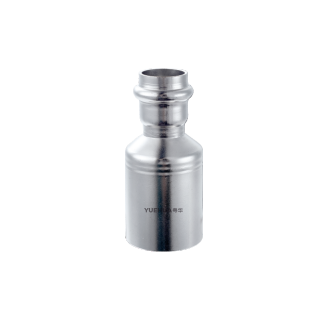
For example, welded press fit reducers from Yuehua are designed to maintain a strong, leak-proof connection even when transitioning between different pipe sizes.
4. Evaluate Flow Requirements
Flow dynamics are critical in piping systems. Poorly chosen fittings can create turbulence, pressure drops, or erosion. Consider:
Elbows and Bends: Short radius elbows increase turbulence, while long radius elbows reduce pressure loss.
Reducers: Smooth transitions minimize velocity changes and maintain flow efficiency.
Tees and Branches: Ensure adequate flow distribution without causing backpressure.
Proper selection ensures system efficiency and prolongs the life of pipes and components.
5. Account for Welding Type and Installation Method
The installation process affects the type of weld-type fitting you choose:
Butt Weld: Requires precision alignment and skilled welding, suitable for high-stress applications.
Socket Weld: Easier to install in tight spaces, ideal for smaller diameters.
Press Fit: Quick and reliable installation with minimal tools, reducing downtime.
Yuehua’s welded press fit reducer offers a convenient installation option while maintaining the structural integrity of the piping system.
6. Ensure Compliance with Standards
Compliance with industry standards ensures safety, quality, and compatibility. Relevant standards include:
ASME B16.9: For factory-made wrought butt-welding fittings.
ASTM Specifications: Material and mechanical property requirements.
ISO Certifications: For global project compatibility.
Using certified fittings like those from Yuehua ensures your project meets regulatory and operational requirements.
7. Plan for Maintenance and Inspection
Fittings should allow for inspection and maintenance without disrupting the entire system. Consider:
Accessibility of elbows, tees, and reducers
Ease of removing or replacing components
Weld quality for visual or NDT (non-destructive testing) inspection
Choosing fittings designed for long-term service reduces downtime and maintenance costs.
8. Match Fittings to Project Application
Different applications require tailored fittings:
Industrial Plants: High-pressure, high-temperature resistant fittings.
Commercial HVAC: Standard stainless steel or carbon steel fittings for fluid transport.
Water Treatment: Corrosion-resistant and sanitary fittings for potable water.
Yuehua offers a variety of weld-type pipe fittings suitable for diverse applications, ensuring compatibility with specific project requirements.
9. Optimize for Cost and Efficiency
While quality is critical, cost efficiency should also be considered:
Reducing installation complexity with press-fit or socket weld designs
Choosing durable materials to minimize replacement costs
Planning system layouts to reduce the number of specialized fittings
High-quality weld-type fittings from Yuehua provide both performance and value, balancing initial investment with long-term reliability.
10. Test Fittings Before Full Installation
Whenever possible, test fittings under operating conditions or conduct pressure tests to verify performance:
Check for leaks or deformation
Ensure alignment and joint integrity
Confirm compatibility with welding procedures and installation tools
Pre-installation testing reduces the risk of costly errors and ensures the system operates as intended.
Conclusion
Selecting the right weld-type pipe fitting requires careful consideration of type, material, size, pressure, flow, installation method, and compliance standards. Each decision affects the safety, efficiency, and longevity of your piping system.
Yuehua provides a wide range of high-quality weld-type fittings, including the reliable welded press fit reducer, designed to simplify installation while ensuring durable, leak-proof connections. By understanding these key factors, project managers and engineers can make informed choices that ensure successful and safe piping installations.
http://www.yuehuasus.com
yuehua -
AuthorPosts

- You must be logged in to reply to this topic.