

- This topic is empty.
-
AuthorPosts
-
2026-05-09 at 3:47 pm #7833
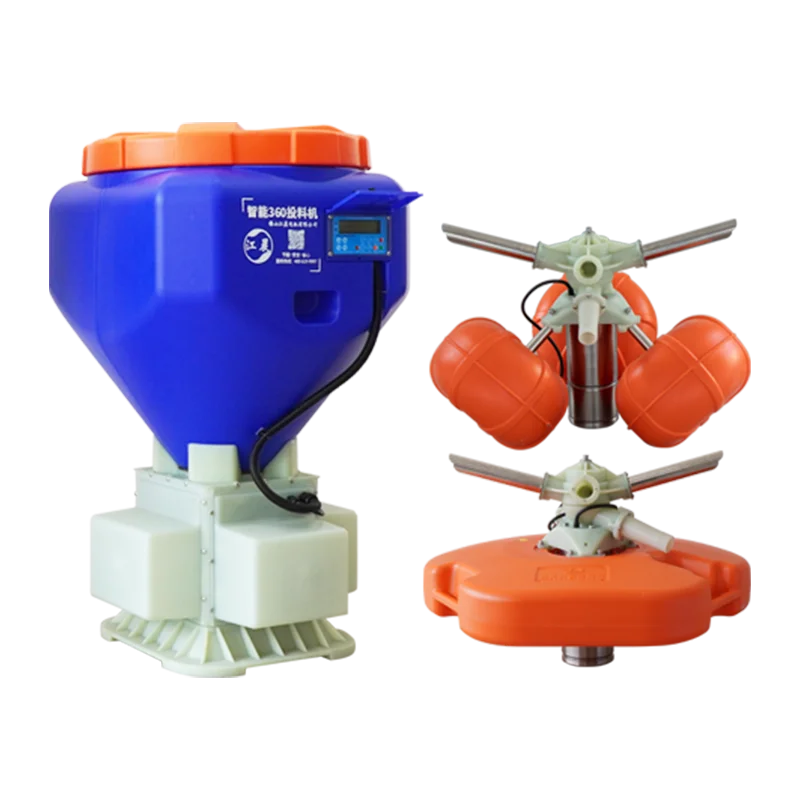
In modern aquaculture operations, feeding is no longer a manual or semi-automated task—it has evolved into a data-driven, precision-controlled process that directly impacts growth rates, feed conversion ratio (FCR), water quality, and overall farm profitability. At the center of this transformation is the 360 Air Conveyor Feeding Machine, a system engineered to deliver uniform, controlled, and energy-efficient feed distribution across complex aquaculture environments.
Unlike traditional feeding systems that rely on localized dispensing or mechanical transport, air conveyor feeding systems use pneumatic delivery to distribute feed over long distances with high spatial accuracy. The 360-degree distribution capability further enhances coverage uniformity, ensuring that feed reaches all target zones within ponds or tanks.
This article provides a comprehensive technical analysis of the 360 Air Conveyor Feeding Machine, focusing on pneumatic transport principles, system architecture, feed distribution accuracy, energy optimization, and real-world aquaculture performance.
The Shift Toward Pneumatic Feeding in Aquaculture Systems
Traditional feeding methods—manual broadcasting, auger conveyors, or belt systems—introduce several inefficiencies:
Uneven feed distribution leading to competition among fish
High feed waste due to overfeeding in localized areas
Labor-intensive operation and inconsistent feeding schedules
Limited scalability in large pond or multi-tank systemsThe 360 Air Conveyor Feeding Machine addresses these limitations through controlled pneumatic transport.
By using airflow to carry feed particles through pipelines, the system enables:
Long-distance feed delivery with minimal mechanical friction
Uniform distribution across large surface areas
Centralized feed management for multi-pond operationsThis shift from mechanical to pneumatic feeding is a key step toward precision aquaculture.
Working Principle of the 360 Air Conveyor Feeding Machine
The system operates by generating controlled airflow using a high-efficiency motor-driven blower. Feed pellets are introduced into the airflow stream and transported through pipelines to distribution points.
The core process includes:
Airflow generation through centrifugal or high-speed blowers
Feed injection into airflow via controlled feeding units
Pneumatic transport through optimized pipeline networks
360-degree dispersion through rotating or multi-nozzle outletsThe key engineering challenge is maintaining stable airflow velocity while preventing feed breakage or clogging.
Airflow Dynamics and Feed Transport Stability
The performance of a 360 Air Conveyor Feeding Machine depends heavily on airflow dynamics.
Critical parameters include:
Air velocity typically ranging between 18–28 m/s depending on pellet size
Pipeline diameter optimized to balance flow resistance and throughput
Pressure stability to prevent pulsation in feed deliveryIf airflow is too weak, feed may settle inside pipelines, causing blockages. If airflow is too strong, pellet breakage increases, leading to feed dust and reduced nutritional efficiency.
Optimized airflow ensures:
Stable feed transport without clogging
Minimal pellet degradation during delivery
Consistent feed flow rate across distribution points
360-Degree Feed Distribution Mechanism
The defining feature of the system is its ability to distribute feed in a full 360-degree pattern.
This is typically achieved through:
Rotating distribution heads driven by controlled motors
Multi-directional nozzle systems with calibrated discharge angles
Adjustable dispersion radius depending on pond sizeUniform feed distribution provides measurable benefits:
Reduced feeding competition among aquatic species
Improved growth uniformity across populations
Lower feed waste due to better coverageIn large-scale aquaculture ponds, distribution radius can reach several meters, depending on airflow and nozzle design.
Feed Integrity and Pellet Protection
One of the key concerns in pneumatic feeding systems is pellet integrity.
Feed pellets must maintain structural consistency to ensure proper sinking or floating behavior and nutritional delivery.
The 360 Air Conveyor Feeding Machine is designed to minimize:
Mechanical abrasion within pipelines
Impact damage at bends and junctions
High-velocity collisions at outlet pointsEngineering solutions include:
Smooth internal pipeline surfaces to reduce friction
Optimized pipeline routing with minimal sharp bends
Controlled airflow deceleration near discharge pointsMaintaining pellet integrity directly improves feed conversion efficiency.
System Throughput and Feeding Rate Control
Modern aquaculture operations require precise control over feeding rate based on biomass, species type, and growth stage.
The 360 Air Conveyor Feeding Machine integrates feeding rate control mechanisms such as:
Variable speed feeders for adjustable feed input
Programmable control systems for feeding schedules
Integration with biomass estimation systemsTypical system throughput can range from:
50 kg/h for small-scale operations
Up to several tons per hour in large commercial farmsAccurate feeding rate control prevents overfeeding and reduces water contamination.
Energy Efficiency and Motor System Optimization
Energy consumption is a critical factor in large-scale aquaculture operations.
The blower system is the primary energy consumer in a 360 Air Conveyor Feeding Machine.
Key efficiency factors include:
High-efficiency motor design with optimized power output
Aerodynamic blower design to reduce energy loss
Variable frequency drives (VFD) for dynamic airflow controlEnergy-efficient systems can reduce operational costs significantly, especially in continuous feeding operations.
Jiangchen Electric Motor Co., Ltd., with its expertise in motor manufacturing, integrates high-performance motor solutions that ensure stable airflow generation while minimizing energy consumption.
Pipeline Design and System Layout Engineering
Pipeline design is essential for ensuring consistent feed delivery across the system.
Key design considerations include:
Pipeline length and routing to minimize pressure loss
Diameter selection based on feed volume requirements
Use of anti-static and wear-resistant materialsImproper pipeline design can lead to:
Uneven feed distribution
Increased energy consumption
Frequent maintenance due to cloggingA well-engineered system ensures stable operation across multiple feeding points.
Automation and Intelligent Control Integration
Modern 360 Air Conveyor Feeding Machine systems are increasingly integrated with intelligent control platforms.
These systems enable:
Automated feeding schedules based on time or biomass data
Remote monitoring and control via digital interfaces
Integration with water quality monitoring systemsData-driven feeding improves:
Feed utilization efficiency
Growth rate consistency
Operational predictability
Environmental Impact and Sustainability Benefits
Efficient feeding systems play a critical role in reducing environmental impact.
Overfeeding is a major contributor to water pollution in aquaculture, leading to:
Increased ammonia levels
Oxygen depletion
Algae growthBy improving feed distribution accuracy and reducing waste, the 360 Air Conveyor Feeding Machine contributes to:
Cleaner water environments
Lower environmental compliance costs
Sustainable aquaculture practices
Application Scenarios in Aquaculture
Pond-Based Aquaculture
Large ponds benefit from wide-area feed distribution and centralized control.
Recirculating Aquaculture Systems (RAS)
Precise feeding minimizes waste and supports water filtration efficiency.
Offshore Aquaculture
Remote feeding systems reduce labor dependency and improve operational efficiency.
Multi-Tank Farming Systems
Centralized feeding systems allow synchronized feeding across multiple tanks.
Common Operational Challenges and Solutions
Pipeline Blockage
Caused by insufficient airflow or moisture in feed. Prevented through proper airflow calibration and dry feed storage.
Uneven Distribution
Occurs due to nozzle misalignment or airflow imbalance. Addressed through regular calibration.
Pellet Breakage
Result of excessive airflow velocity. Controlled through optimized blower settings.
System Wear
Long-term operation leads to wear in pipelines and distribution heads. Mitigated through material selection and maintenance scheduling.
Maintenance and Lifecycle Performance
Routine maintenance ensures long-term system reliability.
Key maintenance activities include:
Inspection of blower performance
Cleaning of pipelines to prevent residue buildup
Calibration of feeding rate and distribution patternsHigh-quality systems are designed for extended operational life with minimal downtime.
Future Trends in Air Conveyor Feeding Technology
The evolution of 360 Air Conveyor Feeding Machine systems is moving toward:
AI-based feeding optimization using real-time fish behavior data
IoT-enabled monitoring for predictive maintenance
Advanced materials for lightweight and durable pipeline systems
Integration with automated aquaculture management platformsThese advancements aim to further improve efficiency, reduce operational cost, and enhance sustainability.
Conclusion
The 360 Air Conveyor Feeding Machine represents a significant advancement in aquaculture feeding technology, combining pneumatic transport, precision distribution, and intelligent control into a single integrated system.
Its performance is defined by airflow stability, feed integrity protection, energy efficiency, and system-level integration.
When properly engineered and deployed, it enables consistent feeding, improved growth performance, reduced waste, and lower operational costs.
With advanced motor technology and system integration capabilities from manufacturers like Jiangchen Electric Motor Co., Ltd., air conveyor feeding systems continue to drive the evolution of modern, efficient, and sustainable aquaculture operations.
http://www.jiangchenmotor.com
Foshan Jiangchen Electric Motor Co., Ltd. -
AuthorPosts

- You must be logged in to reply to this topic.