

- This topic is empty.
-
AuthorPosts
-
2026-05-09 at 3:53 pm #7842
Selecting the right 180 Degree Pneumatic Actuator requires more than choosing a model based on size or price. Incorrect sizing or configuration can lead to insufficient torque, unstable operation, or premature system failure.
This article focuses on practical selection strategies, torque calculation methods, and application-specific considerations to ensure optimal actuator performance.
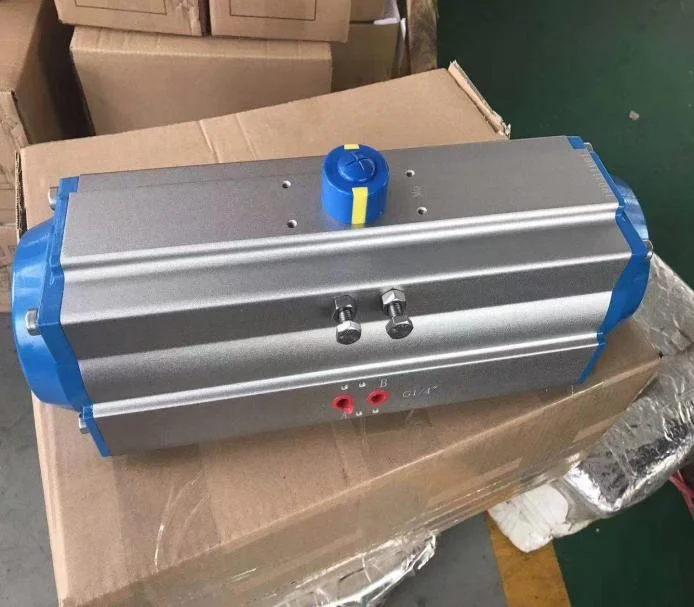
Understanding Valve Torque Requirements
The first step in selecting a 180 Degree Pneumatic Actuator is determining the torque required to operate the valve.
Valve torque typically includes:
Breakaway torque (initial opening force)
Running torque (during movement)
Seating torque (final closing force)In many cases, breakaway torque is the highest and should be used as the baseline for actuator selection.
Torque Calculation and Safety Margin
Once the required torque is identified, a safety factor must be applied.
Typical safety margins:
1.25–1.5 for stable operating conditions
1.5–2.0 for critical or high-risk applicationsFor example:
If valve torque requirement is 1000 Nm, the actuator should provide at least 1250–1500 Nm to ensure reliable operation.
This margin accounts for:
Pressure fluctuations
Friction increase over time
Environmental variations
Matching Actuator Size to Valve Requirements
Actuator sizing involves matching torque output with valve requirements across the full 180-degree rotation.
Key parameters to evaluate:
Maximum torque output at given air pressure
Torque curve consistency across the stroke
Actuator bore size and piston areaZhejiang Maikailun actuators offer torque ranges from 5 Nm to 50,000 Nm, covering a wide range of industrial applications.
Air Consumption and System Efficiency
Air consumption directly impacts operating cost in pneumatic systems.
Factors affecting air usage include:
Actuator size
Operating pressure
Cycle frequencyEfficient actuator design reduces air consumption while maintaining required torque output.
This is particularly important in high-cycle applications where energy cost becomes significant.
Response Time and Control Precision
Response time is critical in applications requiring fast valve operation.
Key influencing factors:
Air flow rate through solenoid valves
Actuator internal volume
Pipeline designShorter response times improve system responsiveness and process control.
Environmental and Operational Conditions
Application environment significantly affects actuator performance.
Key considerations include:
Temperature range (e.g., -20°C to 80°C)
Corrosive environments requiring stainless steel construction
Explosion-proof requirements in hazardous areasSelecting the correct material and sealing system ensures safe and reliable operation.
Control Accessories and Automation Integration
Modern actuator systems require integration with control components.
Common accessories include:
Solenoid valves for air control
Limit switch boxes for position feedback
Positioners for proportional controlThese components enable seamless integration into automated systems and improve operational accuracy.
Installation and Mounting Considerations
Proper installation is essential for optimal performance.
Key factors include:
Alignment between actuator and valve shaft
Secure mounting using standardized interfaces
Proper air line connection to avoid pressure lossIncorrect installation can reduce efficiency and increase wear.
Application-Specific Design Optimization
Different industries have unique requirements:
Chemical industry requires corrosion-resistant materials
Oil and gas applications demand high torque and durability
Water treatment systems prioritize energy efficiency and reliabilityCustom actuator configurations ensure optimal performance in each application.
Lifecycle Cost Considerations
Initial purchase cost is only part of the total cost of ownership.
Other factors include:
Energy consumption
Maintenance requirements
Downtime riskA well-designed actuator reduces long-term operational cost.
Conclusion
Selecting the right 180 Degree Pneumatic Actuator requires a systematic approach based on torque calculation, application requirements, and system integration.
By focusing on proper sizing, efficient air usage, and environmental compatibility, industrial systems can achieve reliable and cost-effective valve automation.
With comprehensive product ranges and integrated solutions from Zhejiang Maikailun Automatic Control Valve Co., Ltd, users can implement robust and efficient actuator systems tailored to their specific operational needs.
http://www.maikailunvalve.com
Zhejiang Maikailun Automatic Control Valve Co . , Ltd -
AuthorPosts

- You must be logged in to reply to this topic.