

- This topic is empty.
-
AuthorPosts
-
2026-05-09 at 3:53 pm #7843
In large-scale food processing, freezing equipment is not selected in isolation—it must align with upstream processing capacity, downstream packaging, and overall production rhythm. Many operations experience bottlenecks not because freezing technology is insufficient, but because the system is not properly matched to throughput, product format, and workflow.
This is where contact plate freezer products stand out. Beyond their well-known heat transfer efficiency, their real value lies in predictable batch performance, compact footprint, and seamless integration into industrial production lines.
This article approaches contact plate freezer selection from a system design perspective, focusing on capacity matching, workflow integration, and operational scalability.
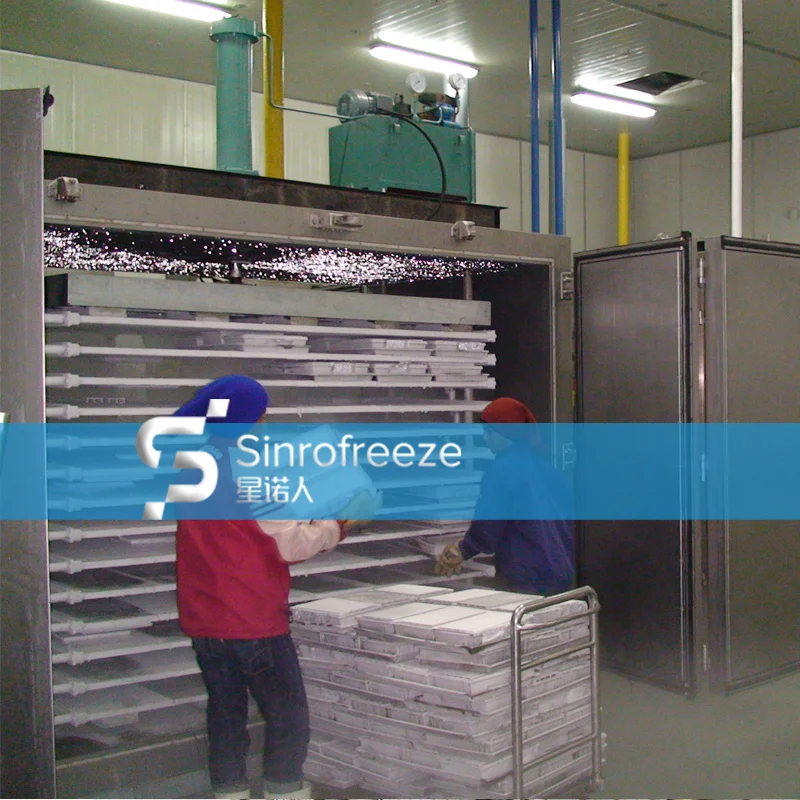
Rethinking Freezing as a Throughput-Control Stage
In continuous food processing environments, freezing often becomes the limiting factor in production capacity.
Upstream processes such as cutting, portioning, or cooking may operate continuously, while freezing is typically batch-based in contact plate systems. If freezing capacity is not aligned, it creates:
-
Product accumulation before freezing
-
Idle time in upstream processes
-
Inconsistent production scheduling
A well-designed contact plate freezer system ensures that freezing capacity matches production output, maintaining a balanced workflow.
Capacity Matching: From Product Output to Freezer Design
Capacity selection for contact plate freezer products should begin with actual production data rather than equipment specifications.
Key parameters include:
-
Hourly production volume (kg/h)
-
Product dimensions and packaging format
-
Target freezing time per batch
For example:
If a processing line produces 2,000 kg of fish blocks per hour, and each freezing cycle takes 2 hours, the freezer system must handle at least 4,000 kg of product capacity across multiple plate stacks.
Important design considerations:
-
Number of plate stations (multi-station vs single unit)
-
Plate dimensions and loading area
-
Cycle time consistency
Proper capacity matching eliminates bottlenecks and stabilizes production flow.
Batch vs Semi-Continuous Operation Strategy
Contact plate freezer products are traditionally batch systems, but modern designs allow semi-continuous operation through parallel configurations.
Two common strategies:
Single large unit (batch mode)
Suitable for stable production with uniform product sizes. Lower equipment complexity but less flexible.Multiple smaller units (modular approach)
Allows staggered loading and unloading, creating a quasi-continuous workflow. This improves flexibility and reduces idle time.In high-volume operations, modular systems provide better adaptability to fluctuating production schedules.
Product Geometry and Plate Contact Efficiency
Unlike air-based systems, contact plate freezers require direct surface contact between the product and freezing plates. Therefore, product geometry plays a critical role.
Ideal product characteristics:
-
Flat or block-shaped structure
-
Uniform thickness for consistent freezing
-
Good surface contact with plates
Products such as:
-
Fish blocks
-
Meat portions
-
Prepared meals in trays
perform well in contact plate systems.
Irregular shapes or uneven surfaces reduce contact efficiency, leading to longer freezing times and inconsistent results.
Packaging Compatibility and Material Considerations
Packaging must be compatible with conductive freezing.
Recommended packaging characteristics:
-
High thermal conductivity materials
-
Flat and uniform surface contact
-
Resistance to low temperatures without deformation
Improper packaging can create air gaps between product and plate, significantly reducing freezing efficiency.
In industrial practice, packaging design is often optimized alongside freezer selection to maximize performance.
Hydraulic System and Plate Pressure Control
Contact plate freezer products rely on hydraulic systems to apply pressure between plates and products.
This pressure ensures:
-
Maximum contact area
-
Uniform heat transfer
-
Consistent product thickness after freezing
Key technical parameters include:
-
Hydraulic pressure range (typically 0.1–0.3 MPa depending on product)
-
Plate alignment precision
-
Stability of pressure during the freezing cycle
Inconsistent pressure leads to uneven freezing and product deformation.
Integration with Upstream and Downstream Processes
A contact plate freezer must integrate seamlessly into the overall production line.
Upstream integration includes:
-
Conveyor systems for product loading
-
Buffer zones to manage flow variations
Downstream integration includes:
-
Automated unloading systems
-
Packaging and storage handling
Poor integration results in:
-
Increased manual handling
-
Higher labor costs
-
Reduced overall efficiency
Nantong Sinrofreeze Equipment Co., Ltd. provides integrated freezing system solutions that align equipment design with full production workflows, ensuring efficient coordination between processing stages.
Energy Consumption and Operational Efficiency
While contact plate freezers are known for energy efficiency, actual performance depends on system design and operation.
Key efficiency factors:
-
Refrigeration system capacity matching
-
Plate insulation performance
-
Cycle time optimization
Shorter freezing cycles reduce compressor load per batch, improving overall energy efficiency.
Typical energy savings compared to air-blast systems can reach 20–40% depending on application.
Maintenance Strategy and System Reliability
Industrial freezing systems must operate continuously with minimal downtime.
Maintenance considerations include:
-
Hydraulic system inspection and sealing integrity
-
Plate surface condition to maintain thermal contact
-
Refrigeration system performance monitoring
Well-designed systems minimize maintenance frequency while ensuring consistent performance.
Scalability for Growing Production Demand
As production demand increases, freezing capacity must scale accordingly.
Contact plate freezer systems support scalability through:
-
Modular expansion with additional units
-
Upgrading refrigeration systems
-
Integration with automated handling systems
This flexibility allows businesses to expand capacity without replacing existing equipment.
Application Scenarios
Seafood Processing
Ideal for freezing fish blocks with uniform shape and high throughput requirements.
Meat Processing
Ensures consistent freezing of portioned meat products with controlled thickness.
Prepared Food Industry
Supports freezing of packaged meals with stable structure and quality preservation.
Export-Oriented Production
Provides reliable freezing for long-distance transportation and extended shelf life.
Choosing the Right System Configuration
Selecting the right contact plate freezer products requires evaluating:
-
Production volume and growth projections
-
Product type and packaging format
-
Available factory space and layout constraints
-
Desired level of automation
A system-level approach ensures that the freezer supports overall production efficiency rather than becoming a bottleneck.
Conclusion
Contact plate freezer products are not just high-efficiency freezing equipment—they are critical components in industrial food processing systems where throughput, consistency, and integration determine overall performance.
By focusing on capacity matching, workflow integration, and system scalability, businesses can optimize freezing operations and improve production efficiency.
With comprehensive solutions from Nantong Sinrofreeze Equipment Co., Ltd., manufacturers can implement freezing systems that are not only fast and energy-efficient but also fully aligned with modern industrial production requirements.
http://www.sinrofreezer.com
Nantong Sinrofreeze Equipment Co., Ltd. -
-
AuthorPosts

- You must be logged in to reply to this topic.