

- This topic is empty.
-
AuthorPosts
-
2026-05-09 at 3:56 pm #7853
In many industrial systems, sealing is not only about preventing leakage outward. In applications such as mining equipment, marine drives, slurry pumps, and agricultural machinery, the more critical challenge is preventing external contaminants from entering the system.
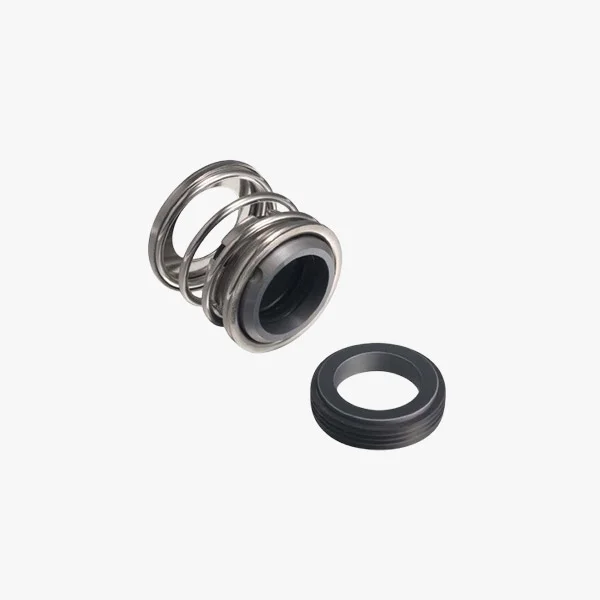
Dust, abrasive particles, moisture, and chemical residues can penetrate rotating interfaces and cause accelerated wear of bearings, shafts, and internal components. Traditional sealing solutions often struggle in these environments because they rely on continuous contact surfaces that degrade quickly under abrasive conditions.
Centrifugal seals provide a different engineering approach. Instead of acting as a passive barrier, they actively use rotational dynamics to repel contaminants, making them particularly effective in contamination control and equipment protection.
Contamination ingress as a primary failure mode
In harsh operating environments, contamination ingress is one of the leading causes of premature equipment failure. Even small particles can cause significant damage when introduced into high-speed rotating systems.
For example, in slurry pumps handling abrasive fluids, particles entering the bearing housing can lead to rapid wear, increased vibration, and eventual system failure. In agricultural machinery, exposure to dust and moisture can degrade lubrication systems and reduce component lifespan.
Traditional contact seals often fail under these conditions because:
Seal lips wear down due to abrasive particles
Contact pressure decreases over time, reducing sealing effectiveness
Heat and friction accelerate material degradationAs a result, maintenance intervals become shorter, and operational costs increase.
Centrifugal seals as an active protection mechanism
Centrifugal seals address contamination by creating a dynamic barrier rather than relying solely on physical contact.
When the shaft rotates, the seal geometry generates outward centrifugal forces that push contaminants away from the sealing interface. This creates a self-cleaning effect, preventing particles from entering critical areas.
Unlike static seals, this mechanism becomes more effective as rotational speed increases. At higher speeds, the outward force acting on particles is stronger, improving the seal’s ability to repel contaminants.
This makes centrifugal seals particularly suitable for:
High-speed rotating shafts
Environments with heavy dust or particulate exposure
Applications involving fluid splashing or spray
Performance under abrasive conditions
A key advantage of centrifugal seals is their ability to maintain performance in abrasive environments without significant wear.
Because they operate with minimal or no direct contact, there is little friction between sealing surfaces. This reduces the risk of abrasion-related degradation.
Typical performance characteristics include:
Stable operation even with high particle concentrations
Minimal wear over extended operating periods
Reduced risk of seal failure due to surface damageIn contrast, contact-based seals often experience rapid wear when exposed to abrasive particles, leading to frequent replacement and increased downtime.
Multi-stage sealing architecture
In many industrial applications, centrifugal seals are integrated into multi-stage sealing systems designed to provide layered protection.
In such configurations, the centrifugal seal acts as the first line of defense, deflecting the majority of contaminants. Secondary seals, such as lip seals or mechanical seals, provide additional containment for any remaining particles or fluids.
This layered approach significantly improves overall sealing performance by:
Reducing the load on primary sealing components
Extending the lifespan of secondary seals
Enhancing system reliability under extreme conditionsFor example, in mining equipment, this configuration can increase bearing life by several times compared to single-stage sealing systems.
Design considerations for contamination-heavy environments
The effectiveness of centrifugal seals depends on precise design parameters tailored to specific operating conditions.
Key design factors include:
Seal clearance, which must balance contamination exclusion and rotational efficiency
Geometry of grooves or channels that direct particles outward
Material selection to resist corrosion and mechanical stressFor applications involving corrosive or wet environments, stainless steel or coated materials are often used to maintain structural integrity.
Ningbo Wecan Seals Co., Ltd. develops customized centrifugal sealing solutions that address these variables, ensuring optimal performance in diverse industrial scenarios.
Impact on maintenance cycles and operational costs
Reducing contamination ingress has a direct impact on maintenance frequency and overall operational costs.
By preventing particles from entering critical components, centrifugal seals help:
Extend bearing and shaft life
Reduce lubricant contamination
Minimize unplanned downtimeIn many cases, equipment using centrifugal seals can operate for significantly longer periods between maintenance intervals compared to systems relying solely on contact seals.
This translates into lower lifecycle costs, particularly in industries where equipment operates continuously under harsh conditions.
Application-driven design examples
In slurry pump systems, centrifugal seals are used to prevent abrasive particles from reaching bearing assemblies. This reduces wear and improves system reliability.
In marine propulsion systems, they protect internal components from saltwater ingress, which can cause corrosion and lubrication failure.
In agricultural machinery, centrifugal seals prevent dust and moisture from entering rotating assemblies, ensuring consistent performance in outdoor environments.
In industrial mixers and agitators, they help maintain clean separation between process materials and mechanical components.
Each application requires specific design adjustments to optimize performance, highlighting the importance of tailored engineering solutions.
Comparison from a protection perspective
When evaluated from a contamination control standpoint, centrifugal seals offer clear advantages over traditional sealing methods.
Contact seals provide immediate sealing but degrade quickly in abrasive environments. Their performance depends heavily on maintaining surface integrity, which is difficult under continuous exposure to particles.
Mechanical seals offer high sealing performance but can be sensitive to contamination, which may damage sealing faces and reduce effectiveness.
Centrifugal seals, by contrast, are inherently resistant to contamination due to their non-contact or low-contact design and dynamic operation.
This makes them a preferred solution in applications where contamination is the primary concern rather than fluid leakage alone.
Future trends in sealing for harsh environments
As industrial systems continue to operate in increasingly demanding environments, the need for robust contamination control solutions is growing.
Advances in computational fluid dynamics (CFD) are enabling more precise design of centrifugal seal geometries, improving their efficiency and adaptability.
At the same time, new materials and surface treatments are enhancing resistance to corrosion and wear, further extending service life.
Manufacturers are also integrating centrifugal seals into more complex sealing systems, combining multiple technologies to achieve higher levels of protection and reliability.
Conclusion
Centrifugal seals redefine the role of sealing in industrial systems by focusing on active contamination control rather than passive leakage prevention.
Their ability to repel particles using rotational dynamics, combined with low wear and high durability, makes them particularly effective in harsh environments where traditional seals struggle.
By reducing contamination ingress, they protect critical components, extend equipment lifespan, and lower maintenance costs.
For industries dealing with dust, slurry, moisture, or corrosive conditions, centrifugal seals are not just an alternative—they are a strategic solution for improving system reliability and long-term performance.
http://www.wecan-seals.com
Ningbo Wecan Seals Co., Ltd. -
AuthorPosts

- You must be logged in to reply to this topic.