

- This topic is empty.
-
AuthorPosts
-
2026-05-26 at 4:27 pm #8267
In the evolving landscape of industrial automation, the demand for reliable remote monitoring solutions has never been more critical. Equipment operators across power generation, construction, and logistics sectors face a persistent challenge: how to simultaneously track asset location and operational data in harsh, unstable environments. The LXI980G Industrial Wireless Data Transmission Unit (DTU) from Dongguan Tuancheng Automation addresses this challenge with a comprehensive approach that integrates GPS positioning and multi-protocol communication into a single, industrial-grade device.
The Core Challenge in Remote Industrial Monitoring
Industrial assets operating in the field—whether generator sets, tower cranes, or fleet vehicles—present unique monitoring difficulties. These machines often operate in environments with fluctuating power supplies, extreme temperatures, and diverse controller ecosystems. Traditional monitoring solutions typically require separate modules for data transmission and GPS tracking, creating complexity in installation, maintenance, and troubleshooting. Furthermore, field technicians frequently lack specialized knowledge of TCP/IP or PPP protocols, making deployment and configuration time-consuming and error-prone.
Integrated Architecture: Communication Meets Positioning
The LXI980G distinguishes itself through high integration of communication and positioning technologies. Unlike conventional DTUs that focus solely on data transmission, this device combines wireless connectivity with GPS positioning in a single hardware unit. This architectural decision eliminates the need for separate GPS modules, reducing equipment costs, simplifying wiring, and decreasing potential failure points in the monitoring system.
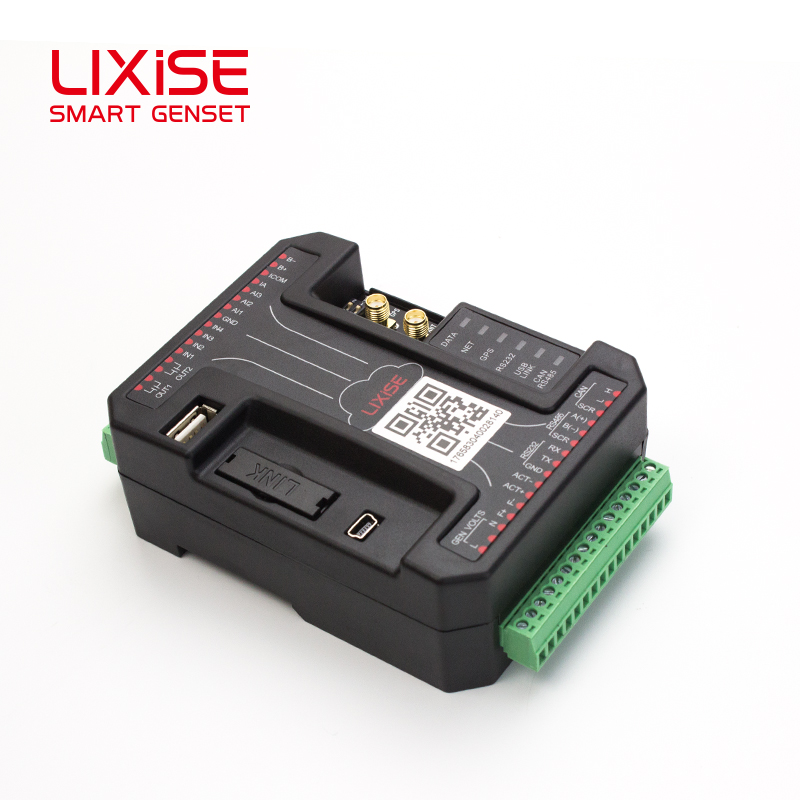
The device operates on an ARM platform with an embedded operating system, providing the computational foundation necessary for stable, long-term operation. This platform supports full transparent data transmission, meaning that equipment data passes through the DTU without requiring protocol conversion or complex configuration. For field personnel, this translates to plug-and-play functionality—connect the device, and data flows to the monitoring center without requiring deep technical expertise.
Operational Resilience in Harsh Environments
Industrial environments demand equipment that can withstand conditions that would disable consumer-grade devices. The LXI980G demonstrates this resilience through several critical specifications:
Wide Voltage Tolerance: With an input range of 8V-35V DC, the DTU maintains stable operation despite voltage fluctuations common in generator sets and heavy machinery during startup, load changes, or power supply instability. This capability ensures continuous monitoring even when electrical conditions would compromise standard electronics.
Temperature Extremes: An operational range of -25°C to +70°C enables deployment in diverse climates, from cold northern regions to hot desert environments, without performance degradation.
Composite Watchdog Architecture: The device employs multi-layer software and hardware watchdog mechanisms that continuously monitor system health. If anomalies are detected, the watchdog automatically resets the system, preventing crashes and ensuring 24/7 uptime—critical for assets that cannot afford monitoring gaps.
Ultra-Low Power Consumption: With standby current at or below 30mA, the DTU minimizes electrical load on host equipment, particularly important for battery-backed systems or applications where power efficiency impacts operational costs.
Broad Controller Compatibility: Eliminating Hardware Proliferation
One of the most significant pain points in industrial monitoring is the variety of controller brands and communication protocols used across different equipment types. The LXI980G addresses this through compatibility with five major controller brands: LIXiSE, Deep Sea, ComAp, Kaixun, and SmartGen. This broad support is enabled by multiple physical interfaces—RS232, RS485, USB, LINK, and CAN—allowing the DTU to connect to virtually any industrial controller without requiring brand-specific hardware variants.
This compatibility dramatically reduces inventory complexity for equipment manufacturers, rental companies, and fleet operators. Rather than maintaining separate communication modules for each controller brand, operators can standardize on a single DTU model, simplifying procurement, training, and spare parts management.
Flexible Connectivity for Diverse Network Environments
Industrial assets operate in locations with varying network infrastructure availability. The LXI980G supports full-network communication, including GPRS, CDMA, 4G, and Ethernet modes. This flexibility ensures connectivity whether equipment operates in urban areas with robust cellular coverage, remote locations where only legacy networks are available, or fixed installations where wired Ethernet provides the most reliable connection.
For applications requiring secure data transmission, the device supports APN VPN configurations, enabling communication over private networks that protect sensitive operational data from unauthorized access. Additionally, authorized SMS and ring control allow remote management and parameter adjustments without requiring constant data connections, reducing operational costs.
Data Integrity During High-Volume Transmission
Industrial monitoring often involves continuous streams of sensor data, status updates, and diagnostic information. The LXI980G features a data buffer capacity of 1024 bytes per frame with a 4-frame buffer, ensuring that large data bursts are captured and transmitted without loss. Combined with adjustable baud rates from 300 to 115,200 bps, the device adapts to both legacy low-speed equipment and modern high-throughput applications.
The DTU’s adjustable heartbeat and reconnection rules optimize network efficiency by reducing unnecessary keep-alive traffic when connections are stable, while ensuring rapid reconnection if network interruptions occur. This intelligence minimizes data plan costs while maintaining link reliability.
GPS Positioning: From Data Points to Operational Intelligence
The integrated GPS functionality transforms raw location coordinates into actionable intelligence. By supporting Baidu Maps integration, the LXI980G enables precise location visualization for asset tracking and fleet management applications. For generator sets deployed to temporary work sites, construction machinery moving between projects, or vehicle fleets covering regional territories, real-time location data combined with operational telemetry provides comprehensive situational awareness.
This capability is particularly valuable for equipment rental companies that need to track asset utilization and location across multiple customer sites, or for maintenance teams that must quickly locate specific units requiring service.
Simplified Configuration and Deployment
Recognizing that field deployment time directly impacts project costs, Dongguan Tuancheng Automation delivers the LXI980G with factory-pre-configured server parameters. This approach eliminates on-site network configuration in many cases, allowing technicians to simply connect the device and begin data transmission.
For applications requiring custom configurations, the DTU supports both local and remote graphical interface configuration. This dual-mode approach enables initial setup via direct connection during installation, while allowing subsequent parameter adjustments remotely without requiring site visits—particularly valuable for assets deployed in remote or difficult-to-access locations.
Industry Applications and Market Validation
The LXI980G serves three primary industry sectors:
Power Generation: Generator sets, whether used for backup power, prime power in off-grid locations, or rental applications, benefit from simultaneous monitoring of operational parameters (voltage, frequency, fuel level, engine diagnostics) and location tracking for fleet management.
Construction: Tower cranes, excavators, and other heavy machinery equipped with the DTU provide real-time telemetry for safety monitoring, utilization tracking, and predictive maintenance, while GPS positioning supports theft prevention and asset allocation optimization.
Logistics and Transportation: Industrial vehicle fleets gain integrated location tracking and diagnostic data transmission, enabling route optimization, maintenance scheduling, and driver behavior analysis.
These applications serve original equipment manufacturers integrating monitoring capabilities into new products, equipment rental companies managing distributed asset portfolios, and fleet operators seeking operational efficiency improvements.
Conclusion: Integration as Differentiation
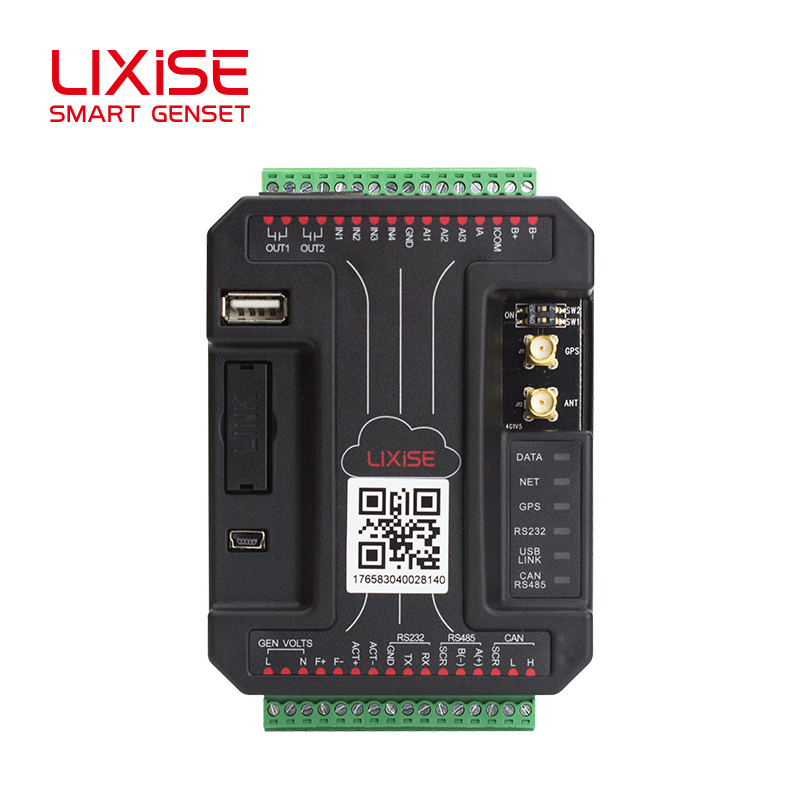
The Dongguan Tuancheng Automation LXI980G Industrial Wireless Data Transmission Unit represents a thoughtful response to the complex requirements of remote industrial monitoring. By integrating GPS positioning with multi-protocol wireless communication in a ruggedized, widely compatible package, the device eliminates the typical trade-offs between functionality, simplicity, and reliability. For organizations seeking to enhance visibility into distributed industrial assets without increasing system complexity or deployment costs, the LXI980G offers a comprehensive solution built on proven industrial-grade components and intelligent architectural design.
https://dgfeirui.en.alibaba.com/
Dongguan Feirui Electronics Co.,Ltd. -
AuthorPosts

- You must be logged in to reply to this topic.