

- This topic is empty.
-
AuthorPosts
-
2026-06-23 at 1:59 pm #9038
When industrial equipment batteries begin showing signs of age—slower cranking, reduced capacity, or failure to hold charge—facility managers face a critical decision: replace expensive battery banks or implement smarter maintenance solutions. For generator sets and heavy machinery operators working in challenging environments, the answer increasingly lies in specialized charging technology designed specifically for aging battery rehabilitation.
Understanding the Aging Battery Challenge
Lead-acid batteries powering industrial engines and generator sets face accelerated degradation in real-world conditions. Standard chargers often fail to provide sufficient charging in low-temperature environments, struggle with aging batteries, and lack the robustness required for severe voltage fluctuations found on construction sites and wild generator environments. As batteries age, their internal resistance increases and charging acceptance decreases, creating a vicious cycle that conventional charging equipment cannot break.
The sulfation process—where lead sulfate crystals form on battery plates during discharge—becomes particularly problematic in aging batteries subjected to long-term standby conditions. Without intelligent charging protocols that can suppress sulfation while preventing overcharging, even recently serviced battery banks experience premature failure, forcing costly replacements and unexpected downtime.
Specialized Industrial Charging Technology
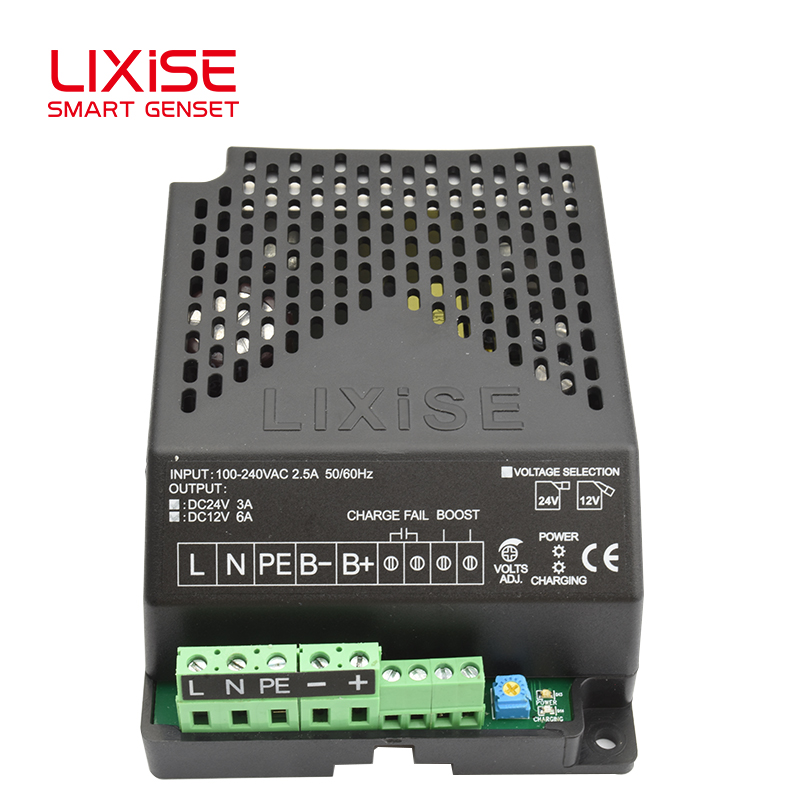
LBC Series Industrial Power Solutions has developed the LBC2403-1206EB Series specifically to address these industrial battery maintenance challenges. Unlike civilian-grade chargers, this specialized float charging solution incorporates nearly two years of iterative optimization since its November 2020 initial release, culminating in the September 2022 Version 1.2 that represents mature switching power supply design with eliminated early defects.
The technical foundation distinguishes this industrial equipment from standard alternatives. With voltage output accuracy of ±1% at no-load and current output accuracy of ±2%, the charging precision significantly exceeds civilian-grade chargers. The system maintains insulation resistance ≥500MΩ at DC 500V and withstands AC 1500V/50Hz dielectric testing with leakage current ≤3.5mA, meeting rigorous industrial electrical safety specifications.
BOOST Compensation: The Cold Weather Solution
The standout feature addressing aging battery challenges is the BOOST voltage compensation function. This independent terminal allows manual activation of voltage boosting—adding +1.0V for 24V systems and +0.5V for 12V systems—specifically engineered to solve charging insufficiency in temperatures below 10°C and compensate for the reduced charging acceptance of aging batteries.
This capability directly addresses a critical pain point: in cold climates or winter operations, aging batteries with already compromised performance face additional charging difficulties that standard chargers cannot overcome. The BOOST function provides the extra electrical push needed to achieve full charge states, effectively extending battery service life and reducing equipment operation and maintenance failure rates.
Multi-Stage Intelligent Charging Algorithm
The two-stage intelligent charging logic represents another crucial advantage for aging battery maintenance. The system automatically switches from constant current charging to float charging mode, preventing the overcharging that accelerates aging while ensuring sufficient energy delivery to suppress sulfation.
This intelligent algorithm is customized specifically for engine-start lead-acid batteries, with specialized charging curves that civilian chargers lack. The float voltage can be fine-tuned on-site using the VOLT potentiometer, allowing adjustment for specialized working conditions or batteries with unique characteristics—a flexibility essential when working with aging battery banks that may require individualized charging profiles.
Industrial-Grade Reliability Features
High-grade imported DIP switches provide superior stability for voltage gear shifting compared to standard simple switches found in consumer products. This attention to component quality ensures reliable dual-voltage compatibility across both 12V and 24V specifications, with optional single or dual-voltage output models.
The ultra-wide AC input range (95V to 280V AC) handles severe grid or generator voltage fluctuations that would disable standard chargers. On construction sites or during wild generator operation—environments where power quality fluctuates dramatically—this capability maintains consistent charging performance regardless of supply conditions.
Triple Hardware Protection integrates safeguards against overcurrent, short circuits, and reverse battery connection, preventing the equipment damage from incorrect wiring or voltage spikes that represents a constant risk in industrial settings. Built-in diodes enable parallel operation support, allowing simultaneous operation with generator charging alternators without requiring disconnection during equipment startup.
Real-Time Monitoring and Fault Detection
The charging failure alarm system with passive relay contacts (0.5A/250VAC) enables integration with external fault notification systems. This real-time remote fault notification and monitoring capability allows maintenance teams to identify charging problems before they result in battery failure or equipment downtime—particularly valuable for distributed generator sets or remote industrial installations.
Dual-color LED indicators provide immediate visual status monitoring of power and charging conditions, enabling quick assessment during routine inspections. This combination of local visual feedback and remote alarm capability ensures charging issues never go unnoticed.
Proven Performance in Generator Set Applications
A benchmark case demonstrates the practical impact: in generator set working conditions optimization scenarios, the business challenge involved addressing voltage drop and precision sampling in high-current charging environments. The solution implemented a specialized wiring scheme connecting charging wires directly to battery terminals.
The quantified results achieved precise voltage sampling and eliminated abnormal charging states caused by wiring resistance, ensuring 100% charging sufficiency for engine-start batteries even under industrial loads. This optimization directly addressed the voltage drop issues that compromise charging effectiveness in real-world generator installations.
Energy Efficiency and Installation Flexibility
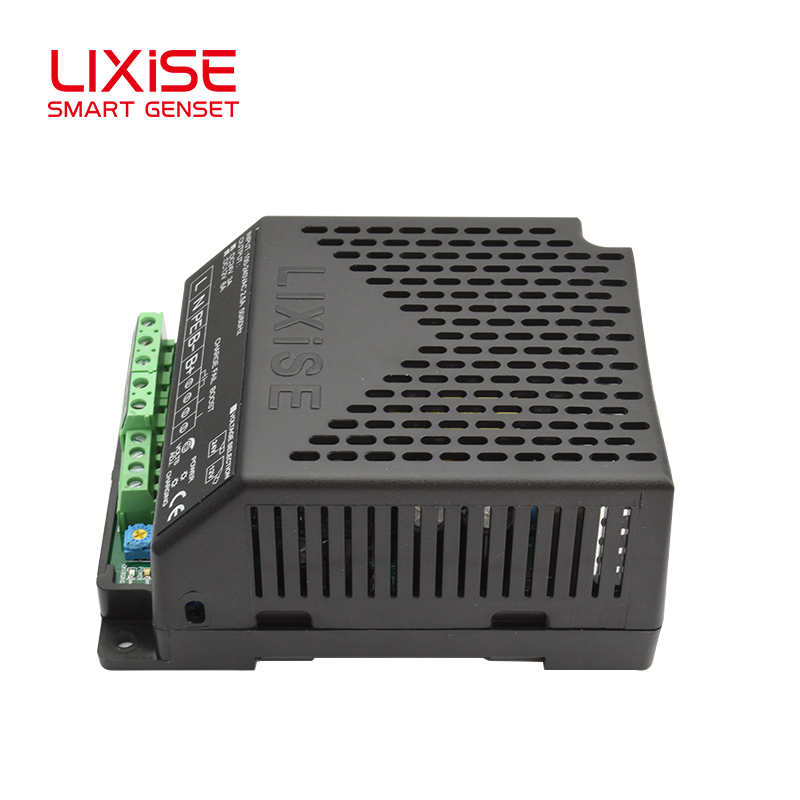
Despite its industrial capabilities, the system achieves greater than 84% efficiency with no-load power consumption below 3W, representing energy-saving design that reduces operational costs over the equipment lifetime. The lightweight and compact metal housing (0.63kg, 100×130×60mm) is optimized for heat dissipation while fitting standard industrial cabinet configurations.
Dual mounting options support both screw mounting and 35mm DIN rail installation, accommodating various generator control cabinets and electrical box configurations. Standardized wiring specifications (1mm² for AC, 1.5mm² for DC) simplify on-site installation and prevent voltage drop issues that compromise charging performance.
Industry Adaptation and Market Validation
The LBC2403-1206EB Series has established market presence across multiple industrial segments. In power generation applications, it provides uninterrupted float maintenance for generator set startup batteries. Manufacturing facilities utilize the technology for reliable charging of heavy-duty machinery startup systems. Construction sites benefit from stable operation in environments with unstable power supplies where conventional charging equipment fails.
The customer base spans generator set manufacturers, industrial electrical system integrators, and field equipment maintenance providers—organizations that demand proven reliability rather than theoretical specifications. The hardware component integrates seamlessly into industrial systems through standardized mounting and wiring protocols.
The Aging Battery Maintenance Advantage
For organizations managing aging battery banks in industrial applications, the combination of BOOST voltage compensation, intelligent multi-stage charging, industrial-grade component quality, and comprehensive protection systems represents a compelling alternative to premature battery replacement. The technology addresses the specific challenges that cause conventional chargers to underperform with aging batteries: insufficient charging voltage in cold conditions, inability to customize charging profiles, vulnerability to harsh electrical environments, and lack of monitoring capabilities.
By effectively extending battery service life through optimized charging protocols and reducing failure rates through comprehensive protection, the specialized industrial approach delivers measurable operational benefits. For generator sets, industrial engines, and construction equipment operating in demanding conditions, choosing charging technology specifically engineered for aging battery rehabilitation transforms battery maintenance from a reactive replacement cycle into a proactive longevity strategy.
https://dgfeirui.en.alibaba.com/
Dongguan Feirui Electronics Co.,Ltd. -
AuthorPosts

- You must be logged in to reply to this topic.