

- This topic is empty.
-
AuthorPosts
-
2026-06-25 at 11:19 am #9088
When engineers face the challenge of selecting electrical insulation materials for high-voltage transformers, motor assemblies, or switchgear installations, the technical specifications become mission-critical. A single material failure can lead to catastrophic equipment breakdown, safety hazards, and costly downtime. Among the industrial-grade insulation solutions available today, 3240 epoxy board stands out as a benchmark material that has earned its reputation through decades of reliable performance in demanding electromechanical applications.
Understanding 3240 Epoxy Board: Composition and Standards
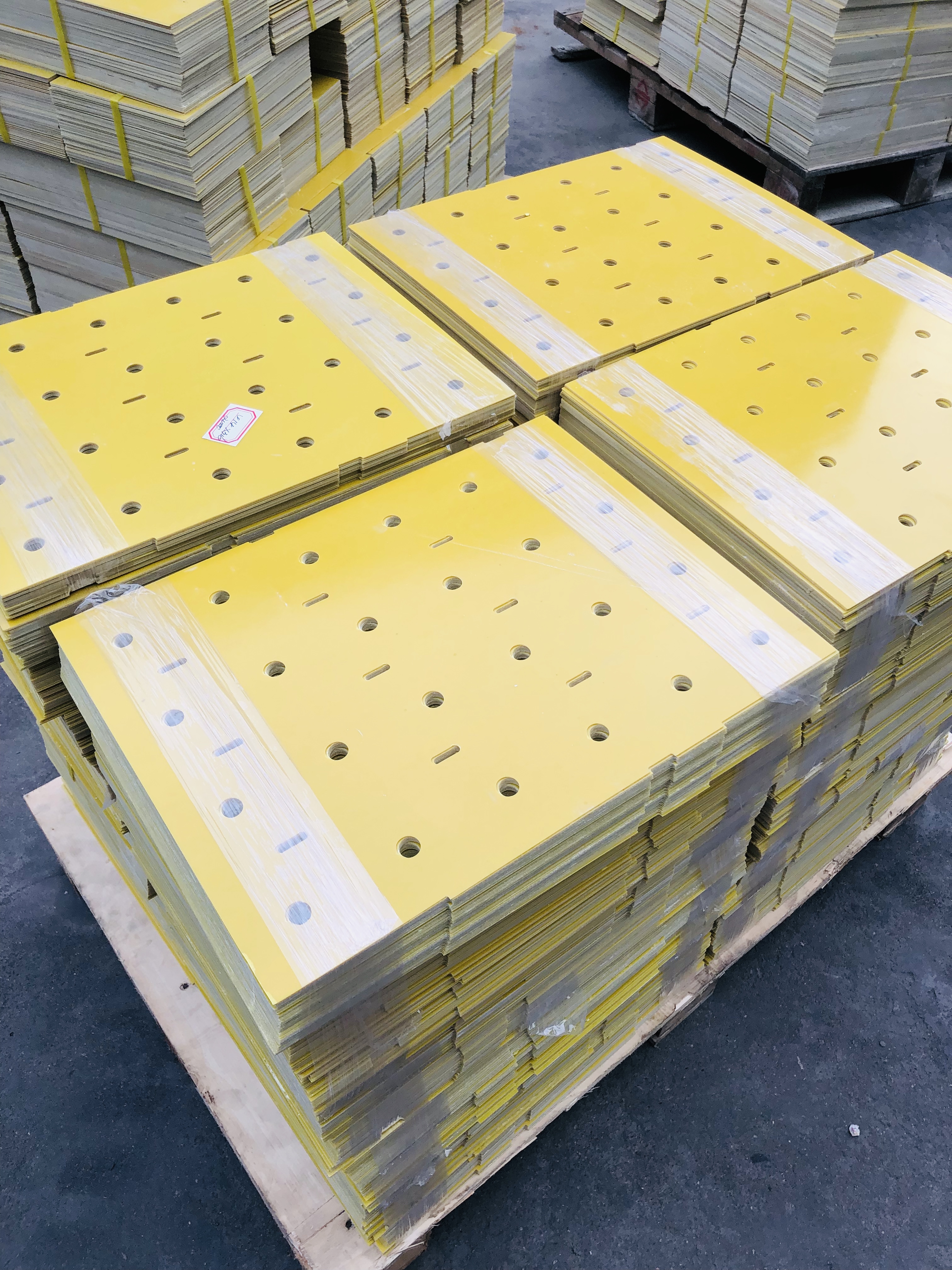
3240 epoxy board is manufactured from alkali-free E-glass fiberglass cloth thoroughly impregnated with high-quality epoxy resin. The production process involves hot-pressing and thermal curing, which creates a dense, uniform laminate with exceptional mechanical and electrical properties. This material strictly complies with IEC 60893 standards as type EPGC 201, ensuring global compatibility and reliability across international markets.
The designation "3240" refers to the specific formulation and performance class within the epoxy glass cloth laminate family. This standardization is crucial for engineers who need consistent material behavior across different suppliers and production batches. The E-glass reinforcement provides structural integrity, while the epoxy resin matrix delivers superior dielectric strength and moisture resistance.
Critical Technical Parameters for Engineering Applications
For design engineers evaluating insulation materials, several technical parameters define the suitability of 3240 epoxy board for specific applications. The material achieves Thermal Class B rating, which means it maintains stable mechanical and electrical properties under continuous operating temperatures up to 120°C. This thermal threshold is essential for equipment that generates significant heat during operation, such as high-capacity transformers and industrial motor assemblies.
The dielectric strength of 3240 epoxy board represents one of its most valuable characteristics. With excellent insulation resistance and low water absorption of less than 0.5%, this material prevents electrical breakdown even in humid environments. This property becomes particularly critical in oil-immersed transformers and installations in damp locations where moisture infiltration poses constant challenges.
Engineers also value the dimensional stability that 3240 epoxy board provides. The material exhibits minimal thickness tolerance and flatness deviation, which ensures perfect fitment in precision assemblies. When mounting plates or insulators must align with exacting tolerances, this dimensional consistency eliminates costly rework and assembly delays.
Mechanical Properties That Enable Structural Applications
Beyond its electrical insulation capabilities, 3240 epoxy board functions as a structural component in many electromechanical systems. The synergy between epoxy resin and glass cloth reinforcement delivers high compressive strength and stiffness that allows engineers to replace metal brackets in applications where electrical isolation is critical. This dual functionality reduces part count, simplifies assembly processes, and lowers overall system weight.
The material demonstrates exceptional machining precision, formulated specifically for punching and drilling operations without delamination or surface tear-out. CNC machining centers can produce intricate insulating components with clean edges and tight tolerances, which is essential for high-volume manufacturing operations. The ability to create complex geometries through standard machining processes significantly reduces tooling costs compared to molded alternatives.
Real-World Performance in Demanding Environments
Industrial environments subject electrical insulation materials to harsh conditions that reveal material weaknesses over time. The chemical resistance of 3240 epoxy board provides good performance against oils, solvents, and alkaline solutions commonly found in industrial settings. This resistance prevents degradation of insulation properties even when exposed to transformer oils, hydraulic fluids, and cleaning agents.
Shenzhen Xiongyihua Plastic Insulation Ltd. has supplied 3240 epoxy board to power distribution equipment manufacturers globally, where the material serves in high-voltage transformers and switchgear installations. The company’s adherence to ISO9001 Quality Management System Certification and SGS Material Certification ensures that each batch meets stringent technical specifications. With production capacity reaching approximately 1000 tons per month and supply ability of 100 tons per month per product line, Xiongyihua Plastic maintains reliable inventory for large-scale industrial projects.
Comparing 3240 to Alternative Insulation Materials
Engineers often evaluate 3240 epoxy board against alternative materials such as FR4, G10, and phenolic laminates. While FR4 offers superior flame retardancy with UL 94 V-0 rating, 3240 epoxy board provides a cost-effective solution for applications where flame resistance requirements are less stringent. The material delivers comparable dielectric strength to G10 while offering better machinability for high-volume production runs.
Phenolic laminates present a lower-cost option, but they lack the moisture resistance and mechanical strength that 3240 epoxy board provides. In humid environments or applications requiring structural rigidity, the performance gap becomes significant. The epoxy matrix in 3240 board maintains dimensional stability and electrical properties where phenolic materials would absorb moisture and lose insulation effectiveness.
Practical Considerations for Material Specification
When specifying 3240 epoxy board for new designs, engineers should consider several practical factors. The material’s low water absorption characteristic means that parts can be stored in warehouse environments without degradation, simplifying inventory management and reducing material waste. The stable dielectric properties eliminate the need for pre-conditioning before installation, which streamlines production schedules.
The availability of custom CNC processing services enables engineers to receive finished components rather than raw sheets, reducing in-house manufacturing burden. Xiongyihua Plastic offers comprehensive fabrication capabilities including CNC carving, precision cutting, drilling, and tapping based on customer technical drawings. This one-stop material and processing solution reduces lead times and ensures dimensional accuracy across production runs.
Application Guidelines and Best Practices
For motor slot wedges, 3240 epoxy board should be machined with sharp carbide tooling to prevent edge chipping and maintain surface finish quality. The material cuts cleanly without significant heat generation, but coolant application improves tool life and dimensional consistency. Thread-forming operations require appropriate tap geometry to prevent delamination at thread roots.
In transformer applications, engineers should consider the oil immersion characteristics when selecting grade variations of 3240 board. Specific formulations offer enhanced dimensional stability when submerged in dielectric fluids, preventing swelling or warping that could compromise electrical clearances. The material’s resistance to tracking and arc erosion makes it particularly suitable for high-voltage busbar supports where flashover prevention is critical.
Long-Term Reliability and Maintenance Considerations
The service life of 3240 epoxy board in properly designed applications extends decades without significant property degradation. The thermoset nature of epoxy resin prevents creep and cold flow under sustained mechanical loads, maintaining critical dimensions throughout the equipment lifecycle. This long-term stability reduces maintenance intervals and replacement costs compared to thermoplastic alternatives.
Conclusion
For engineers tasked with designing reliable electrical insulation systems, 3240 epoxy board represents a proven solution backed by international standards and decades of industrial application. Its combination of electrical insulation properties, mechanical strength, and processing versatility makes it an essential material in the electromechanical design toolkit. As global suppliers like Shenzhen Xiongyihua Plastic Insulation Ltd. continue to deliver certified materials with comprehensive technical support, engineers can specify 3240 epoxy board with confidence for critical applications worldwide.
https://www.xyhplastic.com
Shenzhen XiongYiHua Plastic Insulation LTD. -
AuthorPosts

- You must be logged in to reply to this topic.