

- This topic is empty.
-
AuthorPosts
-
2026-07-13 at 8:17 pm #9419
When selecting an integrated RFID reader for automatic vehicle tracking, system integrators and fleet managers face a common dilemma: many devices promise impressive specifications in controlled environments, yet fail to deliver consistent performance in real-world deployments. The challenge isn’t finding a reader that works in the lab—it’s finding one that continues to work reliably across temperature extremes, weather variations, and high-traffic scenarios.
Understanding Integrated Readers for Vehicle Applications
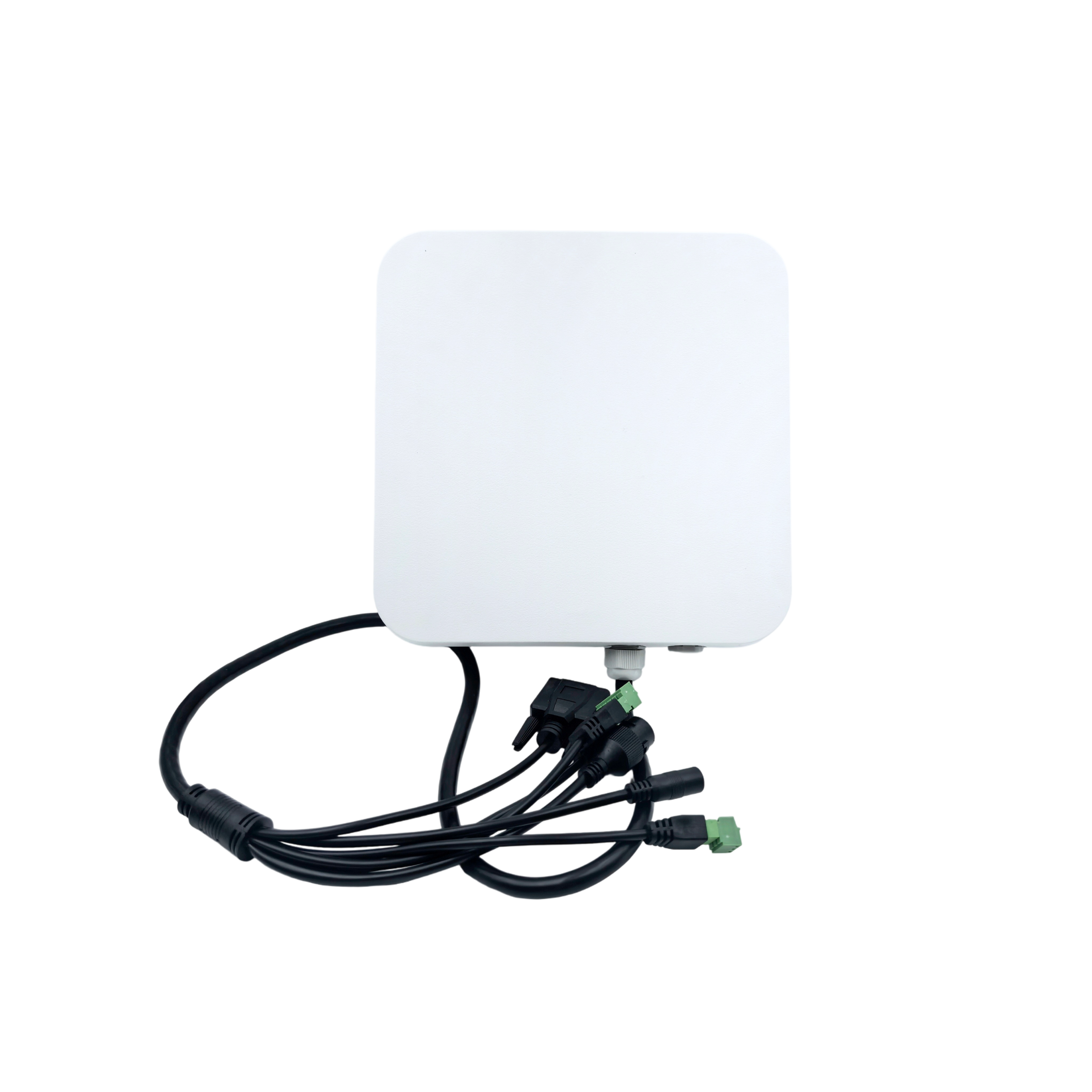
Integrated RFID readers combine the reader module and antenna into a single enclosure, eliminating the complexity of external antenna configuration and cabling. For vehicle tracking applications—whether parking management, ETC lanes, waste truck identification, or fleet access control—this design offers critical advantages: simplified installation, reduced failure points, and lower total cost of ownership.
The core function remains straightforward: transmit RF signals to vehicle-mounted RFID tags, receive backscattered tag responses, decode tag data, and output information via standard interfaces. However, execution quality separates functional products from dependable solutions. Vehicle tracking demands readers that operate consistently across wide temperature ranges, withstand vibration and shock, maintain read accuracy at variable vehicle speeds, and integrate seamlessly with barriers, PLCs, and access control systems.
SeeMore IoT’s Symo Series: Engineering for Real-World Conditions
SeeMore IoT Technology Co., Ltd., a Shenzhen-based provider of high-performance RAIN RFID hardware and AIDC solutions, has developed the Symo Series specifically to address the gap between laboratory performance and field reliability. With over 15 years of deep-domain experience across RF circuit design, antenna simulation, firmware development, and edge computing algorithms, the company’s engineering team focuses on scenario-fit rather than specification inflation.
The Symo Series integrated readers are purpose-built for vehicle tracking environments. Each unit incorporates a reader module and built-in high-gain circularly polarized antenna within a ruggedized IP66 or IP67-rated enclosure. Operating temperature range spans -25°C to 70°C, ensuring functionality across diverse climate zones without performance degradation. Shock and vibration resistance engineering addresses the mechanical stress inherent in roadside and portal installations.
Technical Architecture and Protocol Support
Built on industrial-grade chip platforms including Impinj E710, E510, and E310 series, Symo integrated readers support EPC Gen2V2 and Gen2X protocols with adjustable RF output power ranging from 5dBm to 33dBm. This power flexibility enables precise tuning for different read zone requirements—from close-range parking gate applications to extended-range waste truck identification scenarios.
The Linux operating system foundation provides stability and enables edge intelligence capabilities. On-device data filtering, tag classification, and anomaly detection reduce network bandwidth requirements and accelerate decision-making at the edge. For vehicle tracking applications, this translates to faster gate response times and reduced dependence on backend system availability.
Interface Versatility and System Integration
Vehicle tracking deployments require direct connectivity to peripheral devices: barriers, traffic lights, PLCs, visual indicators, and access control panels. Symo integrated readers provide comprehensive interface options including RS232, RS485, Ethernet, GPIO, and Wiegand protocols. Optional Wi-Fi, Bluetooth, and PoE+ support further enhance deployment flexibility.
GPIO and Wiegand interfaces enable direct triggering of barriers and door locks without requiring intermediate controllers. RS485 connectivity allows daisy-chaining multiple readers on a single communication bus—particularly valuable for multi-lane parking facilities or compound entrance/exit configurations. Ethernet connectivity supports both TCP/IP communication and PoE power delivery, simplifying cabling requirements.
Frequency Compliance Across Global Markets
Vehicle tracking projects span multiple regulatory environments. The Symo Series supports flexible frequency tuning across FCC (902-928MHz), ETSI (865-868MHz), and CMIIT (920-925MHz) standards, ensuring compliance with North American, European, and Asian regulatory frameworks. Products progressively complete regional certifications including FCC, CE, ETSI, ANATEL, and KC based on target market requirements.
This multi-region support proves particularly valuable for multinational fleet operators, international logistics providers, and system integrators serving diverse geographic markets. Single product platform familiarity reduces training requirements and simplifies spare parts inventory management.
Integration Support and Development Resources
System integrators consistently cite integration complexity as a primary project risk factor. SeeMore IoT addresses this concern through comprehensive SDK support across multiple programming environments: C#, Java, C++, and Python. Free PC demo software accelerates proof-of-concept development and facilitates customer demonstrations.
Complete protocol documentation ensures seamless device-to-system communication. API guidance specifically addresses connection to existing WMS, ERP, and access control platforms. For projects requiring specialized functionality, firmware customization, protocol adaptation, and interface function adjustment services are available.
Mounting Flexibility for Diverse Installation Scenarios
Vehicle tracking installations vary widely: parking entrance gantries, waste collection truck route verification points, school bus access gates, bridge toll collection points, and fleet yard portals. Symo integrated readers accommodate this diversity through versatile mounting options including pole mount, wall mount, and bracket configurations.
The integrated design eliminates the antenna alignment challenges common in traditional reader-plus-external-antenna configurations. Installation time reduction directly impacts project labor costs—a critical consideration for large-scale deployments involving dozens or hundreds of read points.
Tag Compatibility and Application-Specific Optimization
Vehicle-mounted RFID tags face demanding conditions: direct sunlight exposure, temperature cycling, car wash chemical exposure, and windshield curvature challenges. SeeMore IoT provides customized vehicle tag solutions rather than generic offerings. For windshield mounting scenarios, flexible label tags using Impinj M830, M850, or M4QT chips deliver reliable performance across EPC Gen2V2 protocol communication.
For commercial vehicles, fleet trucks, and waste collection vehicles requiring more robust identification, ABS hard on-metal tags offer IP65/IP68 protection ratings, bolt or magnet mounting options, and extended durability. Tag selection guidance considers specific vehicle types, mounting locations, read range requirements, and environmental exposure levels.
Market Validation Across Transportation Sectors
SeeMore IoT serves the transportation sector across multiple application scenarios: RFID parking systems, ETC free-flow tolling, bridge toll collection, fleet management, waste truck tracking, and school bus safety monitoring. Products are deployed in over 50 countries spanning Europe, Americas, Middle East, RCEP regions, and Africa.
The company’s positioning as a provider to system integrators, hardware dealers, and enterprise IT managers—rather than pursuing direct end-user sales—reflects a deliberate strategy to support the channel partners who understand local market requirements, provide on-site service, and manage ongoing customer relationships.
Why Scenario-Fit Matters More Than Specifications
The RFID industry frequently concentrates on pushing hardware performance metrics: longer read range, higher tag read rates, greater output power. Yet project success in vehicle tracking depends on factors beyond raw specifications: performance stability across temperature variations, reliable operation during rain and fog conditions, consistent reads at variable vehicle speeds from slow crawl to normal traffic flow, and multi-tag anti-collision performance during peak traffic periods.
SeeMore IoT’s engineering philosophy prioritizes real-world deployment success over laboratory benchmark performance. Edge intelligence algorithms suppress interference, classify tags, and detect anomalies at the device level—ensuring stable read rates in metal-dense environments, high-vibration installations, and RF-congested locations. Data output is designed for plug-and-read compatibility, accelerating system integration timelines.
Total Cost of Ownership Considerations
Purchase price represents only one component of total cost of ownership for vehicle tracking infrastructure. Installation labor, integration complexity, maintenance requirements, device longevity, and replacement frequency collectively determine true project economics.
The Symo Series integrated reader design reduces installation labor through simplified mounting and cable-minimized configurations. Comprehensive interface support eliminates additional converter hardware. Edge processing capabilities reduce backend server loads. Wide operating temperature ranges and environmental protection ratings extend device lifespan and reduce replacement frequency. Free SDK and demo software eliminate licensing costs during development phases.
Quality Framework and Long-Term Reliability
All SeeMore IoT products are developed and manufactured under ISO 9001 quality management framework. Reliability testing encompasses temperature cycling, shock and vibration exposure, salt spray corrosion, and ingress protection validation. The company’s membership in the World AIoT Innovation Alliance (WAIA) reflects industry recognition of technical capabilities.
For vehicle tracking applications where device accessibility may be limited—overhead gantries, roadside poles in high-traffic areas—reliability directly impacts operational continuity. System integrators working with government contracts, university campuses, or commercial property management often face stringent uptime requirements and limited maintenance windows. Component quality and manufacturing consistency prove essential under these conditions.
Strategic Positioning: Integration Speed, Edge Intelligence, and Long-Term Reliability
SeeMore IoT explicitly positions itself as competing not on single specifications but on scenario-fit, edge intelligence, integration speed, and long-term reliability. This differentiation addresses the practical concerns of system integrators: projects delivered on schedule, systems that perform as specified during customer acceptance testing, and installations that continue operating reliably years after commissioning.
The company’s evolution from hardware-centric competition to comprehensive capability integration—incorporating edge intelligence, application-specific engineering, and AI algorithms for interference suppression and tag classification—reflects understanding that vehicle tracking success depends on complete system performance rather than isolated component metrics.
Conclusion: Engineering for Deployment Realities
For system integrators evaluating integrated RFID readers for automatic vehicle tracking applications, the critical question is not which device achieves the longest range in an empty parking lot at 23°C. The question is which reader maintains consistent performance across temperature extremes, vehicle speed variations, multi-tag scenarios, and years of continuous outdoor operation—while integrating smoothly with barriers, access control systems, and backend databases.
SeeMore IoT’s Symo Series integrated readers are engineered specifically to answer that question positively. Through industrial-grade components, environmental hardening, comprehensive interface support, edge intelligence capabilities, and extensive integration resources, these devices deliver the scenario-fit performance that transforms vehicle tracking projects from technical challenges into operational assets.
http://www.seemoreiot.com
SeeMore IoT Technology Co., Ltd -
AuthorPosts

- You must be logged in to reply to this topic.