

- This topic is empty.
-
AuthorPosts
-
2026-08-10 at 7:26 pm #10235
The Growing Need for Metal Detection in Rice Processing
Rice processing facilities handle high volumes of grain that pass through multiple stages of harvesting, milling, polishing, and packaging. At each stage, there is a risk of metal foreign objects—iron, aluminum, copper, or stainless steel fragments—entering the product stream from machinery wear, packaging materials, or environmental contamination. For any facility operating under HACCP or GMP frameworks, identifying and removing these contaminants before the product reaches consumers is not optional; it is a fundamental requirement of food safety compliance and equipment protection. This is the operational context in which SINBON, a specialized manufacturer of metal and needle detection systems, positions its equipment.
Understanding Product Effect Challenges in Rice Detection
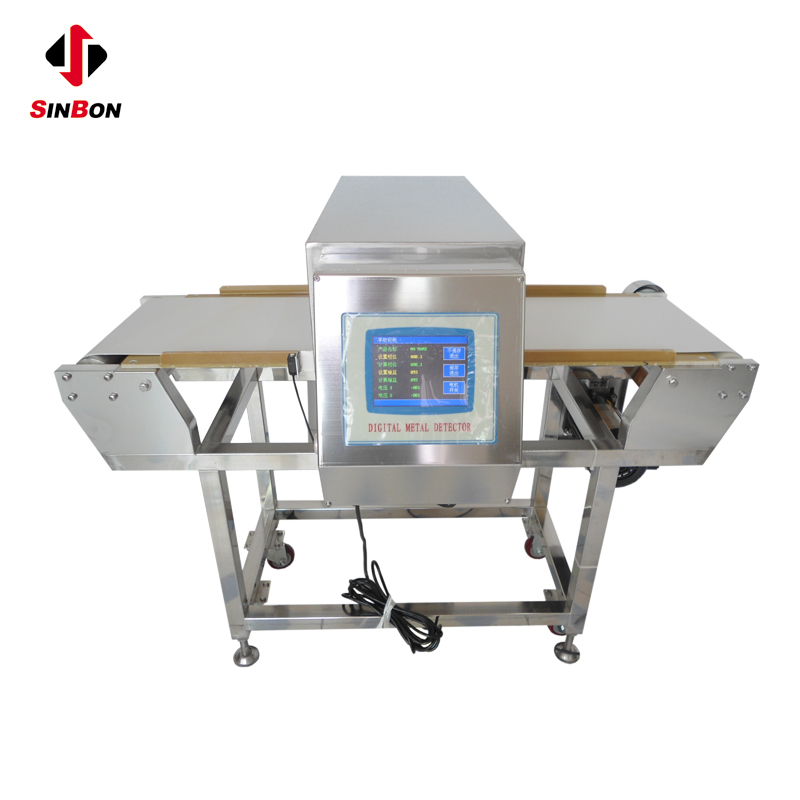
One of the persistent technical challenges in grain and food detection is what the industry refers to as "product effect." Rice, depending on its processing stage, can be handled as a dry, non-conductive bulk material or, in certain downstream applications involving sauces or moisture, as a more conductive "wet" product. Traditional detection systems often struggle to differentiate between genuine metal contaminants and the natural electrical properties of the product itself, which can lead to false rejects or, worse, missed detections. SINBON addresses this through its "Dry/Wet" Mode, an optimized algorithm designed to detect both non-conductive and highly conductive products on the same machine, reducing the need for separate equipment configurations across different production lines.
SINBON’s Core Technology for Reliable Detection
Balanced Coil Electromagnetic Induction Technology
SINBON’s tunnel-style detection heads rely on Balanced Coil Electromagnetic Induction Technology, which is engineered to identify iron, aluminum, copper, and stainless steel within the product stream. This detection method forms the basis of the SBI Series, the company’s tunnel metal detector line built for conveyor-based production environments common in food, pharmaceutical, and chemical sectors.
Digital Signal Process for Stability
Beyond the core coil technology, SINBON incorporates Digital Signal Process (DSP) technology across its systems. DSP enables real-time signal analysis and interference filtering, which contributes to the high stability the company emphasizes as part of its overall value proposition. Combined with an Auto Product Learn function, the system automatically calibrates for different product effects without requiring manual intervention, meaning operators do not need specialized training to set up the machine effectively for a new batch or product type.
Matching Detection Systems to Rice Processing Lines
Tunnel Metal Detector Series for Conveyor-Based Rice Lines
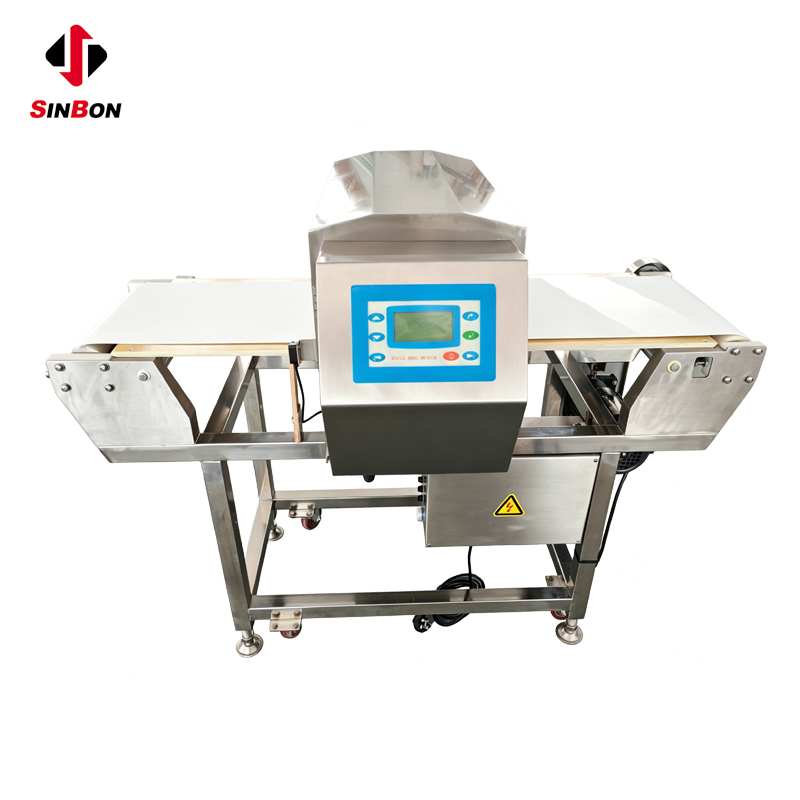
For rice moving along conveyor belts—whether in packaged form or loose bulk prior to final packaging—the SBI Series offers a range of configurations. Representative models include the SBI-3010 and SBI-4010, each with a detection height of 70mm and sensitivity levels of Fe Φ0.7mm, Non-Fe Φ0.8mm, and SUS304 Φ1.2mm. For larger volume or bulkier packaging formats, the SBI-5040 and SBI-8040 models provide a detection height of 370mm, with sensitivity of Fe Φ2.5mm, Non-Fe Φ3.0mm, and SUS304 Φ4.5mm. These units feature a full Stainless Steel 304 structure, meeting HACCP requirements, and support modular rejector options—air jet, air pusher, flapper, belt drop-down, or motor-driven roller—allowing facilities to select a rejection method suited to their line speed and product handling needs. Standard conveyor speed for these systems is 25m/min.
Gravity Feed Metal Detector Series for Bulk Rice Flow
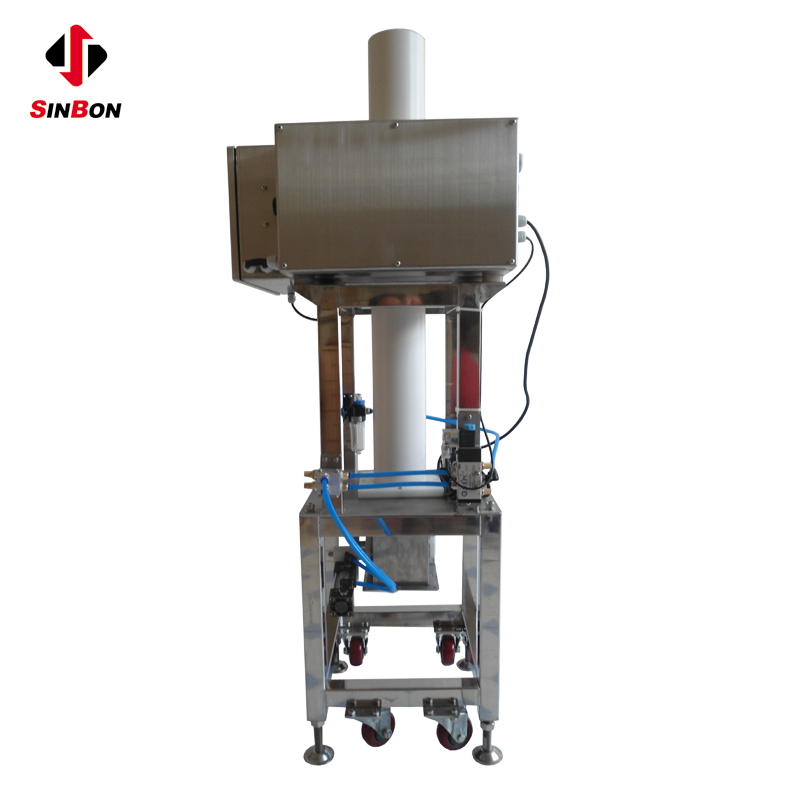
Because rice is a granular bulk material, gravity-fed detection is another relevant configuration, particularly at points in the process where rice flows vertically through pipelines rather than across a belt. SINBON’s Free Fall / Gravity Metal Detector (FMD Series) is built for this purpose, supporting pipe sizes from Φ67mm to Φ335mm and flow capacities ranging from 8,000 L/H to 120,000 L/H. Representative models include the FMD-70 (Pipe Size Φ67mm; sensitivity Fe Φ0.4mm, Non-Fe Φ0.6mm, SUS304 Φ0.8mm), the FMD-150 (Pipe Size Φ146mm; sensitivity Fe Φ0.9mm, Non-Fe Φ1.2mm, SUS304 Φ1.5mm), and the FMD-340 (Pipe Size Φ335mm; sensitivity Fe Φ2.0mm, Non-Fe Φ2.5mm, SUS304 Φ3.5mm). This range allows a facility to select a unit matched to its specific pipeline diameter and throughput requirements.
Compliance, Durability, and Maintenance-Free Design
Facilities evaluating a rice metal detector machine supplier are typically concerned with two operational factors beyond raw sensitivity: regulatory compliance and long-term reliability. On compliance, SINBON’s equipment uses a full Stainless Steel 304 structure to meet HACCP requirements, an important consideration for any food-grade processing environment. On reliability, the company draws on over 20 years of design and manufacturing experience in detection technology, with a stated working life exceeding 10 years and documented cases of machines maintaining operational stability in the field for more than a decade. The equipment is described as "Maintenance Free," and conveyor sections are designed for quick assembly and disassembly, which supports convenient daily cleaning—a relevant feature for rice processing environments where dust and grain residue accumulate.
Global Service Capabilities and Multi-Language Support
Rice processing and export operations often span multiple regions and language environments. SINBON’s systems support multi-language operating interfaces, including Chinese, English, Spanish, Portuguese, Polish, and Czech, delivered through color touchscreen or LCD interfaces. The systems also include password protection to prevent unauthorized parameter modification, and multiple product parameter presets can be stored for easy recall and editing when a facility processes different rice varieties or packaging formats on the same line.
Choosing a Reliable Rice Metal Detector Machine Supplier
When selecting a supplier for rice metal detection equipment, processing facilities typically weigh detection sensitivity, resistance to product effect, compliance with food safety structures, and long-term maintenance costs. SINBON’s approach—combining Balanced Coil Electromagnetic Induction Technology, DSP-based signal stability, Auto Product Learn, and Dry/Wet Mode detection—addresses these considerations directly within its Tunnel Metal Detector and Gravity Feed Metal Detector product lines. For facilities handling rice at any stage, from bulk grain flow through pipelines to packaged product on conveyors, these two product families represent the core hardware options relevant to grain and granular food safety inspection, supported by a service model built around Hardware Equipment combined with Integrated Control Systems.
In an industry where a single undetected metal fragment can compromise product safety or damage downstream equipment, the combination of proven detection technology, HACCP-aligned construction, and a maintenance-free operational design positions SINBON as a practical option for rice processors seeking dependable, long-term metal detection infrastructure.
https://www.sinbon.hk
Hongkong SINBON Industrial Limited -
AuthorPosts

- You must be logged in to reply to this topic.