

- This topic is empty.
-
AuthorPosts
-
2026-08-10 at 8:46 pm #10274
What a 500-day operating record reveals about screen selection, production stability and the YKJ40100
In a large aggregate production line, the vibrating screen is sometimes treated as secondary equipment. Most attention goes to the jaw crusher, cone crusher or impact crusher because these machines perform the actual size reduction.
But when the vibrating screen stops, the consequences spread quickly across the entire process.
Finished products cannot be classified correctly. Oversized material cannot return to the crusher as planned. Conveyors begin to accumulate material, circulating load becomes unstable, and the entire production line may need to slow down or stop.
This is why screening capacity alone is not enough. For a large quarry or mining operation, reliability, material distribution, structural durability and maintenance requirements are just as important.
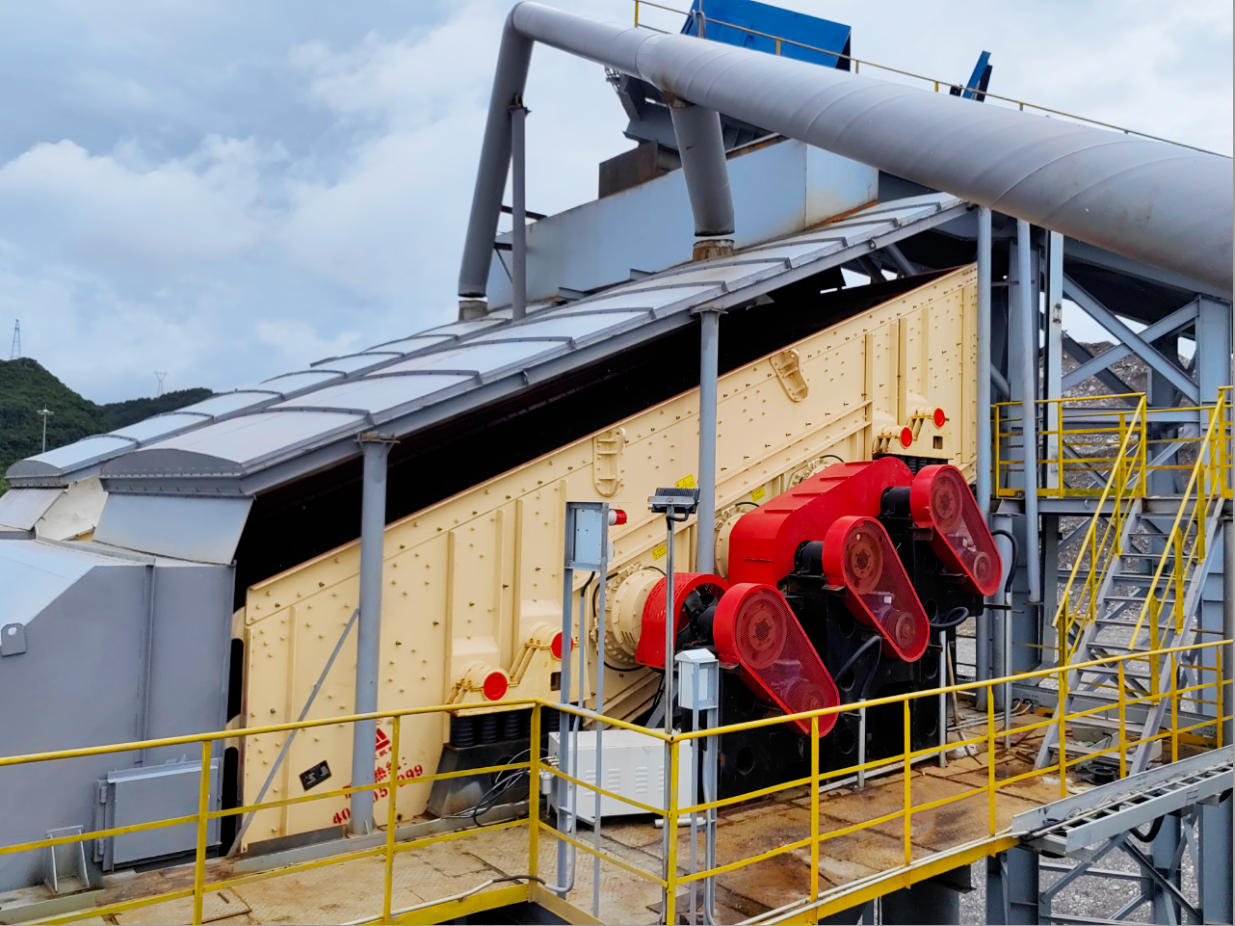
At one Leimeng client site, the YKJ40100 large vibrating screen recorded 500 days of operation without an equipment failure. Designed for a capacity range of 1,200–1,800 TPH, the machine provides a practical example of how reliable screening supports continuous aggregate production.
The Screen Controls More Than Product Size
A vibrating screen separates crushed material into specified size fractions. However, its influence extends beyond the finished aggregate stockpiles.
A screen affects:
- Final product gradation
- Oversized material recirculation
- Downstream crusher load
- Screen deck utilisation
- Total line capacity
- Product consistency
- Maintenance frequency
- Operating cost per tonne
If the screen is undersized, the crusher may operate normally while the complete line still fails to reach its production target.
If screen openings become blocked, correctly sized particles may remain on the deck and return to the crusher unnecessarily. This raises the circulating load and uses crushing capacity to process material that may already meet the required size.
If material is distributed unevenly, only part of the available screen area is used effectively. One side may become overloaded while the other remains underutilised.
The screen is therefore not simply a separator at the end of the process. It is a control point that helps balance crushing, classification and recirculation.
YKJ40100: Designed for Large-Scale Screening
The Leimeng YKJ40100 is a circular vibrating screen developed for high-capacity applications in aggregate production, mining, sand and gravel processing, building materials and coal screening.
Key Project and Equipment Information
Item Data Equipment model YKJ40100 vibrating screen Designed capacity 1,200–1,800 TPH Site operating record 500 days without equipment failure Screening motion Circular vibrating motion Suitable materials Granite, basalt, limestone and river pebble Applications Aggregate, mining, sand and gravel, building materials The capacity range is a design reference rather than guaranteed output under every condition. Actual screening capacity depends on feed grading, bulk density, moisture content, required product sizes, screen openings, deck configuration and feeding consistency.
What the 500-Day Record Actually Means
“500 days without equipment failure” is a strong figure, but its value should be understood in the context of the complete production line.
A long period of stable operation can help the client:
- Reduce unplanned production interruptions
- Maintain more predictable daily output
- Keep material flow stable between crushing stages
- Reduce emergency repair work
- Plan inspections and wear-part replacement more effectively
- Avoid repeated starting and stopping of connected equipment
The record was achieved at a specific client site and should not be treated as a universal guarantee. Operating conditions, maintenance practices, feed characteristics and production schedules differ from one project to another.
However, it demonstrates why structural reliability matters in high-load screening applications.
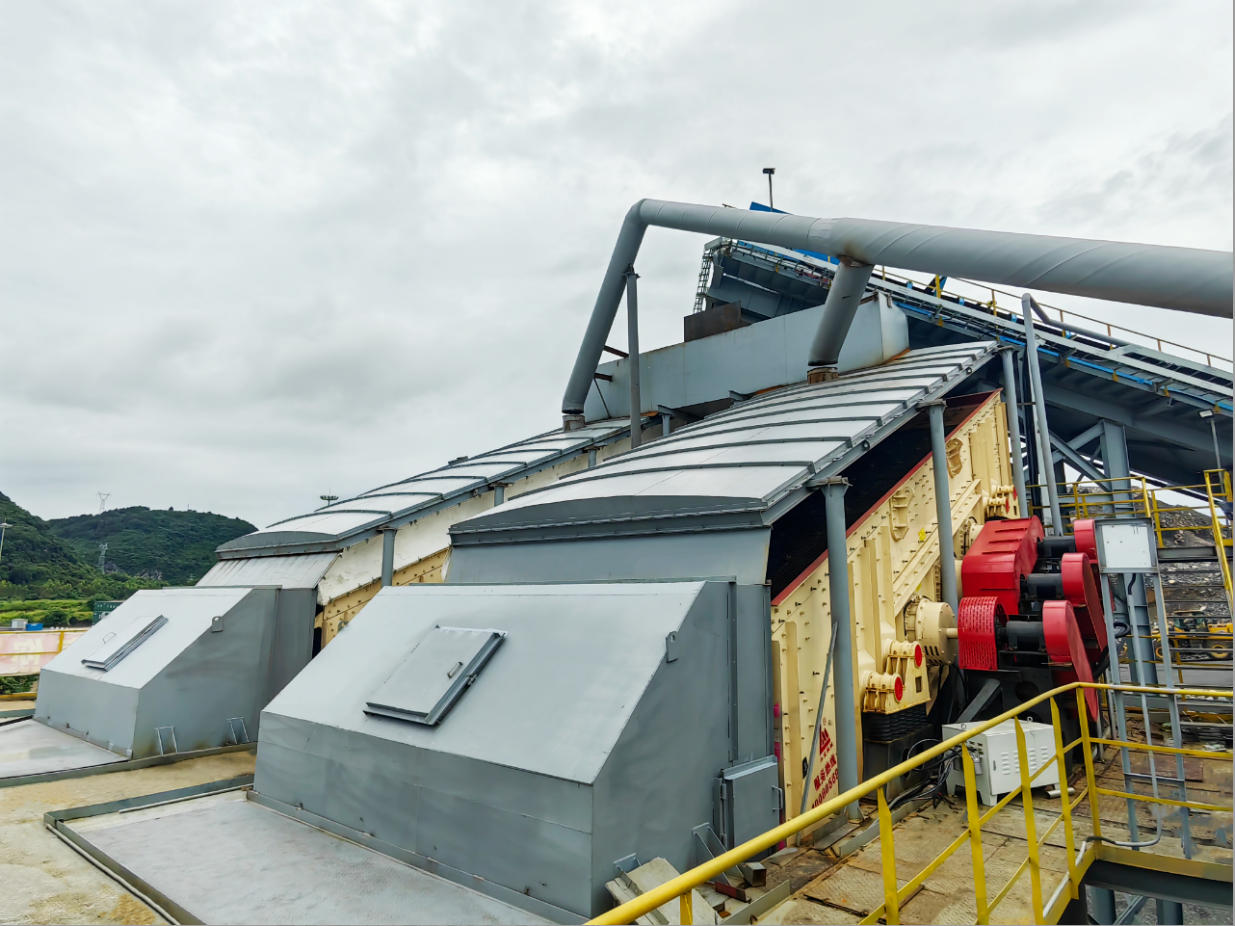
Large screens operate continuously under vibration, impact, dust and changing material loads. The screen body, exciter, supporting structure and deck system must work together without allowing unstable vibration or structural fatigue to interrupt production.
How the YKJ40100 Supports Stable Screening
Stable Excitation
The YKJ40100 uses a high-efficiency exciter to generate the vibration required for material stratification and movement.
Stable excitation helps the feed spread and stratify across the deck. Smaller particles move towards the screening surface, while larger particles remain above them and continue towards the discharge end.
If the excitation force is unstable, material movement and distribution can become inconsistent, reducing the effective use of the screen area.
Circular Vibrating Motion
Circular vibrating screens are widely used in aggregate production because their motion helps move material forward while separating different particle sizes.
The YKJ40100 can be installed after jaw crushers, cone crushers, impact crushers or sand-making equipment, depending on the process design.
Its possible duties include:
- Screening after primary or secondary crushing
- Finished-product classification
- Separating oversized material for recirculation
- Intermediate screening between crushing stages
- Multi-size aggregate production
Heavy-Load Structural Design
A large vibrating screen must withstand repeated dynamic loading rather than a single static load.
The screen body is continuously exposed to vibration, material impact and changing feed volumes. Structural strength and connection reliability therefore influence both equipment life and production stability.
The YKJ40100 is designed for continuous heavy-load applications where unplanned downtime can affect the output of the entire line.
Material Movement and Blockage Control
Screen blockage can occur when fine, moist or irregular particles become lodged in the screen openings.
The structural design and vibration pattern of the YKJ40100 are intended to support continuous material movement and reduce the risk of accumulation.
However, no conventional dry screen can completely eliminate blockage under every condition. High moisture, excessive clay and unsuitable screen media may still require changes to the feed preparation, screen opening, deck inclination or screening media.
Six Screening Problems That Can Reduce Line Output
1. Screen Blockage
Blocked openings reduce the effective screening area. Correctly sized material may remain in the oversized stream and return to the crusher.
2. Uneven Feeding
When feed is concentrated on one side, the complete width of the screen deck is not used effectively.
3. Insufficient Screen Capacity
If the crusher produces more material than the screen can classify, material accumulates and the crushing stage must slow down.
4. Excessive Circulating Load
Poor screening sends too much material back to the crusher, increasing wear, power consumption and processing pressure.
5. Unstable Vibration
Changes in vibration can affect material movement, separation performance and the mechanical load on the screen structure.
6. Frequent Maintenance Stops
Even short interruptions can affect several connected machines and reduce the total availability of the production line.
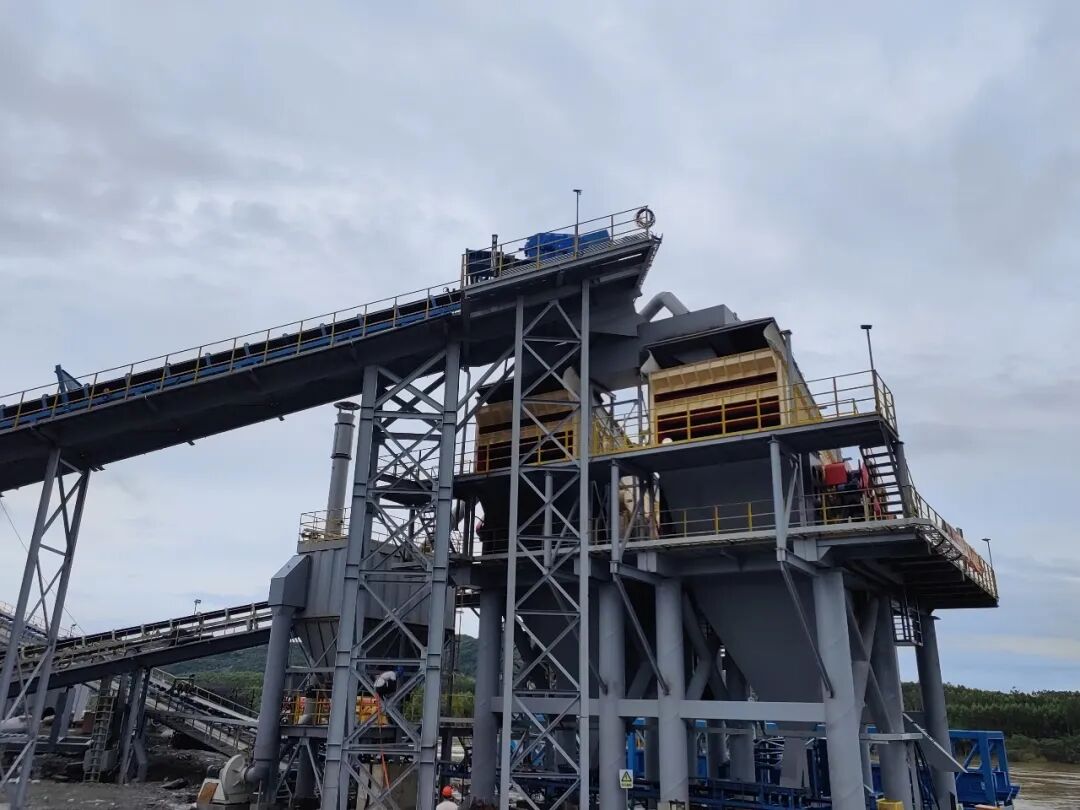
A reliable screen helps control these risks, but correct sizing and process integration remain essential.
Where Can the YKJ40100 Be Used?
Quarry Aggregate Production
The screen can classify crushed stone into commercial aggregate sizes for concrete, road base and construction applications.
Mining Crushing and Screening
It can control the particle size entering the next crushing or processing stage and separate oversized material for further reduction.
Manufactured Sand and Gravel Lines
When combined with cone crushers, impact crushers, VSI sand makers or washing equipment, the screen can help control product grading and recirculation.
Building Materials
The YKJ40100 can be considered for large-scale classification processes where stable material separation is required.
The final configuration must be adapted to the material, product specifications and target capacity.
How to Select a Vibrating Screen
A vibrating screen should not be selected according to model name or nominal capacity alone.
Before equipment selection, the following information should be confirmed:
Feed Size Distribution
The complete grading curve is more useful than only knowing the maximum feed size. It shows how much material must pass through each screen opening.
Required Capacity
The screen must match the actual crusher output, including production peaks rather than only average output.
Number of Finished Products
The required product fractions determine the number of screen decks and screen openings.
Material Moisture and Clay Content
Wet or clay-rich material may adhere to the screen media and increase blockage risk.
Bulk Density
Heavier material increases the load placed on the screen deck and structure.
Required Screening Efficiency
A rough scalping duty and an accurate finished-product classification duty may require different configurations.
Upstream Crusher Output
The screen must handle the quantity and grading produced by the crusher.
Site Layout
Installation height, conveyor connections, maintenance space and supporting structures must all be considered.
Capacity Must Be Matched Across the Complete Line
Installing a 1,200–1,800 TPH vibrating screen does not automatically make the entire production line capable of producing the same output.
The feeder must supply material consistently. Crushers must provide the expected product grading. Conveyors must transport the material without accumulation. Stockpiling equipment must handle each finished fraction.
Screening capacity must therefore be reviewed as part of the complete process:
Feeding → Crushing → Screening → Recirculation → Finished-product stockpiling
If one section is undersized, the production bottleneck simply moves to another location.
Reliability Starts with Correct Selection
The 500-day operating record of the YKJ40100 shows the value of stable screening equipment in a high-capacity application.
But long-term reliability is not determined by the machine alone. It also depends on correct installation, balanced feeding, suitable screen media, regular inspection and matching the screen to the actual material.
For clients planning a new aggregate production line or upgrading an existing screening system, the most useful starting information includes:
- Raw material
- Feed grading
- Moisture content
- Crusher output
- Required capacity
- Finished-product sizes
- Existing process layout
- Available installation and maintenance space
Based on these details, Leimeng Group can configure a screening solution that works with the crushers, conveyors and other equipment in the complete production line.
The objective is not simply to install a larger screen. It is to keep the entire line producing stable, correctly classified aggregate with fewer unplanned interruptions.
https://www.lmcrusher.com/
GUANGDONG LEIMENG INTELLIGENT EQUIPMENT GROUP CO.,LTD. -
AuthorPosts

- You must be logged in to reply to this topic.