

- This topic is empty.
-
AuthorPosts
-
2026-08-10 at 8:44 pm #10263
Large mining and aggregate projects do not lose production only because a crusher stops running. Capacity can also be lost when the primary crusher cannot provide a stable feed, the secondary crusher becomes a bottleneck, or the screening and conveying system cannot keep up with circulating material.
This is why selecting a high-capacity crusher involves more than comparing the largest number on a specification sheet.
Introduced by Leimeng Group in January 2025, the GC200 high-performance jaw crusher and H(M)PY1250 multi-cylinder hydraulic cone crusher are designed for different stages of large-scale crushing and screening lines:
- GC200 jaw crusher: 760–2,000 t/h
- H(M)PY1250 cone crusher: 590–3,025 t/h
The GC200 is intended for heavy-duty primary crushing, while the H(M)PY1250 is used for high-capacity secondary or tertiary crushing. Understanding these different roles is the first step in selecting the right machine.
Why Crusher Capacity Must Be Considered as Part of the Whole Line
The capacity of an aggregate production line is not determined by one machine alone.
The feeder, primary crusher, secondary and tertiary crushers, vibrating screens, conveyors and closed-circuit system must work at compatible capacities. If one stage is undersized, material begins to accumulate and the output of the entire line may fall below the expected target.
For example, an undersized primary crusher may cause:
- Unstable downstream feeding
- Frequent material accumulation
- Longer waiting time for trucks or loaders
- Higher pressure on the feeding system
- Difficulty maintaining the planned hourly output
An undersized secondary or tertiary crusher may lead to:
- Excessive circulating load
- Greater pressure on the vibrating screen
- Unstable final product grading
- Increased wear and energy consumption
- A production bottleneck after primary crushing
A high-capacity crusher is valuable only when it is correctly matched with the feed conditions and the rest of the production line.
GC200 Jaw Crusher: Heavy-Duty Primary Crushing
The jaw crusher normally handles the first size-reduction stage in a hard rock aggregate or mining line. Its job is to accept large raw material and reduce it to a size that can be handled by downstream crushing equipment.
The Leimeng GC200 is developed for large-capacity primary crushing applications.
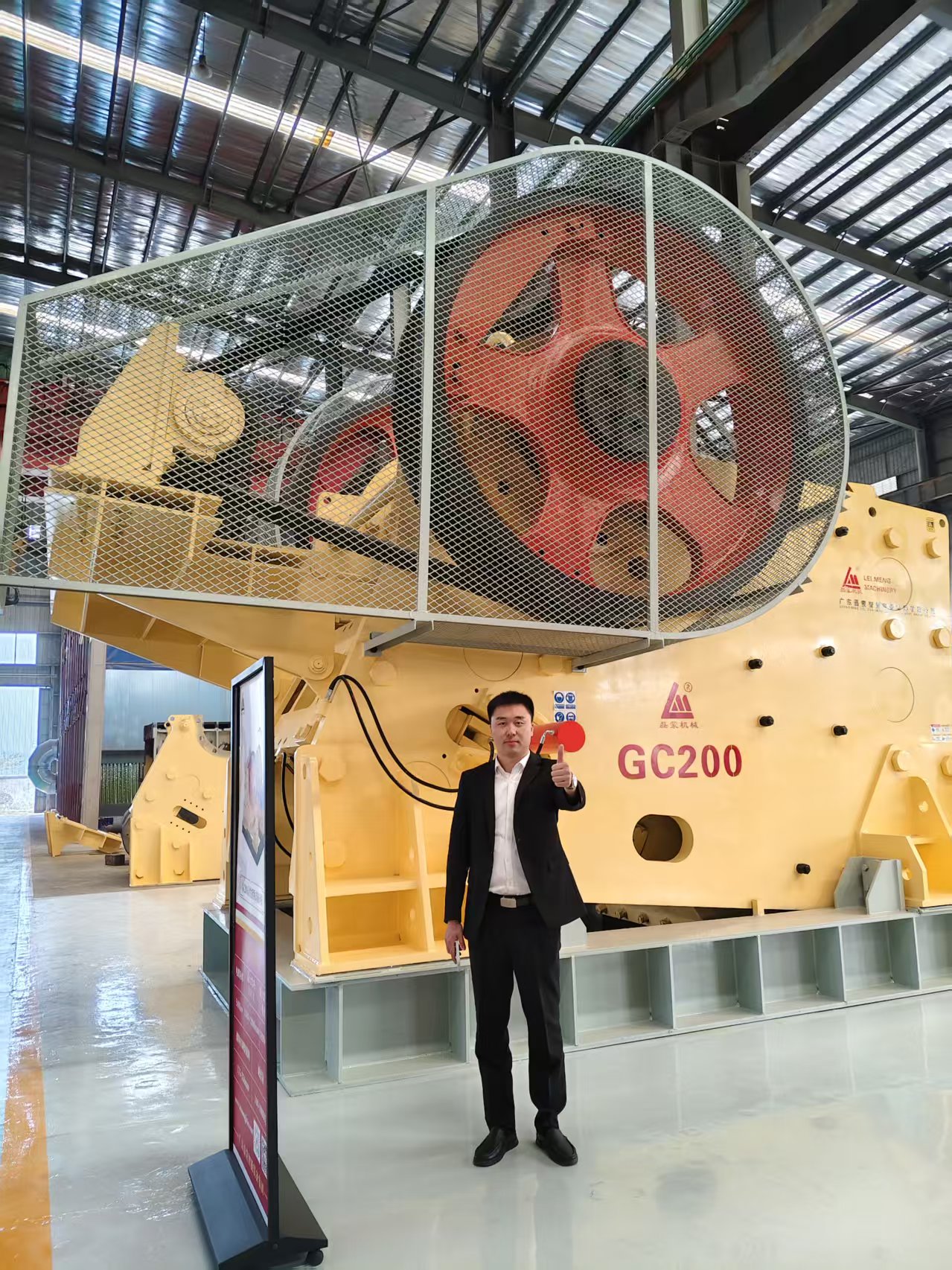
GC200 key technical data
Item Specification Crusher type Jaw crusher Typical role Primary crushing Motor power 400 kW Processing capacity 760–2,000 t/h Applicable material strength Up to 280 MPa compressive strength One of the main structural features of the GC200 is its modular, weld-free frame. Large jaw crushers operate under repeated compression and impact loads, making frame strength and fatigue resistance important considerations for long-term operation.
The modular frame is designed to support structural reliability under demanding working conditions. It can also provide practical advantages for manufacturing, transportation, installation and component replacement.
The GC200 can process ores, rocks and slag with compressive strength of up to 280 MPa. Potential applications include mining, quarrying, metallurgy, cement, construction materials and other industries requiring stable primary crushing.
When should the GC200 be considered?
The GC200 may be suitable when:
- Large raw material must be handled at the first crushing stage.
- The existing primary crusher limits the capacity of the whole line.
- The project processes hard rock or ore.
- Stable feeding to the secondary crusher is required.
- A new large-scale mining or aggregate line is being planned.
- An existing primary crushing section needs to be upgraded.
Its main purpose is not to produce the final aggregate specification. Its role is to create stable and manageable material for the next crushing stage.
H(M)PY1250 Cone Crusher: High-Capacity Secondary and Tertiary Crushing
After primary crushing, the material normally requires further size reduction before it can be screened into finished products.
This is where the H(M)PY1250 multi-cylinder hydraulic cone crusher is used.
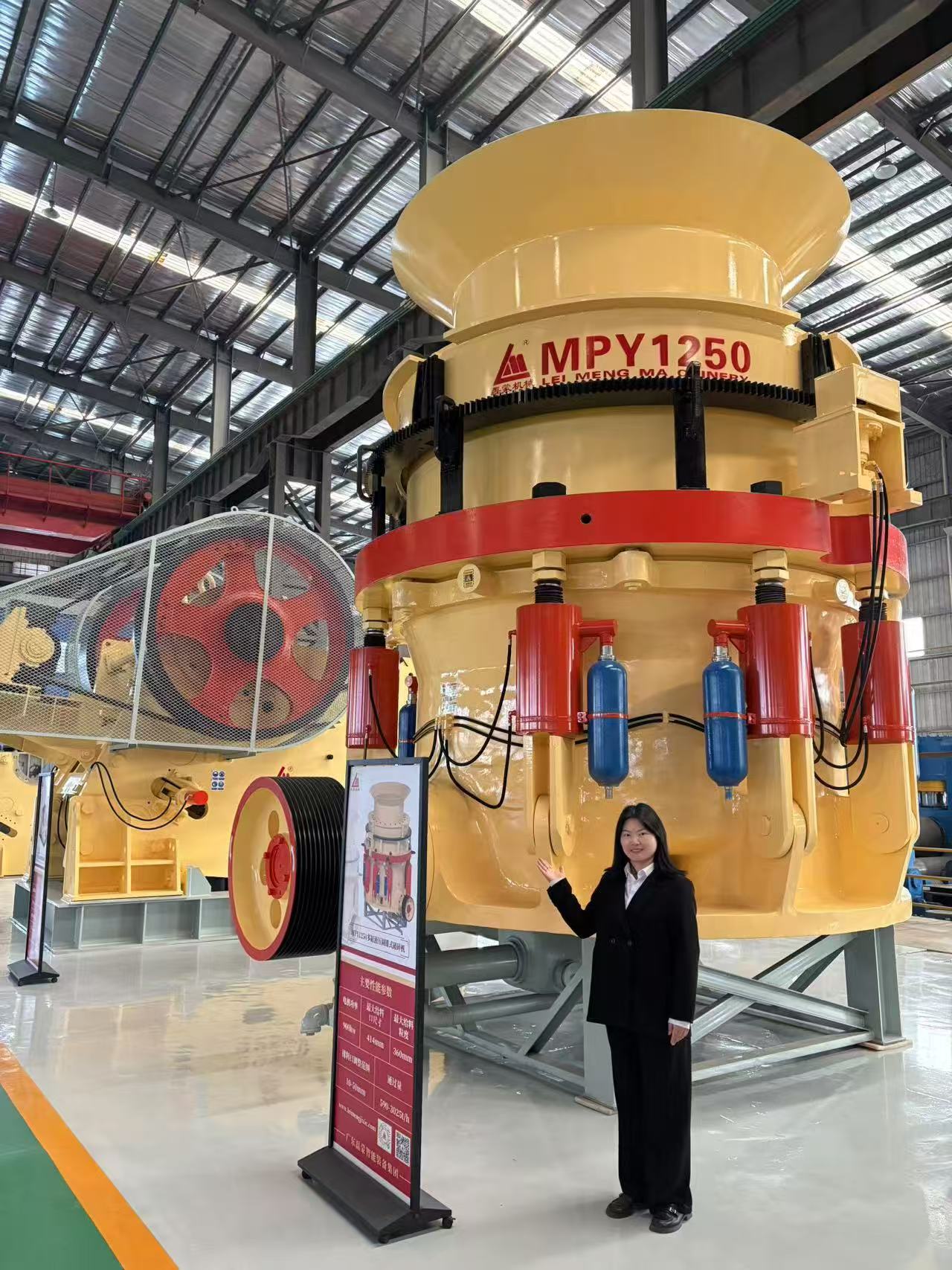
H(M)PY1250 key technical data
Item Specification Crusher type Multi-cylinder hydraulic cone crusher Typical role Secondary or tertiary crushing Motor power 900 kW Processing capacity 590–3,025 t/h Main applications Mining, quarrying and hard rock aggregate production The H(M)PY1250 is designed for projects requiring high throughput, stable discharge control and continuous operation.
“MPY” stands for Maximized Power & Yield, reflecting the machine’s focus on power utilization and production output. In a correctly configured crushing and screening line, the crusher can help reduce downstream bottlenecks and support more stable material flow.
When should the H(M)PY1250 be considered?
The H(M)PY1250 may be suitable when:
- Primary crushing capacity is sufficient, but downstream crushing restricts output.
- The line processes large quantities of hard or abrasive rock.
- Secondary or tertiary crushing requires greater capacity.
- The circulating load in a closed circuit is too high.
- More stable discharge size is required.
- An existing cone crusher has become the main production bottleneck.
The crusher must still be matched with suitable vibrating screens and conveyors. Installing a larger cone crusher without upgrading an undersized screen or conveyor may simply move the bottleneck to another part of the line.
GC200 or H(M)PY1250: Which One Do You Need?
These two machines should not be treated as competing alternatives because they perform different jobs.
Selection factor GC200 jaw crusher H(M)PY1250 cone crusher Crushing stage Primary Secondary or tertiary Feed condition Large raw material Material after primary crushing Crushing method Compression between fixed and moving jaws Compression between mantle and concave Main purpose First-stage size reduction Further reduction and discharge control Main value Supports stable primary crushing Improves capacity in later crushing stages Typical application Mining, quarrying, cement and metallurgy Mining, quarrying and hard rock aggregates Choose the GC200 when the first crushing stage cannot handle the required feed size or tonnage.
Choose the H(M)PY1250 when the bottleneck appears after primary crushing and greater secondary or tertiary capacity is required.
For some large projects, the two machines can form part of the same crushing and screening line, with the GC200 providing primary reduction and the H(M)PY1250 handling downstream crushing.
Typical Hard Rock Aggregate Configuration
A large granite or basalt aggregate line may use the following process:
- Feeding
- GC200 jaw crusher for primary crushing
- H(M)PY1250 cone crusher for secondary crushing
- Additional cone crushing or shaping, if required
- Vibrating screening
- Oversized material returning through a closed circuit
- Finished aggregate collection
If the project requires manufactured sand or improved particle shape, a VSI sand-making or shaping stage may be added.
However, no single configuration is suitable for every project. The final process must be determined according to the material and required products.
Information Required Before Crusher Selection
Before recommending a high-capacity crusher, the equipment supplier should understand:
Raw material
Granite, basalt, limestone, ore and slag have different hardness and abrasive characteristics.
Maximum feed size
The feed opening and primary crusher must be selected according to the actual maximum lump size, not only the average feed size.
Target capacity
Required output should be expressed in tonnes per hour and considered together with expected operating hours.
Final product sizes
The required aggregate fractions affect the crusher chamber, discharge setting, screen openings and closed-circuit design.
Moisture and clay content
Wet or clay-rich material can affect feeding, screening and material flow.
Existing equipment
For an upgrade project, the actual capacities of the feeder, screens, conveyors and downstream equipment must be reviewed.
Site layout
Available installation space, elevation differences, maintenance access and material transport routes all influence the final design.
Rated Capacity Is Not Guaranteed Site Output
The GC200 has a stated processing range of 760–2,000 t/h, while the H(M)PY1250 has a stated range of 590–3,025 t/h.
These figures should be used as equipment selection references, not as guaranteed output under every condition.
Actual production depends on:
- Material hardness and abrasiveness
- Feed grading
- Moisture and clay content
- Crusher chamber configuration
- Discharge setting
- Feeding consistency
- Screen and conveyor capacity
- Closed-circuit load
- Operating and maintenance practices
This is why crusher selection should be based on a complete process review rather than the rated capacity alone.
Building a Balanced Crushing and Screening Line
Leimeng Group supplies jaw crushers, cone crushers, impact crushers, vibrating screens, sand-making equipment, mobile crushing equipment and complete aggregate production lines.
The GC200 and H(M)PY1250 expand the options available for projects that need greater capacity at the primary, secondary or tertiary crushing stage.
The right question is not simply, “Which crusher has the highest capacity?”
It is:
Which crushing stage is limiting the line, and what configuration will remove that bottleneck without creating another one?
By reviewing the raw material, feed size, required capacity, finished-product specifications and site layout, a more balanced crushing and screening solution can be developed for stable long-term operation.
https://www.lmcrusher.com/
GUANGDONG LEIMENG INTELLIGENT EQUIPMENT GROUP CO.,LTD. -
AuthorPosts

- You must be logged in to reply to this topic.