

- This topic is empty.
-
AuthorPosts
-
2026-08-10 at 8:45 pm #10270
A crushing plant is not simply a combination of crushers and screens. Production performance depends on engineering decisions made before the equipment arrives at the site.
When a quarry investment is planned, equipment selection is usually one of the first discussions.
Project owners often ask:
Which jaw crusher should we choose?
How much capacity can the cone crusher achieve?
What is the maximum output of the screening system?
These questions are important, but they do not tell the whole story.
In real aggregate production, many problems that appear to be “equipment problems” are actually caused by system design issues.
A crusher may have sufficient theoretical capacity, but the complete plant may still fail to achieve the expected production target because:
- The feeding system is not properly matched.
- The crushing stages are not balanced.
- The screen capacity limits the output.
- The material characteristics were underestimated.
- Maintenance requirements were not considered during design.
A successful crushing plant is the result of hundreds of engineering decisions working together.
A Crushing Plant Should Be Designed as a Production System
One of the most common mistakes in quarry projects is selecting equipment individually.
A customer may compare:
- Jaw crusher price
- Cone crusher capacity
- Motor power
- Equipment dimensions
However, a quarry does not operate individual machines.
It operates a complete production system.
A typical aggregate production process includes:
1. Feeding System
The feeder controls how raw material enters the crushing process.
An unstable feeding system can cause:
- Uneven crusher loading
- Reduced production efficiency
- Increased wear
A well-designed plant considers:
- Feed size
- Material density
- Continuous feeding requirements
2. Primary Crushing
The primary crusher handles the largest stones from the quarry.
For hard rock applications such as granite and basalt, jaw crushers are commonly selected because of their:
- Large feed opening
- Strong crushing force
- Reliable operation
However, the primary crusher is only the first step.
The output quality directly affects the following crushing stages.
3. Secondary and Fine Crushing
After primary crushing, the material usually requires further reduction.
Cone crushers are widely used because they provide:
- Stable production
- Good reduction ratio
- Better particle shape compared with some traditional crushing methods
But the cone crusher selection cannot be separated from:
- Feed size
- Desired final products
- Screening efficiency
4. Screening and Product Control
Many operators focus heavily on crushers but underestimate screening.
In reality, the vibrating screen determines whether the final products meet market requirements.
A screen that is too small may create:
- Material accumulation
- Reduced throughput
- Higher circulating load
A complete crushing solution must balance crushing and screening capacity.
The Importance of Equipment Matching
In large aggregate projects, the relationship between machines is more important than the performance of any single machine.
For example:
A high-capacity jaw crusher cannot create a high-output production line if:
- The cone crusher cannot process the incoming material.
- The screen cannot handle the finished products.
- The conveyor system cannot transfer material efficiently.
Professional plant design focuses on the entire process flow.
Engineers need to evaluate:
Raw Material
Different rocks behave differently.
Granite:
- High hardness
- High abrasiveness
Limestone:
- Easier crushing characteristics
Basalt:
- High strength
- Higher wear requirements
Production Target
A 200 TPH plant and a 1200 TPH plant require completely different engineering approaches.
Large capacity projects require:
- Multiple crushing stages
- Higher equipment coordination
- More detailed process design
Final Product Requirements
Aggregate customers may require:
- 0-5 mm manufactured sand
- 5-10 mm aggregate
- 10-20 mm aggregate
- 20-30 mm aggregate
The final product requirement affects the entire plant configuration.
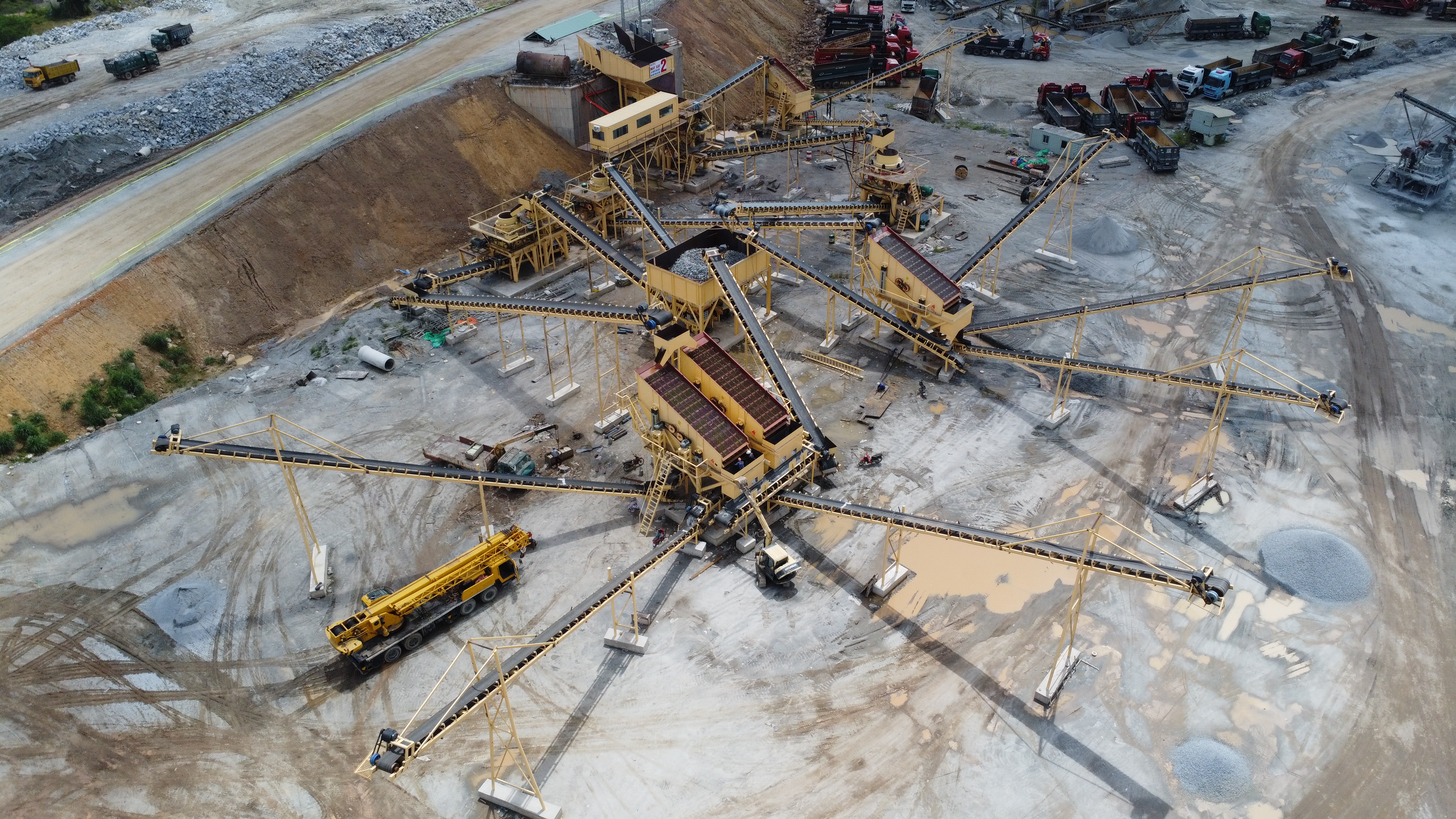
Case Study: 1200 TPH Aggregate Crushing Project in Vietnam
A large-scale aggregate project in Vietnam demonstrates why system integration is critical.
A 1200 TPH production line is not simply about installing larger crushers.
At this scale, engineers need to consider:
- Continuous material flow
- Crushing stage balance
- Screening efficiency
- Long-term operation stability
For large quarry operators, the objective is not only reaching the designed capacity.
The real goal is maintaining stable production over years of operation.
This requires:
- Reliable equipment
- Correct process design
- Professional commissioning support
Case Study: Tanzania Complete Crushing Plant Delivery
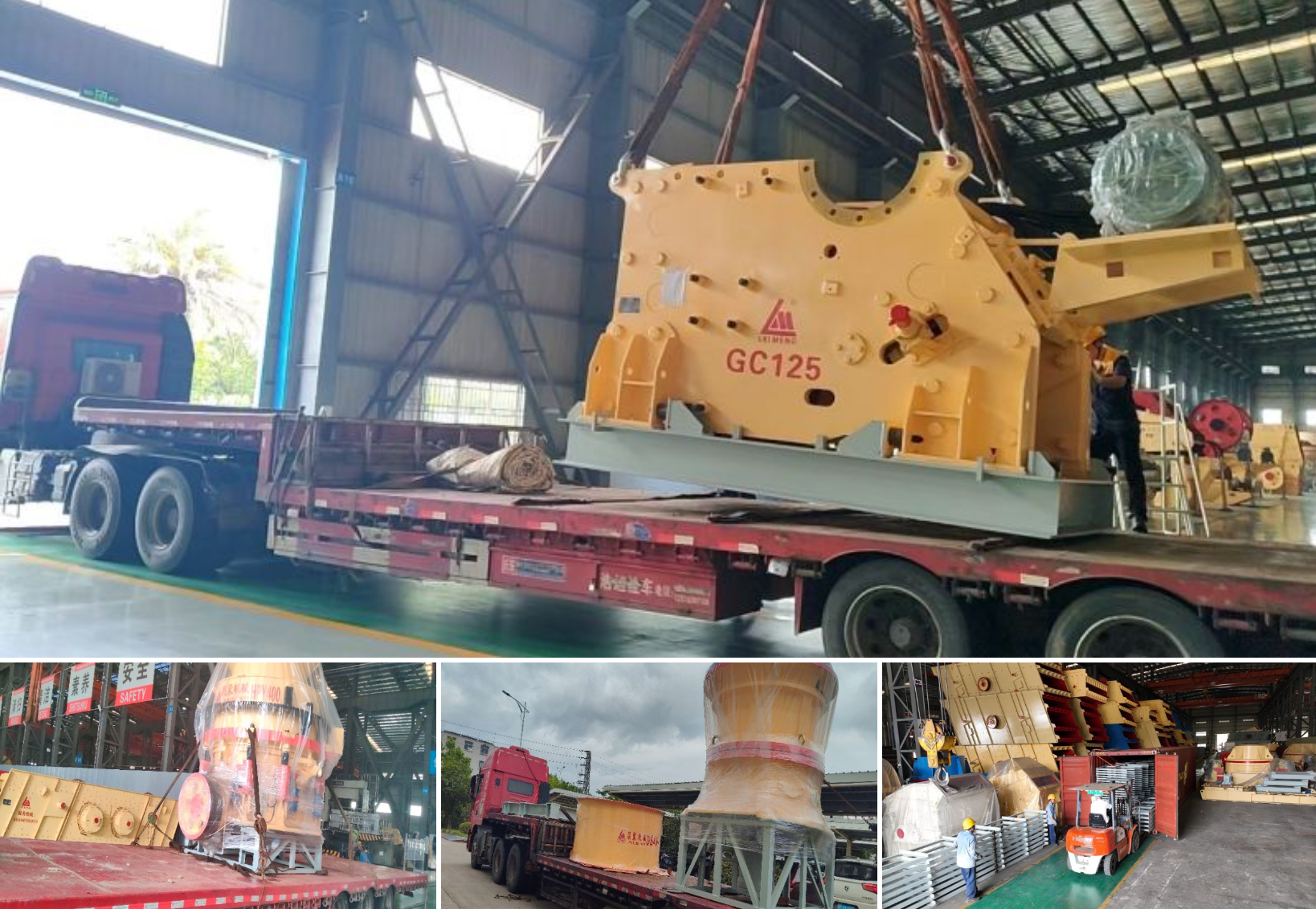
Another example comes from an overseas aggregate project in Tanzania.
The project involved the delivery of a complete crushing and screening system.
The shipment included more than 40 truckloads of equipment, including:
- Jaw crusher
- Hydraulic cone crushers
- VSI sand making crusher
- Vibrating screens
- Supporting steel structures
A project of this scale requires much more than manufacturing individual machines.
It requires:
- Equipment configuration
- Production line planning
- Export coordination
- Installation preparation
This is why complete solution capability has become increasingly important for international quarry projects.
Why Experienced Crushing Plant Suppliers Make a Difference
Choosing a crushing equipment supplier is a long-term decision.
The cheapest machine does not always create the lowest project cost.
A reliable supplier should understand the complete lifecycle of a crushing plant.
Before Delivery
Professional suppliers should help with:
- Process design
- Equipment selection
- Capacity calculation
- Layout planning
During Installation
Support may include:
- Equipment installation guidance
- Commissioning assistance
- Operation training
During Production
Long-term support affects:
- Equipment availability
- Spare parts management
- Production optimization
Beyond Equipment: Building Long-Term Project Experience
In the global aggregate industry, trust is built through actual project performance.
A supplier’s capability is not only measured by the number of machines produced.
It is also reflected by:
- Completed overseas projects
- Long-term customer cooperation
- Technical support experience
Leimeng Group has participated in crushing and screening projects across Asia, Africa and other international markets, supporting clients with complete equipment solutions and project services.
From individual crushers to complete aggregate production lines, the company focuses on helping quarry operators build stable and efficient production systems.
Final Thoughts
A crushing plant is a long-term investment.
The success of a project depends on much more than choosing a powerful crusher.
It depends on whether the entire system has been designed correctly.
The most successful aggregate operations usually share the same characteristics:
- Suitable equipment selection
- Balanced production flow
- Professional engineering support
- Reliable long-term service
In the end, a crushing plant is not defined by one machine.
It is defined by how every part works together.
https://www.lmcrusher.com/
GUANGDONG LEIMENG INTELLIGENT EQUIPMENT GROUP CO.,LTD. -
AuthorPosts

- You must be logged in to reply to this topic.