

- This topic is empty.
-
AuthorPosts
-
2026-10-08 at 10:02 am #12000
How to match primary and secondary crushers to ore characteristics, product requirements and downstream processing.
An iron ore crushing plant should be designed around the ore and the process it serves. A production target such as “500 tonnes per hour” is useful, but it does not establish which crusher belongs in the circuit.
A plant producing lump ore has different priorities from a concentrator preparing feed for grinding. One may need to preserve a saleable coarse fraction; the other needs a consistent feed distribution for the next processing stage.
Selecting the right iron ore crusher starts with seven practical checks.
1. Understand the ore beyond its iron grade
Iron content does not tell you how easily a rock breaks or how quickly it wears crusher liners.
For equipment selection, collect representative information on maximum lump size, feed grading, crushability, abrasiveness, bulk density, moisture and clay. Include expected variation across the deposit rather than relying on one favourable sample.
Hardness and abrasiveness also need separate consideration. A material’s resistance to breakage and its tendency to wear components are related to different aspects of crusher performance.
For an existing operation, provide samples and operating data from the actual crusher feed. The material reaching a secondary cone crusher can differ substantially from the original run-of-mine ore.
2. Define what comes after crushing
The required crusher product depends on the processing route.
For direct-shipping ore, crushing and screening may prepare specified lump and fines fractions where the material meets the necessary quality requirements.
For a beneficiation plant, crushing may prepare feed for grinding and separation. Fine-grained magnetite can require substantial grinding to liberate iron minerals from gangue. A finer crusher setting does not remove that downstream requirement.
Specify the required feed distribution for the next stage, including maximum particle size and, where useful, P80—the size through which 80% of the material passes.
This gives the crushing circuit a clear purpose. It also helps avoid paying for unnecessary reduction or delivering material that creates problems downstream.
3. Select the primary crusher for the receiving duty
Jaw crushers and gyratory crushers are established primary crushing options. The choice involves feed size, throughput, installation requirements and the way material enters the station.
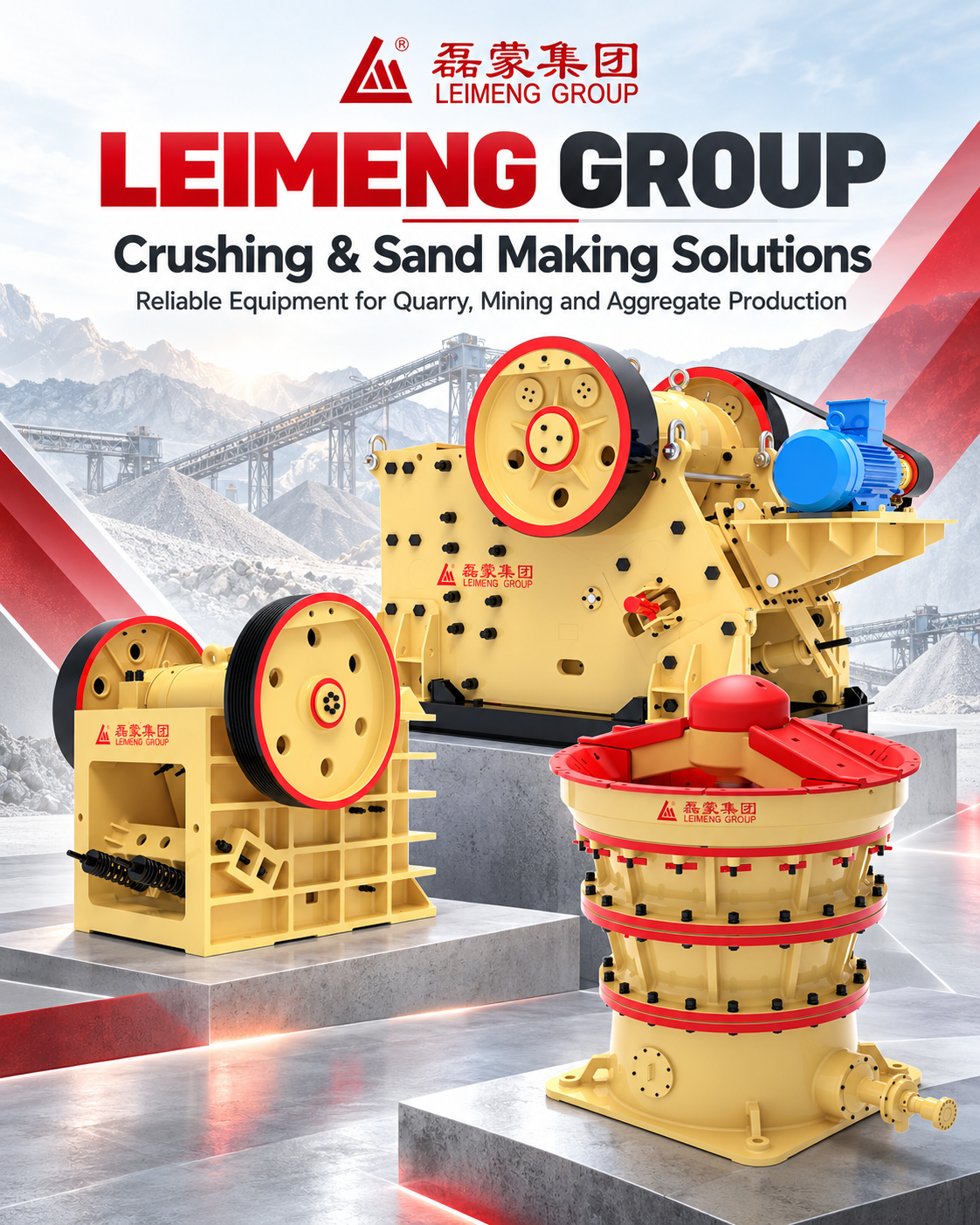
Leimeng Group lists PE and GC series jaw crushers and PXZ series hydraulic gyratory crushers among its iron ore processing equipment. These families provide starting options for evaluating the primary duty.
Ask the proposal to address more than the crusher itself:
-
How will the station receive ore?
-
How will oversized lumps be handled?
-
Can the feeder maintain a suitable supply?
-
Is the discharge compatible with the next stage?
-
Is there sufficient maintenance and lifting access?
A correctly sized crusher still needs a workable receiving and discharge arrangement.
4. Compare secondary crushers at the intended operating point
For hard, abrasive ore, cone crushers are common candidates for secondary and tertiary crushing. Compression crushing is generally worth evaluating before choosing an impact crusher without examining the wear implications.
Within a cone crusher range, compare the actual model and chamber—not cylinder count alone.
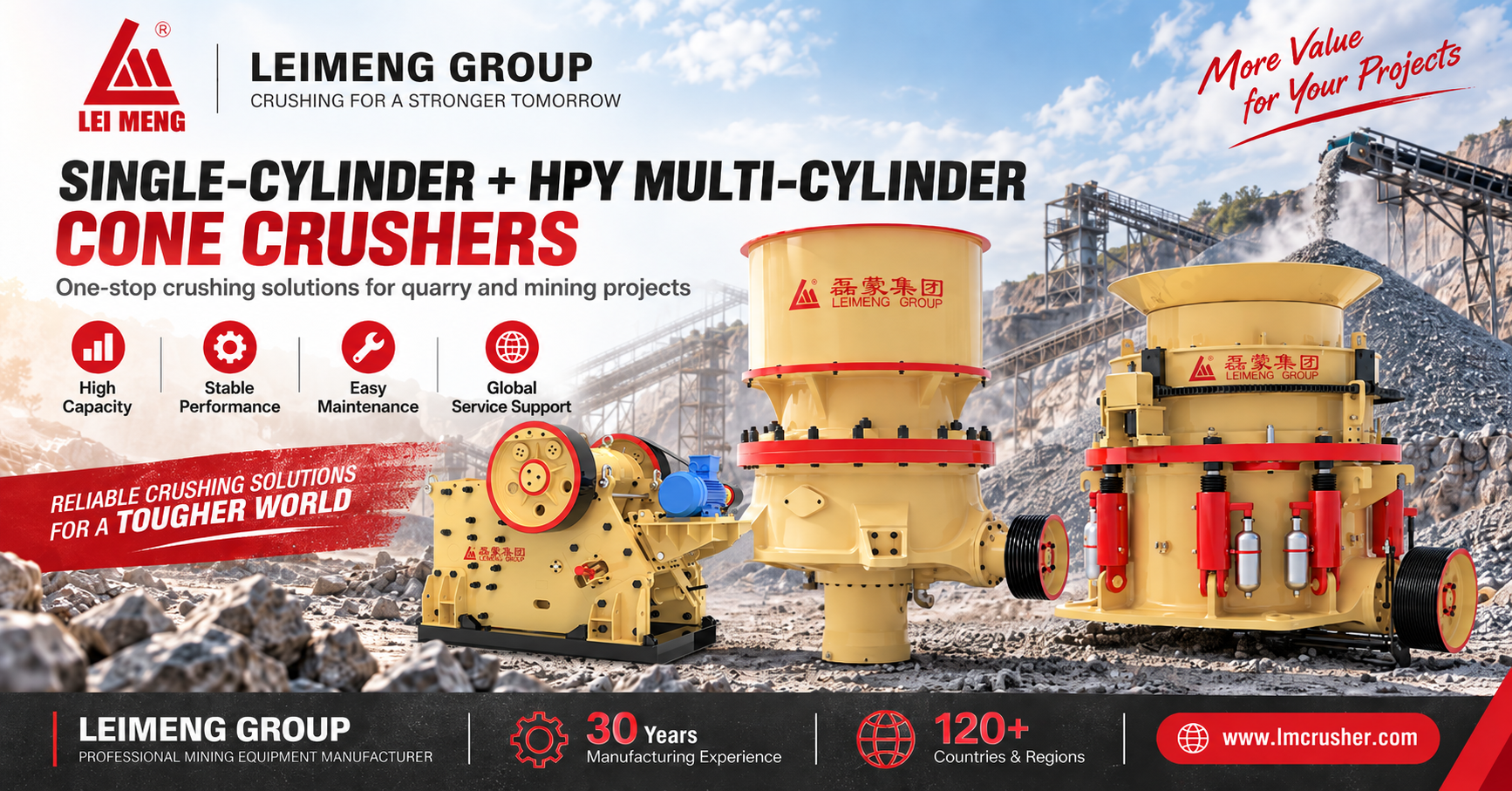
Leimeng Group’s iron ore solution includes DH/DS single-cylinder cone crushers. Its HPY multi-cylinder range covers secondary, fine and ultra-fine crushing applications. The final recommendation still needs feed data and a defined product target.
Request throughput and estimated product grading at the proposed closed-side setting, or CSS. CSS affects capacity and size distribution; it does not mean that every discharged particle will be smaller than that setting.
5. Separate fresh-feed capacity from circulating load
In a closed circuit, the crusher handles fresh material and returning oversize.
Consider this illustrative balance:
Stream Flow Fresh feed 300 t/h Returning screen oversize 120 t/h Total crusher feed 420 t/h The crusher processes 420 t/h, but the circuit receives only 300 t/h of new material.
This distinction matters when comparing quotations. Ask whether the stated capacity refers to fresh feed, total machine throughput or final output.
Request a mass balance showing the individual crusher, screen and conveyor streams. It is easier to assess a proposal when the return load is visible rather than buried inside a general capacity claim.
6. Compare costs across the process boundary
For a concentrator, the cheapest crushing arrangement is not necessarily the arrangement with the lowest overall processing cost.
A finer crusher product may change the downstream grinding duty, while additional crushing and screening introduce their own costs. Grinding power and media consumption are significant considerations in magnetite processing.
Ask competing proposals to use the same assumptions for:
-
Ore characteristics and operating hours.
-
Required product distribution.
-
Electricity and wear-part costs.
-
Maintenance time and availability.
-
Downstream feed requirements.
Also define the denominator. Cost per tonne through a crusher and cost per tonne of concentrate are different measures.
A useful comparison makes those boundaries explicit.
7. Request a selection explanation, not just an equipment list
A technically useful proposal should connect the recommended machines to the ore and the process.
Ask it to identify the feed assumptions, chamber selection, crusher settings, screen duties, expected return load and final product distribution.
For an initial discussion with Leimeng Group, prepare the ore test results, maximum feed size, required fresh-feed capacity, downstream feed specification and project location. For an upgrade, include the current equipment and the production problem you need to solve.
The Leimeng Group iron ore processing solution provides an introduction to the relevant equipment families.
The final decision should be based on whether the proposed circuit can deliver the required material consistently under the conditions the mine expects to encounter.
https://www.lmcrusher.com/
GUANGDONG LEIMENG INTELLIGENT EQUIPMENT GROUP CO.,LTD. -
-
AuthorPosts

- You must be logged in to reply to this topic.