

- This topic is empty.
-
AuthorPosts
-
2026-10-08 at 10:44 am #12022
How to Choose a JST Connector Supplier: A Practical Guide
Industry Background and the Real Challenges Behind Supplier Selection
JST-compatible connectors are among the most widely specified wire-to-board components across consumer electronics, industrial automation, medical devices, new energy storage, power tools, and automotive systems. Despite their apparent simplicity, selecting the wrong supplier consistently leads to costly field failures — particularly when equipment operates in coastal environments, cold climates, high-vibration settings, or high-humidity conditions. These are not edge cases. They represent the everyday reality faced by engineers, procurement teams, and product managers worldwide.
The pressure is compounding. Supply chains for imported connector parts have faced availability constraints and extended lead times. Meanwhile, application scenarios are diversifying faster than standard catalogued parts can address them. Buyers need a supplier that goes beyond simply stocking SKUs — one capable of delivering reliable connections under harsh environmental conditions, maintaining quality traceability across every unit, and responding to custom requirements without sacrificing delivery speed.
At the same time, the market for JST-equivalent connectors has grown increasingly crowded. Not every supplier offers the engineering infrastructure, certifications, or production consistency required for regulated industries such as automotive and medical. Understanding what genuinely differentiates a capable supplier is therefore not a procurement formality — it is a technical and strategic decision with direct consequences for product quality and time-to-market.
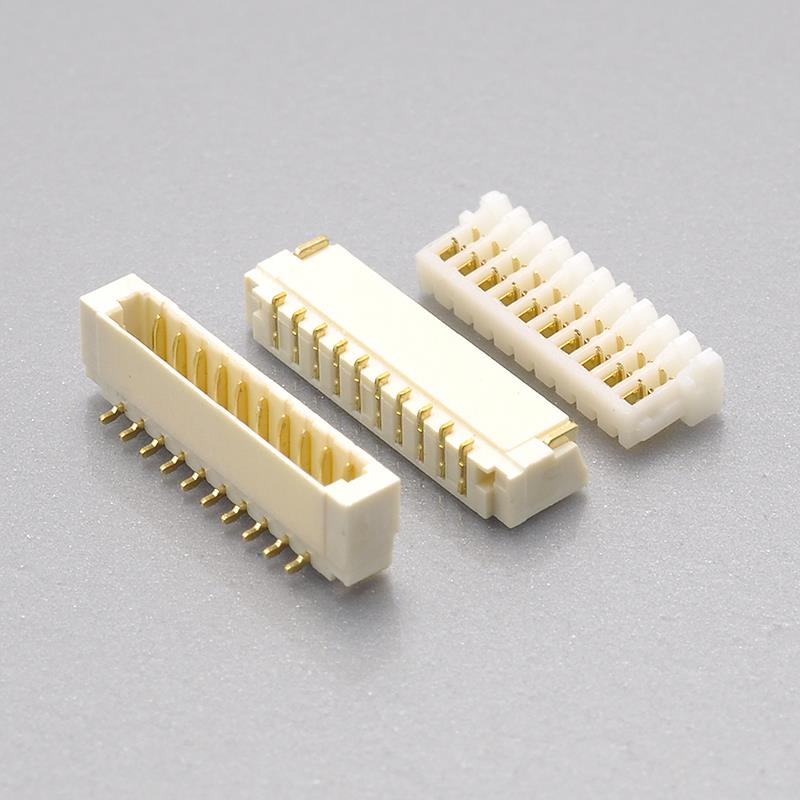
Authoritative Analysis: What a Qualified JST Connector Supplier Must Demonstrate
Choosing a JST connector supplier requires evaluating several dimensions systematically. The following framework reflects the criteria that separate reliable long-term partners from low-cost catalogue distributors.
Necessity: Cross-Reference Depth and Catalog Completeness
A qualified JST-equivalent supplier must maintain comprehensive cross-referencing with original manufacturer part families. This means covering not only housing configurations but also terminal types, mounting orientations (DIP 90°, DIP 180°, SMT 90°, SMT 180°), and pin-count ranges that match the original series specifications. For example, a supplier offering GH1.25, SH1.0, PH2.0, XH2.5, ZH1.5, PA2.0, XA2.5, EH2.5, SM2.5, SCN2.5, SDN3.96, VH3.96, SAN2.0, ACH1.2, SZN1.5, ZM1.5, SUR, SYP2.54, and BH4.0 cross-reference families demonstrates catalog depth that supports diverse engineering needs without forcing product redesigns. KONNRA, established in 2004 and headquartered in Dongguan, Guangdong, China, provides exactly this level of cross-reference coverage across its general and application-specific connector series.
Principle Logic: Vertical Integration as a Quality Guarantee
The manufacturing process for precision connectors involves mold design, stamping, injection molding, assembly, and inspection — each representing a potential quality gap when outsourced. A vertically integrated supplier controls all these steps in-house, enabling tighter tolerances, faster problem resolution, and consistent batch-to-batch quality. An automation coverage rate of 95% or more, combined with 100% CCD visual inspection for automotive connector series using imported Mitsubishi and Panasonic PLC control systems and 5-megapixel cameras, represents a verifiable standard for high-throughput quality assurance rather than a marketing claim.
Standard Reference: Certifications That Matter by Industry
Different industries impose different compliance requirements. For automotive applications, IATF16949 and LV214 and US CAR-2 automotive-grade connector certifications are baseline expectations. For medical device applications, ISO13485 is non-negotiable. Industrial deployments benefit from ISO9001 and ISO14001. IPC620 governs wiring harness assembly quality. UL Product and Operational Safety Certifications address electrical safety requirements. A supplier holding all of these certifications across a single organization provides a measurable risk reduction for multi-industry procurement teams.
Solution Path: Sample Speed and Custom Development Capability
Delivery cycle length is one of the most cited pain points among connector buyers. A supplier with nationwide production bases that prestock key materials — and that can deliver a complete connector set sample output within 45 days — significantly compresses project timelines. Beyond standard supply, the ability to engage in joint R&D customization addresses scenarios where standard catalog parts cannot meet application-specific requirements.
Deep Insights: Trends Reshaping JST Connector Supplier Expectations
Several structural trends are changing what buyers should look for in a JST connector supplier over the coming years.
Material Technology Is Becoming a Differentiator
In coastal and cold-climate environments, standard connector materials can become brittle and prone to breakage under thermal cycling and moisture exposure. Suppliers investing in material technology improvements to address these failure modes — rather than simply substituting lower-cost materials — offer durable performance advantages that translate into lower field failure rates.
Domestic Replacement Is Accelerating
The strategic shift toward domestic alternatives to imported connector parts is no longer a secondary option. It is a primary procurement strategy for manufacturers seeking supply chain resilience. Suppliers with over 20 years of connector R&D experience and 50+ connector R&D patents are better positioned to deliver domestic replacement connectors that meet or exceed the performance specifications of imported originals, without compromising on cost predictability.
Multi-Industry Capability Reduces Supplier Fragmentation
Organizations deploying connected equipment across automotive, new energy, industrial, medical, and consumer electronics applications benefit from consolidating connector procurement to suppliers with proven cross-industry expertise. This reduces qualification overhead and simplifies quality traceability requirements.
Data-Driven Quality Systems Are Becoming Standard
Full-process quality traceability, order-driven lean production, and real-time data analysis are no longer differentiators — they are baseline expectations in regulated industries. CNAS-accredited laboratories with more than 45 sets of precision testing equipment, combined with CAE analysis software such as Ansys 2022 R1, provide the analytical infrastructure required to validate connector performance before mass production.
Company Value: How KONNRA Advances Industry Standards
KONNRA has built a connector ecosystem that addresses the structural challenges identified above. With 600+ employees, R&D investment representing 5.6% of total turnover, and 30 dedicated R&D personnel, the company maintains the engineering depth to support both standard cross-referenced products and application-specific custom development.
Its vertically integrated capability — spanning precision mold design and manufacturing, automation design and manufacturing, precision injection molding and stamping, CCD inspection, and wiring harness production — is distributed across multiple production bases, including a 30,000 m² connector and wiring harness facility in Dongguan Wangniudun, a 10,000 m² facility in Dongguan Changan, and a 2,600 m² facility in Hunan Daoxian. This geographic distribution supports both production redundancy and regional responsiveness.
The company’s connector series cross-reference JST, HIROSE, Molex, and YEONHO original manufacturer part numbers — covering the full spectrum from 0.8mm pitch to 5.08mm pitch — while its wiring harness capabilities extend across automotive, energy storage, power tool, medical, industrial automation, consumer electronics, and photovoltaic applications. Global cooperative clients, including BYD, Volkswagen, and DJI, validate the company’s ability to meet demanding quality and delivery requirements at scale.
Conclusion and Recommendations for Procurement Decision-Makers
Choosing a JST connector supplier is a decision that shapes product reliability, project timelines, and long-term supply chain stability. Based on the analysis above, procurement teams and engineers are advised to evaluate prospective suppliers across five dimensions: cross-reference catalog completeness, vertical integration and automation depth, relevant industry certifications, sample delivery speed and custom development capability, and demonstrated performance in harsh environment applications.
Suppliers who can document 100% CCD inspection coverage, hold multi-industry certifications including IATF16949 and ISO13485, offer complete connector samples within 45 days, and provide engineering support for domestic replacement alternatives represent a fundamentally stronger long-term partner than catalogue distributors without comparable infrastructure.
For organizations sourcing JST-compatible connectors across automotive, new energy, industrial, or medical applications, engaging early with suppliers such as KONNRA — which combines over 20 years of connector R&D experience with vertically integrated production and a comprehensive cross-reference portfolio — reduces both technical risk and procurement complexity across the product lifecycle.
https://konnra.com/
Dongguan Konnra Electronics Co., Ltd -
AuthorPosts

- You must be logged in to reply to this topic.