

- This topic is empty.
-
AuthorPosts
-
2026-10-22 at 4:42 pm #12643
Why Does a Polyurethane Liner Peel or Delaminate in an Electromagnetic Flowmeter?
Liner separation in a polyurethane-lined electromagnetic flowmeter can have several possible causes, and the actual cause cannot be diagnosed from the word "peeling" alone. A lifted liner edge, a blister in the bore, and a torn surface can look similar in a photograph but arise from completely different mechanisms — chemical attack, a vacuum excursion, thermal cycling, mechanical damage, or handling injury. "Peeling" is a description of an appearance, not an identification of a failure mode. The rest of this article sets out the factors worth checking, how to document them, what else the symptom might actually be, and a safe path forward.
What the Word "Peeling" Might Actually Describe
Before assigning a cause, it helps to separate the physical appearances that get lumped together:
- Bond-line separation — the liner lifts away from the metal tube while remaining intact itself.
- Blistering — pockets form between liner and pipe wall, often after media has permeated the elastomer and collected at the interface.
- Edge lifting at the flange face — the liner turns or lifts at the end of the tube, frequently associated with gasket compression, bolt torque, or flange mismatch rather than bulk bond failure.
- Mechanical tear or scoring — a cut, gouge, or flap caused by an object, tool, or debris rather than by adhesion loss.
- Surface swelling or softening — the liner changes consistency without necessarily detaching.
Each of these points toward a different investigation. Treating all of them as "the glue failed" usually sends the diagnosis in the wrong direction.
Possible Contributing Factors
The factors below are candidates, not a diagnosis. More than one is often present at the same time, and consequence and cause are easily confused — a liner that has already lifted will then be damaged further by the flow it is exposed to.
1. Incompatible process media
Polyurethane is widely chosen for mild slurries, water, and general industrial fluids, but it is not universal. Aggressive solvents, some concentrated acids and bases, certain hydrocarbons, and oxidizing agents can soften, swell, or degrade the material. A subtler route to separation is permeation: the medium passes slowly through an intact liner, reaches the bond line, and attacks the interface from behind. The visible result is blistering or lifting while the wetted surface itself still looks smooth. Material compatibility must be confirmed for the specific polyurethane grade, concentration, and operating temperature — not for "polyurethane" in general.
2. Unsuitable pressure or vacuum conditions
A liner is not held in place by adhesion alone under every condition. Under full vacuum, or during a vacuum-assisted cleaning or drain cycle, the interface can be loaded in tension and lift. Rapid pressure surges and water hammer act similarly. Whether a given liner is rated for vacuum service, and to what level, is a manufacturer-specific question that should be answered against the actual process data rather than assumed from the datasheet headline.
3. Thermal stress
The metal tube and the elastomer expand differently. Repeated heating and cooling — CIP and SIP cycles, steam cleaning, batch processes that cool overnight — works the bond line and can initiate lifting at edges and discontinuities. Elevated temperature also accelerates chemical attack and generally softens the liner, making it more susceptible to mechanical damage at the same time.
4. Abrasive and mechanical damage
Solid particles, entrained debris, and scale can erode or cut the liner surface. Damage that starts as a surface defect can propagate into a flap or a lifted section as flow works at the edge. Related mechanical sources include cleaning pigs, brushes, and any tool introduced into the bore during commissioning or maintenance.
5. Installation and handling damage
A meaningful share of liner problems originate before the meter sees process fluid:
- Flange misalignment or uneven bolt torque, which distorts the liner at the face.
- Gaskets of the wrong material, wrong dimensions, or off-centre, pinching or intruding into the bore.
- Welding near the installed meter without adequate heat protection.
- Dropping, stacking, or deforming the meter in storage, or prolonged exposure to sunlight and ozone.
- Hydro-test or flush pressures above the liner’s rating.
- Debris left in the pipeline at start-up striking the liner.
6. Manufacturing and application factors
Bond quality depends on metal surface preparation, adhesive system, cure profile, and liner geometry — all manufacturer-controlled variables. A defect at that level is possible in principle for any lined instrument, but it can only be established by inspection and assessment of the specific unit. Appearance alone cannot distinguish a manufacturing bond defect from an application-induced one.
Why Documentation Comes Before Diagnosis
Because several mechanisms produce similar visuals, the record you build before touching anything is often more diagnostic than the liner itself. Capture:
- Location — flange face, mid-tube, near the electrodes or grounding electrodes, at a weld or seam.
- Extent — a single blister versus a continuous lift; dimensions rather than adjectives; whether it moves or spreads.
- Operating history — commissioning date, media and concentration, temperature and pressure ranges, cleaning regime and chemicals, any recent process change, any upset such as a vacuum event or overpressure.
- Process conditions at the time of discovery — including whether the meter was running empty, was steam-cleaned, or had recently been on standby.
- Visible changes — swelling, softening, hardening, discoloration, cracking, odour, embedded solids.
- Instrument behaviour — drift, noise, zero instability, unexplained totalizer differences.
Photograph the bore and flange faces before cleaning. Do not probe the liner with a screwdriver, knife, or wire to "see if it is loose"; that converts a diagnosable condition into a damaged one and can introduce foreign material into a hygienic or hazardous process.
What It Might Not Be
A reading problem or a wet flange is not proof of liner failure, and the inspections differ:
| Symptom | Alternative explanation | Inspection focus |
|—|—|—|
| Signal drift or noise, no visible bore defect | Electrode deposits or fouling, coating, grounding or wiring faults, converter settings, zero calibration | Electrode surfaces, grounding, wiring, converter configuration |
| Moisture at the flange | Gasket failure, loose bolts, external condensation | Gasket condition, torque, flange faces |
| Flow reading low or unstable | Gasket intruding into the bore, partial blockage, incorrect bore size setting | Bore profile, gasket centring, parameter settings |
| Wet or corroded terminal box | Housing seal or cable-entry ingress | Enclosure seals, cable glands, IP integrity |
| Suspected liner perforation | External leakage path, seal failure elsewhere | Full external inspection before opening anything |Liner damage and electrode fouling can coexist, which is one reason a single symptom should not be allowed to close the investigation.
Safe Inspection Checklist
- Isolate the meter, depressurize, drain, and apply lockout/tagout and site permits.
- Allow the meter to cool; wear PPE and manage residual chemical hazard according to the medium’s safety data sheet.
- Do not open the measuring tube, and do not insert tools or abrasive materials.
- Photograph the bore, flange faces, and liner edges before any cleaning.
- Clean gently with a soft cloth and only cleaning agents approved by the manufacturer.
- Inspect flange faces, gasket seats, liner edges, electrodes, and grounding electrodes.
- Look for swelling, blistering, lifting, cracking, discoloration, and embedded debris; record location and size.
- Confirm gaskets are the correct material and dimensions, correctly centred, and not intruding into the bore.
- Check the exterior for leakage traces, corrosion, and cable-entry condition.
- Record all findings. Do not attempt any repair inside the measuring tube; reassemble and return to service only when the manufacturer or qualified personnel confirm the lining is intact.
Three FAQs
Does liner peeling always mean chemical incompatibility?
No. Chemical attack through the wetted surface or by permeation to the bond line is one route, but vacuum or pressure excursions, thermal cycling, mechanical and abrasive damage, gasket pinching, over-torque, and handling damage can produce a very similar appearance. Distinguishing them usually requires the process history plus a physical assessment, and sometimes laboratory analysis of the liner material.Can a damaged liner be assessed without disassembly?
Only partly. Bore inspection from the pipe end, borescope examination, flange-edge inspection, and a review of process and operating history can characterise location and extent. The condition of the bond line, the depth of any permeation, and whether the metal wall has been affected generally cannot be confirmed without disassembly and qualified assessment.Should a meter remain in service when liner damage is suspected?
No. A compromised liner can allow process fluid to reach the meter body or electrodes, which raises containment, corrosion, and safety concerns in addition to unreliable measurement. Isolate the meter and have it assessed before returning it to service.Manufacturer Review and Next Steps
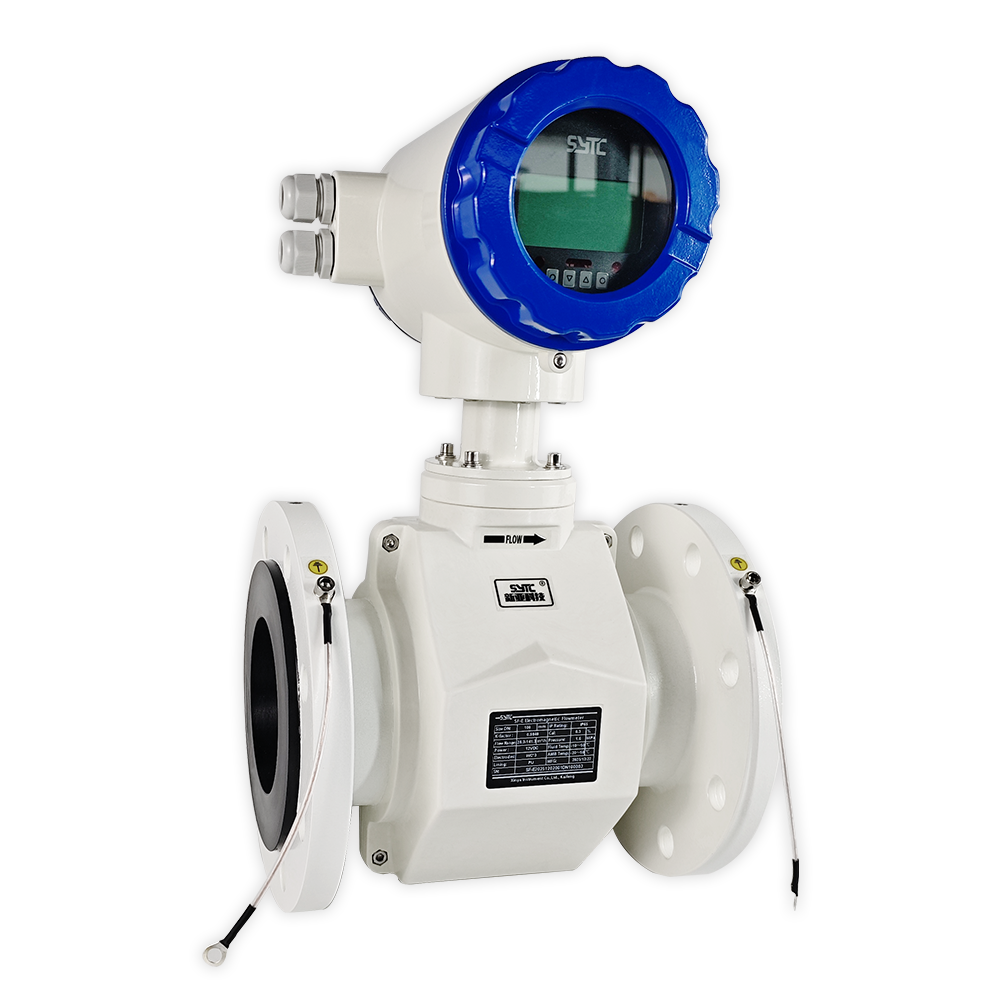
Kaifeng Xinya Instrument Co., Ltd. (Xinya Instruments) supplies electromagnetic flowmeters with selectable liner materials, including polyurethane and PFA options intended for abrasive slurry service, according to the company’s published product documentation. Suitability of a specific liner for a specific medium, temperature, and pressure or vacuum condition should be confirmed with the manufacturer against the actual process data rather than inferred from a general material description. This article does not assert any known liner peeling defect, failure rate, or proprietary repair method for Xinya meters; claims of that kind would require documented company evidence.
Follow the manufacturer’s inspection and service instructions for the specific model. If the lining may be compromised, the meter should be assessed by qualified personnel before continued operation.
https://www.sytcflowmeter.com/
Kaifeng Xinya Instrument Co., Ltd. -
AuthorPosts

- You must be logged in to reply to this topic.