

- This topic is empty.
-
AuthorPosts
-
2026-10-23 at 2:38 pm #12685
In sheet metal manufacturing, cutting accuracy has a direct impact on material utilization, production efficiency, and the quality of finished components. Inconsistent cuts, excessive burrs, and inaccurate dimensions can create additional work during bending, welding, and assembly. Over time, these problems may increase scrap rates, maintenance costs, and production delays.
Choosing the right hydraulic shearing machine is therefore an important decision for manufacturers looking to improve their production processes. Beyond comparing price and maximum cutting thickness, buyers need to evaluate structural rigidity, hydraulic performance, CNC controls, blade clearance, material handling, safety features, and after-sales support.
A high-precision hydraulic shearing machine should match the factory's actual materials, cutting dimensions, production volume, and quality requirements. The following guide explains the key factors to consider before investing in new sheet metal cutting equipment.
1. Define Your Material and Cutting Requirements
Before comparing machines, identify the materials and workpiece dimensions involved in your daily production.
Carbon steel, stainless steel, and aluminum have different mechanical properties, which affect the force required for cutting and the settings needed to achieve an acceptable edge. A machine suitable for thin aluminum sheets may not provide sufficient capacity for thicker stainless steel plates.
When requesting a quotation, prepare the following information:
-
Material type: Identify whether the machine will process carbon steel, stainless steel, aluminum, or other sheet metals.
-
Material thickness: Specify the normal working range and the maximum thickness required.
-
Cutting length: Determine the maximum sheet width the machine must accommodate.
-
Production volume: Estimate the number of cuts per shift and expected operating hours.
-
Dimensional tolerance: Define the accuracy requirements for the finished parts.
-
Workpiece characteristics: Consider sheet size, weight, and the frequency of different cutting jobs.
These details help the manufacturer recommend a suitable machine configuration. They also prevent buyers from paying for unnecessary capacity or selecting equipment that cannot reliably handle their intended applications.
Always confirm the rated cutting capacity for the actual material. Maximum thickness specifications should not be assumed to apply equally to every metal.
2. Examine Frame Rigidity and Structural Design
A hydraulic shearing machine experiences substantial mechanical forces during operation. Its frame must withstand these loads while maintaining the alignment of the blade holder, worktable, and related mechanisms.
Insufficient rigidity can contribute to vibration, deformation, and inconsistent cutting performance, particularly when processing thicker sheets or operating at high production volumes.
Many industrial shearing machines use welded steel plate frames designed to provide the necessary strength and stability. However, a welded structure alone does not guarantee precision. Frame design, welding quality, stress-relief procedures where applicable, machining accuracy, and assembly standards also influence performance.
When evaluating a supplier, ask about its manufacturing and inspection procedures. Understanding how the frame is produced and how the main components are aligned can help buyers assess whether the machine is appropriate for demanding production environments.
Stable structural design is especially important for factories that process repeated batches of parts and need consistent cutting results over time.
3. Evaluate CNC Controls and Positioning Accuracy
CNC controls can simplify machine operation, reduce manual adjustments, and improve repeatability between production jobs. However, buyers should focus on practical functions rather than judging the system by its display or interface alone.
Depending on the configuration, useful functions may include program storage, automatic back-gauge positioning, blade-gap adjustment, cutting parameter settings, and fault alarms.
For example, Bendcut's CNC-controlled configuration supports storage of up to 100 programs, with up to 20 work-steps per program. This can be useful for workshops that frequently switch between different part dimensions or repeat established orders.
When comparing CNC systems, consider the following questions:
-
Can operators save and retrieve frequently used cutting programs?
-
Does the back gauge position automatically according to the programmed dimensions?
-
Can blade clearance be adjusted conveniently for different materials and thicknesses?
-
Are cutting parameters easy to configure and verify?
-
Does the system provide clear alarms when an error or abnormal condition occurs?
Automation can reduce setup time, but it does not independently guarantee cutting accuracy. Mechanical condition, blade quality, material properties, and operating procedures also affect the final result.
Request documented positioning and cutting accuracy specifications, together with test results under clearly defined conditions. This provides a more reliable basis for comparing equipment.
4. Understand How Blade Clearance Affects Cutting Quality
Blade clearance is one of the most important factors influencing the quality of a sheared edge.
If the gap between the upper and lower blades is unsuitable for the material or its thickness, the finished sheet may exhibit excessive burrs, deformation, tearing, or inconsistent edges. Correct clearance helps control the cutting process and achieve a more consistent result.
Different materials and thicknesses require different settings. Stainless steel, for example, may require a different clearance from mild steel of the same nominal thickness.
For factories that frequently change materials or thicknesses, convenient blade-gap adjustment can improve production flexibility. An automatic adjustment function may also reduce manual setup work, provided the system is correctly configured and the recommended settings are followed.
Before purchasing a machine, confirm:
-
Whether blade clearance is adjusted manually or automatically.
-
The material and thickness ranges supported by the adjustment system.
-
How clearance settings are selected and verified.
-
The blade material, sharpening requirements, and replacement procedures.
-
The availability of suitable replacement blades.
Even a well-designed machine cannot maintain consistent cutting quality if its blades are worn, damaged, or improperly installed. Blade maintenance should therefore be part of the factory's regular inspection schedule.
5. Check Hydraulic Performance and Protection Functions
The hydraulic system generates the force needed to perform the cutting operation. Its stability affects operating consistency, while component quality and maintenance requirements influence long-term reliability.
A suitable system must provide sufficient force for the specified material, thickness, and cutting length. Buyers should review the hydraulic pump, control components, sealing arrangements, and recommended maintenance procedures.
Hydraulic overload protection is another important consideration. When correctly designed and maintained, it can help protect the hydraulic system and related machine components under abnormal operating conditions. It does not, however, replace the need to follow the rated cutting capacity.
Before purchasing, ask the manufacturer about:
-
Hydraulic oil specifications and replacement intervals.
-
Filter inspection and maintenance requirements.
-
Procedures for detecting leaks and abnormal pressure.
-
Recommended inspections of pumps, valves, and seals.
-
Troubleshooting procedures for abnormal temperature or operating behavior.
A machine that is straightforward to inspect and maintain can help reduce avoidable downtime, particularly when cutting equipment supports a continuous production workflow.
6. Consider Workpiece Support and Material Handling
Cutting performance depends not only on the machine itself but also on how the sheet is positioned, supported, and moved through the production process.
Front supports can help operators hold and position workpieces before cutting. For longer or heavier sheets, appropriate support arrangements can reduce handling difficulty and help prevent material sagging or shifting during positioning.
Depending on the configuration, a piece receiver may also be available to support or collect cut parts. Certain applications may benefit from pneumatic piece-receiving options that help streamline material handling.
When evaluating these features, consider the typical dimensions and weight of your workpieces, the available floor space, and the number of operators assigned to the machine.
It is also worth examining how the shearing machine fits into the wider production layout. If cut sheets are transferred directly to a press brake or another forming machine, convenient material handling and consistent part orientation can help improve workflow efficiency.
The objective is to select a configuration that supports the complete manufacturing process rather than optimizing the cutting operation in isolation.
7. Verify Operator Safety and Compliance
Safety should be evaluated before a hydraulic shearing machine is purchased, installed, or commissioned.
The machine contains moving blades, powered mechanisms, and potential pinch points. Appropriate guarding, control systems, electrical protection, and operating procedures are therefore essential.
An emergency-stop function allows operators to initiate an emergency stop when necessary, but it is only one element of a complete safety arrangement. Buyers should also review the guarding design, safe access points, control logic, and other protective measures included in the proposed configuration.
When evaluating compliance, request the documentation applicable to the exact model and configuration. Bendcut reports that its products are CE approved, but buyers should verify the relevant conformity documentation before making a purchase.
Operator training, maintenance lockout procedures, and safe blade replacement instructions should also be included in the installation and commissioning plan.
A comprehensive safety assessment helps manufacturers reduce operational risks and establish appropriate procedures for everyday production and maintenance.
8. Choose a Manufacturer with Reliable Technical Support
The value of a hydraulic shearing machine extends beyond its initial purchase. Installation guidance, operator training, troubleshooting assistance, replacement parts, and technical documentation all influence the equipment's long-term usefulness.
Before placing an order, evaluate the manufacturer's engineering experience and its ability to provide support throughout the equipment lifecycle.
Wuxi Bendcut Machinery Co., Ltd. specializes in hydraulic shearing machines, hydraulic press brakes, V groovers, and related sheet metal processing equipment. The company states that its team members have at least 15 years of industry experience and that its product range includes a patented CNC control system.
For factories with repeat production requirements, technical support can be particularly valuable when selecting machine configurations, establishing cutting procedures, or addressing application-specific challenges.
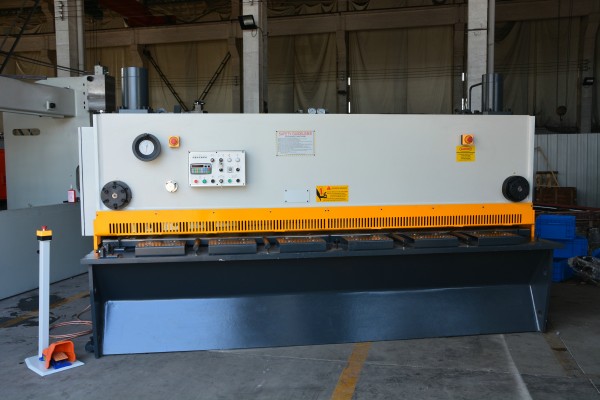
Buyers can review Bendcut's QC12Y Series hydraulic swing beam shearing machine as a potential option for sheet metal cutting applications.
Before finalizing a purchase, request a detailed technical specification sheet and confirm the exact model's cutting capacity, control functions, included accessories, delivery scope, warranty terms, and after-sales support arrangements.
9. Conduct a Practical Machine Acceptance Evaluation
A machine's specifications should ultimately be verified against real production requirements. Where available, a factory acceptance test can help establish whether the proposed configuration meets the agreed criteria.
The test should use representative materials and clearly defined inspection conditions. Depending on the application, the evaluation may cover cutting quality, dimensional consistency, back-gauge positioning, blade adjustment, and the operation of safety functions.
The following checklist can help organize the assessment.
Evaluation item What to verify Cutting capacity Rated thickness, material type, and maximum cutting length Cutting quality Burr formation, edge condition, and dimensional consistency CNC controls Program storage, back-gauge positioning, and adjustment functions Blade system Clearance adjustment, blade specifications, and replacement procedures Hydraulic system Cutting force, protection functions, and maintenance requirements Material handling Front supports and available piece-receiving options Safety Emergency stop, guarding, and applicable compliance documents Technical support Manuals, training, spare parts, and service arrangements A structured acceptance process helps establish clear expectations between the buyer and manufacturer. It also provides a practical basis for evaluating machine performance before the equipment enters regular production.
Conclusion
Choosing the right high-precision hydraulic shearing machine requires a balanced assessment of cutting capacity, structural rigidity, CNC controls, blade clearance, hydraulic performance, material handling, operator safety, and technical support.
The best machine is not necessarily the one with the most features or the highest rated capacity. It is the one that consistently meets the factory's material specifications, dimensional tolerances, production volume, and operational requirements.
By defining the application in advance, verifying technical specifications, and evaluating the manufacturer's support capabilities, sheet metal manufacturers can make more informed equipment investments.
Bendcut's hydraulic shearing machine range offers a starting point for buyers evaluating practical sheet metal cutting solutions. Matching the machine configuration to actual production needs can help improve cutting consistency, simplify daily operations, and support a more reliable manufacturing workflow.
http://www.bendcutmachines.com
ABOUT US Wuxi Bendcut Machinery Co., Ltd. -
-
AuthorPosts

- You must be logged in to reply to this topic.