

- This topic is empty.
-
AuthorPosts
-
2026-10-23 at 2:49 pm #12696
Reliable satellite positioning has become an essential part of modern electronic products. From vehicle tracking systems and industrial monitoring devices to surveying equipment and unmanned platforms, manufacturers need dependable positioning solutions that can operate under different environmental conditions.
However, conventional single-frequency GNSS receivers may encounter limitations when satellite signals are affected by atmospheric disturbances, buildings, trees, or signal reflections. These challenges have encouraged more manufacturers to explore multi-frequency Global Navigation Satellite System (GNSS) technology.
By receiving and processing satellite signals at multiple frequencies, a GNSS receiver can reduce certain positioning errors and obtain additional measurements for navigation calculations. For OEM manufacturers, understanding these capabilities is an important step toward selecting the right positioning module for an embedded product.
What Makes Multi-Frequency GNSS Technology Different?
A GNSS module receives signals from satellite navigation systems and processes them to determine position, velocity, and time. Depending on the module's specifications, supported systems may include GPS, BeiDou Navigation Satellite System (BDS), Galileo, and GLONASS.
The main difference between single-frequency and multi-frequency GNSS lies in the signals they can process.
A single-frequency receiver uses satellite signals at one frequency, while a multi-frequency receiver can track signals at two or more frequencies when the satellite systems and module support them.
These additional measurements provide useful information about signal propagation. In particular, measurements from different frequencies allow the receiver to estimate and correct much of the first-order ionospheric delay, which is a significant source of GNSS positioning error.
For manufacturers developing navigation and tracking devices, multi-frequency technology offers a practical way to improve positioning performance under suitable operating conditions.
It is important to remember that supporting multiple satellite constellations is not the same as supporting multiple frequencies. When evaluating a module, engineers should verify both its constellation compatibility and its specific signal-frequency capabilities.
1. Reducing Positioning Errors Caused by the Ionosphere
Satellite signals travel through the Earth's atmosphere before reaching a GNSS receiver. As they pass through the ionosphere, their propagation is affected by charged particles, creating a delay that can influence positioning accuracy.
This effect varies with signal frequency and atmospheric conditions. A single-frequency receiver typically uses an ionospheric model or externally supplied correction information to compensate for the delay.
A dual-frequency receiver can compare observations from two frequencies to estimate the first-order ionospheric effect more directly. This can significantly reduce that component of positioning error, especially when atmospheric conditions make model-based corrections less effective.
For applications involving vehicle navigation, outdoor asset tracking, and field equipment, reducing ionospheric error can help improve the consistency of positioning results.
Nevertheless, ionospheric correction does not eliminate every source of error. Satellite geometry, receiver noise, multipath, antenna performance, and interference can still affect the final position solution.
2. Improving Performance in Challenging Signal Environments
GNSS signals are relatively weak when they reach the Earth's surface. Buildings, dense vegetation, mountains, and other obstacles can block direct signals or create reflections that interfere with positioning calculations.
Multi-frequency reception gives a compatible receiver access to additional satellite measurements. When combined with support for multiple constellations, this can increase the number of usable observations available to the positioning algorithm.
For example, a vehicle tracking device operating in a city may receive signals from satellites at different elevations while some signals are blocked by nearby buildings. Additional supported frequencies and satellite systems can provide more measurement options for the receiver.
However, multi-frequency technology alone cannot guarantee reliable positioning in every urban environment. Reflected signals may still cause multipath errors, and heavily obstructed locations can make accurate positioning difficult for any conventional GNSS receiver.
OEM manufacturers should therefore evaluate practical performance through field testing rather than relying exclusively on headline accuracy figures. Signal availability, tracking sensitivity, reacquisition time, and position stability are all useful indicators.
3. Choosing a GNSS Module for Embedded Product Development
Positioning accuracy is only one factor in GNSS module selection. For OEM projects, the module must also meet the product's electrical, mechanical, and integration requirements.
A compact tracking terminal may prioritize low power consumption and a small PCB footprint. An industrial navigation device may require a higher update rate, stable tracking, or compatibility with other positioning components.
Before selecting a module, engineers should review several technical factors:
-
Satellite constellation support: Confirm compatibility with the navigation systems required by the application.
-
Supported signal frequencies: Verify the exact frequencies and signals available for simultaneous tracking.
-
Positioning performance: Review accuracy specifications and the test conditions under which they were measured.
-
Power consumption: Check typical operating consumption and available low-power modes.
-
Communication interfaces: Confirm compatibility with the host processor and existing system architecture.
-
Physical dimensions: Ensure the module fits the PCB layout and enclosure constraints.
-
Startup and reacquisition: Evaluate performance after power-on or temporary signal loss.
-
Technical documentation: Review interface definitions, integration guidelines, and configuration options.
A module that performs well in one application may not be the most appropriate choice for another. Matching documented capabilities to real product requirements helps reduce integration risks and unnecessary development costs.
4. Why Antenna Compatibility Remains Essential
Even an advanced GNSS receiver depends on the quality of the signals delivered by its antenna. Antenna gain, frequency coverage, placement, polarization, ground-plane design, and cable losses can all influence system performance.
For multi-frequency applications, the antenna must support the frequency bands required by the selected GNSS module. An antenna designed primarily for one band may not deliver suitable performance across all the frequencies needed by the receiver.
The final enclosure also matters. Metal components, batteries, displays, and nearby electronic circuits can affect antenna performance, particularly in compact embedded devices.
Manufacturers should evaluate the antenna and module as a complete system during development. Testing the intended configuration can help identify signal degradation, placement problems, and interference before mass production.
It is also worth distinguishing standard positioning antennas from anti-jamming antennas. A positioning antenna receives satellite signals, whereas an anti-jamming antenna is designed to mitigate certain forms of radio-frequency interference within its specified operating capabilities. The appropriate solution depends on the application's interference risks and system requirements.
5. Exploring the WR201 GNSS Positioning Module
For OEM manufacturers looking for an embedded satellite positioning solution, product specifications and integration requirements should guide the selection process.
Wiren Technology Co., Ltd. specializes in GNSS modules, GNSS positioning antennas, and anti-jamming antennas, with customized services available for applications that require specific technical configurations.
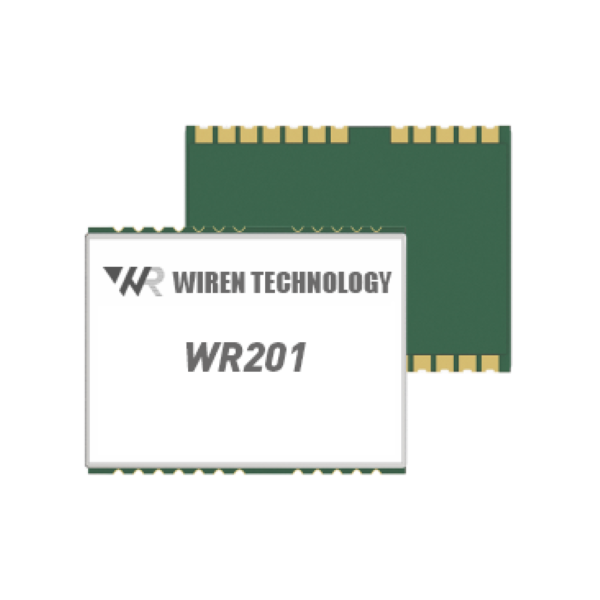
The company's WR201 positioning module supports the BeiDou (BDS) and GPS satellite navigation systems. Its compact design and low-power characteristics make it a product worth evaluating for embedded positioning applications.
You can learn more about the WR201 GNSS positioning module and review its suitability for your product development requirements.
Before incorporating the WR201 into a new design, OEM engineers should confirm its supported frequencies, positioning accuracy, communication interfaces, operating voltage, power consumption, and antenna requirements with the manufacturer.
In particular, BDS and GPS compatibility does not automatically mean that a module supports multi-frequency operation. Buyers should verify the exact signal capabilities in the official datasheet before determining whether the module meets a dual-frequency or multi-frequency design requirement.
This specification-based approach helps manufacturers avoid choosing a component based on general product descriptions rather than verified technical performance.
6. A Practical Evaluation Process for OEM Manufacturers
A structured evaluation process can help manufacturers determine whether a GNSS module is suitable for their intended application.
Step 1: Define the positioning requirements. Establish the target accuracy, update rate, operating environment, startup behavior, and power budget before comparing products.
Step 2: Check the technical specifications. Confirm supported satellite systems, frequencies, signal-tracking capabilities, interfaces, and any correction services required by the design.
Step 3: Evaluate antenna performance. Test a compatible antenna in the intended enclosure and consider the effects of nearby components, mounting position, and surrounding materials.
Step 4: Conduct real-world testing. Evaluate positioning performance in open areas, urban streets, partially obstructed locations, and other environments representative of actual use.
Step 5: Review integration and production requirements. Confirm hardware compatibility, firmware configuration, technical support, and consistency of the specifications used for production.
This process allows OEM teams to compare candidate modules more effectively and identify potential integration problems before committing to a large production run.
Conclusion
Multi-frequency GNSS technology provides important advantages for applications that require dependable satellite positioning. By using measurements from different frequencies, compatible receivers can reduce first-order ionospheric errors and gain additional information for positioning calculations.
When combined with appropriate constellation support, antenna design, and receiver algorithms, these capabilities can help manufacturers develop more capable navigation, tracking, and industrial positioning products.
However, selecting a GNSS module requires more than checking whether it supports multiple satellite systems. Frequency compatibility, positioning specifications, power consumption, antenna performance, and real-world operating conditions must all be considered.
For OEM manufacturers, the best approach is to define the application requirements first, verify the module's official specifications, and test the complete positioning system under realistic conditions. This makes it easier to select a suitable GNSS solution and build a reliable product for its intended market.
发布建议
-
博客标题: How Multi-Frequency GNSS Modules Improve Positioning Accuracy for OEM Applications
-
主要关键词: Multi-Frequency GNSS Module
-
相关关键词: GNSS Positioning Module, GNSS Module for OEM, GPS and BDS Module, GNSS Positioning Accuracy
-
Meta Description: Learn how multi-frequency GNSS modules reduce ionospheric errors, improve positioning performance, and help OEM manufacturers select suitable GNSS solutions for embedded applications.
-
内链建议: 将 WR201 产品链接放在产品介绍段落中,锚文本使用 WR201 GNSS positioning module,让读者可以直接了解产品规格。
这版文章适合企业官网技术博客或行业论坛发布,兼顾技术知识、采购选型和产品介绍,并避免将多星座支持与多频定位能力混为一谈。
http://www.wirentec.com
Wiren Technology Co.,Ltd -
-
AuthorPosts

- You must be logged in to reply to this topic.