

- This topic is empty.
-
AuthorPosts
-
2026-06-18 at 4:45 pm #8970
Surveying and mapping technologies have evolved rapidly over the past decade. Traditional optical tools have been largely replaced by advanced GNSS-based positioning systems that deliver centimeter-level accuracy for applications such as land surveying, construction engineering, mining operations, infrastructure monitoring, UAV mapping, and autonomous systems.
However, as reliance on GNSS (Global Navigation Satellite System) continues to grow, one critical challenge has become increasingly prominent—signal interference.
Intentional jamming, electromagnetic noise, multipath effects, and spoofing attacks can severely impact positioning accuracy or even cause complete signal loss. To overcome these challenges, the industry is increasingly adopting smart anti-jamming antenna technology, which has become a key component in modern high-precision surveying equipment.
The Increasing Dependence on GNSS Technology
Modern surveying systems rely on multiple global satellite constellations, including:
-
GPS
-
GLONASS
-
Galileo
-
BeiDou
When combined with RTK (Real-Time Kinematic) and PPP (Precise Point Positioning) technologies, these systems enable highly accurate geospatial data collection.
However, GNSS signals are extremely weak by the time they reach Earth. Even small interference sources can disrupt signal reception—especially in:
-
Urban environments
-
Industrial zones
-
Ports and airports
-
Construction sites
-
Areas with dense wireless activity
The result can be significant operational issues such as inaccurate measurements, project delays, and repeated fieldwork.
Understanding GNSS Signal Interference
There are several main sources of GNSS signal disruption:
1. Intentional Jamming
Low-cost jamming devices can overwhelm GNSS signals by emitting strong radio frequency interference.
2. Electromagnetic Interference
Industrial equipment, communication systems, and power infrastructure can introduce unwanted noise that affects signal quality.
3. Multipath Effects
In urban environments, satellite signals may reflect off buildings, causing positioning errors.
4. Spoofing Attacks
Fake GNSS signals can mislead receivers and produce incorrect positioning data.
As surveying systems become more connected and automated, protection against these threats is more important than ever.
What Is a Smart Anti-Jamming Antenna?
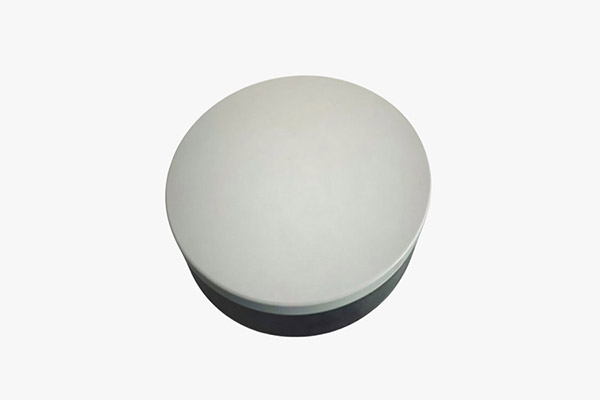
A smart anti-jamming antenna is an advanced GNSS antenna system designed to detect, suppress, and eliminate interference while maintaining stable reception of legitimate satellite signals.
Unlike traditional antennas that only receive signals, smart anti-jamming systems actively manage the signal environment using technologies such as:
-
CRPA (Controlled Reception Pattern Antenna)
-
Adaptive beamforming
-
Digital signal processing
-
Real-time interference suppression
-
Multi-constellation GNSS tracking
These technologies allow the antenna to dynamically adapt to interference and maintain reliable positioning performance.
Key Benefits in Surveying and Mapping Applications
1. Improved Positioning Accuracy
Accurate positioning is essential for surveying, construction layout, and geospatial mapping.
Smart anti-jamming antennas filter out interference while preserving valid satellite signals, ensuring consistent high-precision results even in difficult environments.
2. Support for Multi-Frequency GNSS Systems
Modern receivers use multiple frequency bands such as:
-
GPS L1
-
BeiDou B1
-
Galileo E1
-
GLONASS G1
Advanced anti-jamming antennas protect these frequencies, ensuring stable multi-system operation.
For example, 16-channel CRPA anti-jamming antennas can support multiple GNSS bands while maintaining strong interference resistance.
3. Enhanced Performance in Urban Environments
Urban surveying is especially challenging due to signal reflections, dense infrastructure, and electromagnetic noise.
Smart anti-jamming antennas significantly improve signal quality by isolating usable satellite signals and reducing environmental interference.
4. Reduced Downtime and Operational Costs
GNSS signal interruptions can lead to:
-
Repeated field measurements
-
Project delays
-
Increased labor costs
-
Data reprocessing
By ensuring continuous signal stability, anti-jamming antennas help reduce downtime and improve overall project efficiency.
5. Reliable Support for UAV Mapping
Drones and UAVs rely heavily on GNSS signals for navigation and data collection.
Applications include:
-
Topographic mapping
-
Construction monitoring
-
Agricultural surveying
-
Mining inspections
-
Corridor mapping
Smart anti-jamming antennas enhance UAV stability by ensuring uninterrupted positioning signals during flight operations.
The Advantages of CRPA Technology
CRPA (Controlled Reception Pattern Antenna) is one of the most advanced anti-jamming technologies used today.
A typical 16-channel CRPA system offers:
Strong Multi-Source Interference Suppression
-
Can suppress multiple interference sources simultaneously
-
Handles signals arriving from different directions
High Anti-Jamming Performance
-
Strong interference suppression capability (up to 110dB in single-source scenarios)
-
Reliable performance in complex RF environments
Compact and Flexible Design
-
Suitable for integration into surveying instruments
-
Compatible with UAVs, vehicles, and mobile mapping systems
-
Low power consumption and easy deployment
Industry Trends Driving Adoption
The demand for smart anti-jamming antennas continues to grow due to several key trends:
Increased Automation
Autonomous surveying systems require uninterrupted GNSS signals.
Smart Infrastructure Development
Modern construction and infrastructure projects rely on real-time geospatial data.
Rising Security Concerns
GNSS vulnerabilities are driving demand for stronger signal protection systems.
Expansion of Multi-Constellation Systems
More satellites mean more signals—and more complexity in signal management.
Conclusion
GNSS technology is now the backbone of modern surveying and mapping, but signal interference remains a major challenge. As industries demand higher accuracy, greater efficiency, and uninterrupted positioning, smart anti-jamming antennas have become essential equipment rather than optional upgrades.
By combining technologies such as CRPA, adaptive beamforming, and real-time interference suppression, these antennas ensure stable and reliable GNSS performance in even the most challenging environments.
For surveying professionals, construction engineers, and UAV operators, smart anti-jamming antennas represent a critical step toward more accurate, efficient, and future-ready geospatial operations.
http://www.wirentec.com
Wiren Technology Co., Ltd. -
-
AuthorPosts

- You must be logged in to reply to this topic.