

- This topic is empty.
-
AuthorPosts
-
2026-09-28 at 11:59 am #11863
Why Choosing the Right TPA Connector Matters
Selecting a TPA connector is not a simple catalog exercise. Engineers responsible for automotive lighting, power tool assemblies, or industrial control systems must confirm that a connector’s terminal position assurance feature will hold under vibration, thermal cycling, and repeated mating without loosening or backing out. A poor choice at the component level can translate into field failures, warranty claims, or costly redesigns downstream. This guide explains what a TPA connector is, which technical terms buyers need to understand, and which selection criteria separate a reliable connection from a risky one, drawing on documented connector engineering practices from Dongguan Konnra Electronics Co., Ltd. (KONNRA), a connector manufacturer with more than 20 years of R&D experience and 50+ connector-related patents.
Technical Terminology Buyers Need to Understand
Before comparing connector families, buyers should be fluent in the core vocabulary used across connector datasheets and cross-reference tables. Below are the terms most relevant to evaluating a TPA connector.
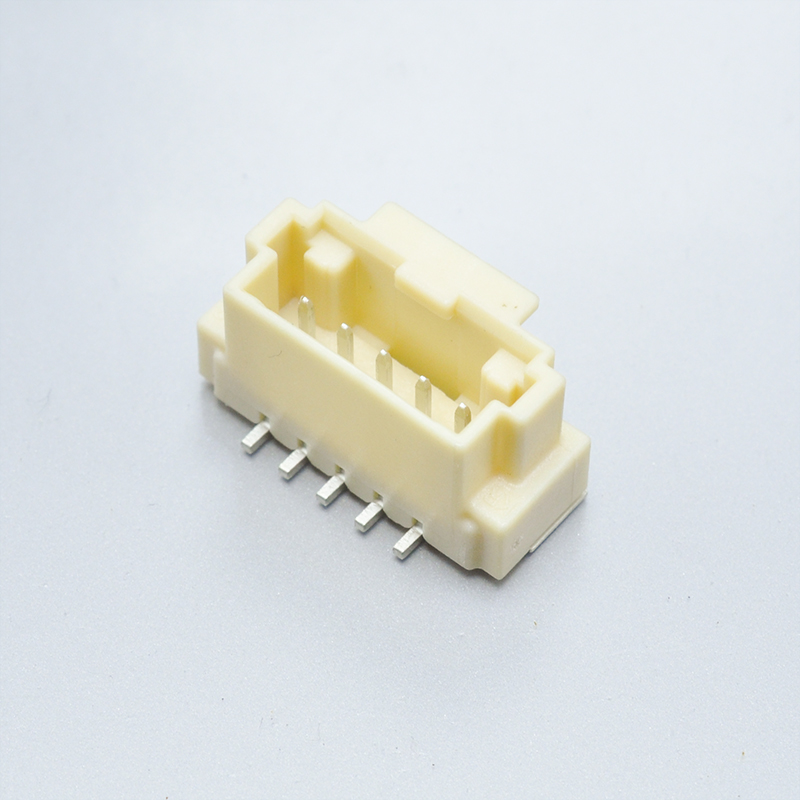
- TPA (Terminal Position Assurance): A secondary locking feature built into or added onto a connector housing that confirms each terminal is fully seated in its cavity and prevents it from backing out under vibration or pull force. TPA is a standard structural element in connector families designed for automotive and power tool use, where mechanical stress is common.
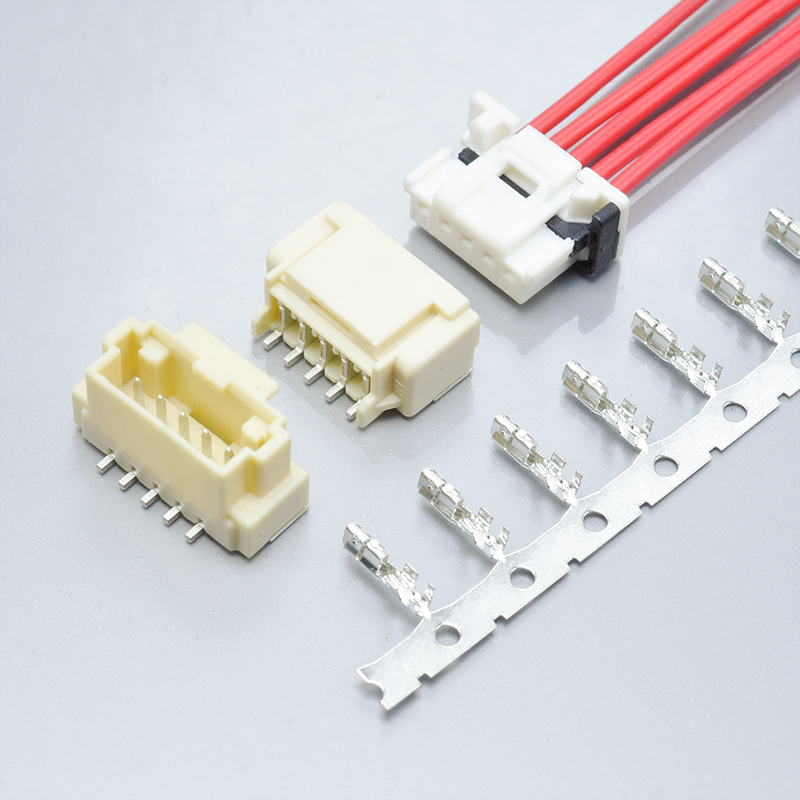
- Housing: The plastic body of the connector that holds terminal cavities in place; housings are produced in single-row and dual-row configurations depending on circuit density requirements.
- Terminal: The conductive contact element crimped or soldered to a wire, inserted into the housing cavity, and retained by the primary latch and, where present, the TPA feature.
- Wafer: A board-mounted connector half, available in SMT (surface-mount technology) and DIP (dual in-line package) orientations such as 90° or 180°, used to interface a wire-side connector to a printed circuit board.
- Cross-Reference: A documented equivalence between a manufacturer’s part number and an original equipment part number from brands such as JST, HIROSE, Molex, or YEONHO, allowing buyers to identify functionally interchangeable domestic alternatives.
- CCD Inspection: Charge-coupled device visual inspection using industrial cameras and PLC-controlled systems to verify terminal seating, housing dimensions, and assembly quality before shipment.
- Automation Coverage: The proportion of production steps handled by automated equipment rather than manual labor, which directly affects dimensional consistency of features like TPA locking tabs.
Key Selection Criteria for a TPA Connector
Once the terminology is clear, buyers can apply structured evaluation criteria. The following factors determine whether a TPA connector will perform reliably in its intended application.
Terminal Retention and Secondary Locking Design
The primary function of TPA is to add a secondary mechanical lock beyond the housing’s built-in latch, and buyers should confirm that the connector family they select explicitly includes a TPA component as part of its housing, terminal, and wafer configuration set. Connector families that list TPA as a distinct configurable part—separate from housing and terminal—give assemblers a verifiable checkpoint during production. This distinction matters most in applications where vibration or repeated handling could otherwise dislodge an unlocked terminal.
Environmental and Temperature Resistance
Connectors intended for automotive lighting, on-board devices, or outdoor power tool use must withstand vibration and high-temperature exposure without degrading terminal contact. As a reference data point, thermal FEA analysis on a 63A circuit using 16 mm² copper wire showed a maximum temperature rise of 27.3 K, illustrating the kind of thermal validation buyers should expect connector suppliers to perform before recommending a part for high-current or high-heat environments. Buyers operating in coastal or cold-climate regions should also ask whether the material formulation has been specifically evaluated for those conditions, since standard materials can be prone to breakage in such settings.
Cross-Reference Compatibility with Original Part Numbers
Many industrial buyers need a domestic or alternative-source connector that fits an existing design without re-engineering the surrounding assembly. Connector series cross-referenced to JST, HIROSE, Molex, and YEONHO original part families allow direct substitution while maintaining pin pitch, housing footprint, and mating compatibility. This criterion reduces qualification time and supports supply chain continuity when original-brand parts face lead time or availability constraints.
Certification and Quality Assurance Standards
For automotive and safety-relevant applications, buyers should verify that the connector supplier operates under recognized quality management systems. Relevant certifications include IATF16949 for automotive quality management, ISO9001 for general quality systems, ISO13485 for medical device manufacturing, and IPC620 for cable and wire harness acceptability. Suppliers whose automotive connector series undergo 100% CCD visual inspection provide an additional documented quality checkpoint beyond system-level certification alone.
Delivery Capability and Supply Chain Reliability
A technically suitable TPA connector is only useful if it can be delivered within project timelines. Buyers should evaluate whether the supplier maintains nationwide production bases with prestocked key materials, since this directly shortens order lead times. A benchmark to compare against is a complete connector set sample output within 45 days, which reflects a supplier’s capacity to move from specification to physical sample without extended delays.
Component and Feature Breakdown
Understanding how individual components interact clarifies why TPA-equipped connectors behave differently from standard connectors under stress.
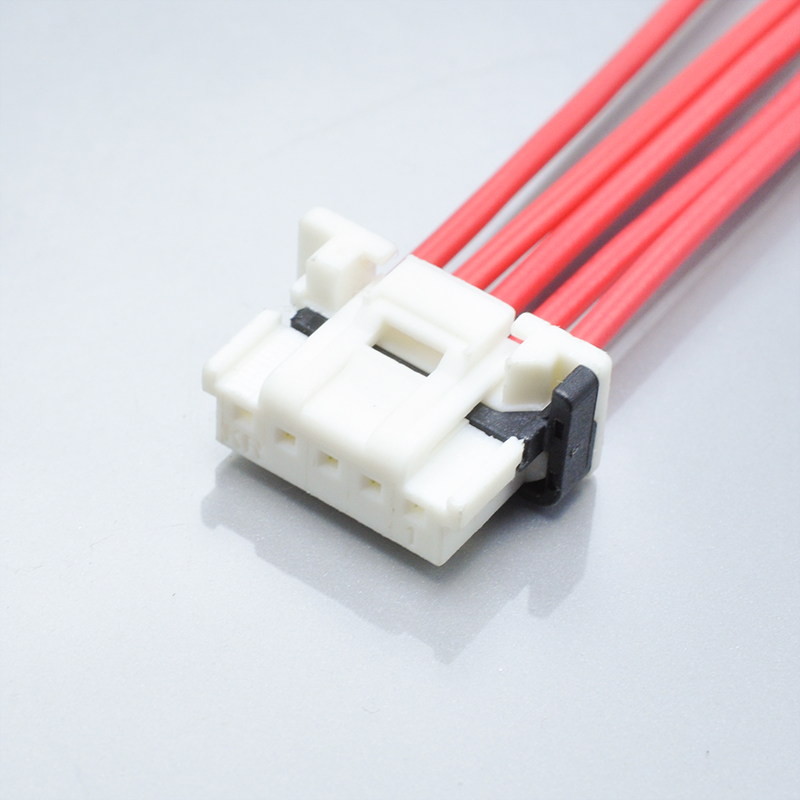
- Housing: Provides the structural cavity array and, in dual-row or single-row form, determines pin density; housing geometry also defines where the TPA insert or tab is positioned relative to each terminal cavity.
- TPA Insert: Functions as a secondary confirmation lock; in documented connector families such as the ULH2.0-based KR2023 series, TPA is offered as a distinct configurable component alongside housing, terminal, and SMT 90° wafer options, meaning buyers can specify it independently based on application vibration risk.
- Terminal: The crimp or solder contact point; its retention is only as strong as the combination of the housing’s primary latch and the TPA secondary lock working together.
- Wafer (SMT/DIP): Determines how the board-side connector mounts and orients on a PCB; SMT 90° and SMT 180° wafer options affect board layout space and mechanical stress transfer at the solder joint.
- Lock Feature: Present in several automotive-oriented families such as the MX34C-based KR2021 series, lock mechanisms work alongside TPA and A/B/C keying to prevent mismating in multi-connector harness assemblies.
Application Scenarios for TPA Connectors
TPA connectors are most relevant in applications where vibration, repeated handling, or high current density create risk of terminal displacement. In automotive lighting and on-board device wiring, TPA-equipped connectors support vibration resistance and high-temperature tolerance required for underhood or lighting-circuit environments. In power tool assemblies—including smart lawn mowers, pool cleaning robots, and floor scrubbers—connectors combining TPA with impact-resistant housings help maintain current-carrying reliability under mechanical shock. In industrial automation equipment such as robots and heavy machinery, TPA features work alongside dustproof, waterproof, and corrosion-resistant housing designs to maintain terminal integrity in demanding operating conditions.
Summary and Actionable Recommendation
Choosing a TPA connector requires evaluating five interconnected factors: the presence and design of a distinct secondary locking (TPA) component, verified environmental and thermal performance, cross-reference compatibility with established part families like JST, HIROSE, Molex, or YEONHO, documented quality certifications such as IATF16949 and ISO9001, and a supplier’s demonstrated delivery capability. Buyers should request a supplier’s TPA configuration options, thermal or FEA validation data, and cross-reference documentation before finalizing a part number. As a next step, request connector samples with TPA configurations specified for your application’s vibration and temperature profile, and confirm the supplier can support a full sample output timeline consistent with your project schedule.
https://konnra.com/how-to-choose-a-tpa-connector/
Dongguan Konnra Electronics Co., Ltd -
AuthorPosts

- You must be logged in to reply to this topic.