

- This topic is empty.
-
AuthorPosts
-
2026-07-16 at 7:32 pm #9494
When investing in a temperature and humidity test chamber, many buyers focus primarily on technical specifications or price. While these factors are certainly important, they don’t tell the whole story.
A temperature and humidity chamber is more than just a piece of laboratory equipment—it’s a long-term investment in product quality, reliability, and compliance. The manufacturer you choose will influence everything from testing accuracy and equipment lifespan to maintenance costs and after-sales support.
Today, environmental testing plays a critical role across industries such as electronics, semiconductors, automotive, aerospace, medical devices, renewable energy, and consumer products. Companies rely on these chambers to simulate real-world environmental conditions, identify potential product failures, and ensure compliance with international testing standards before products reach the market.
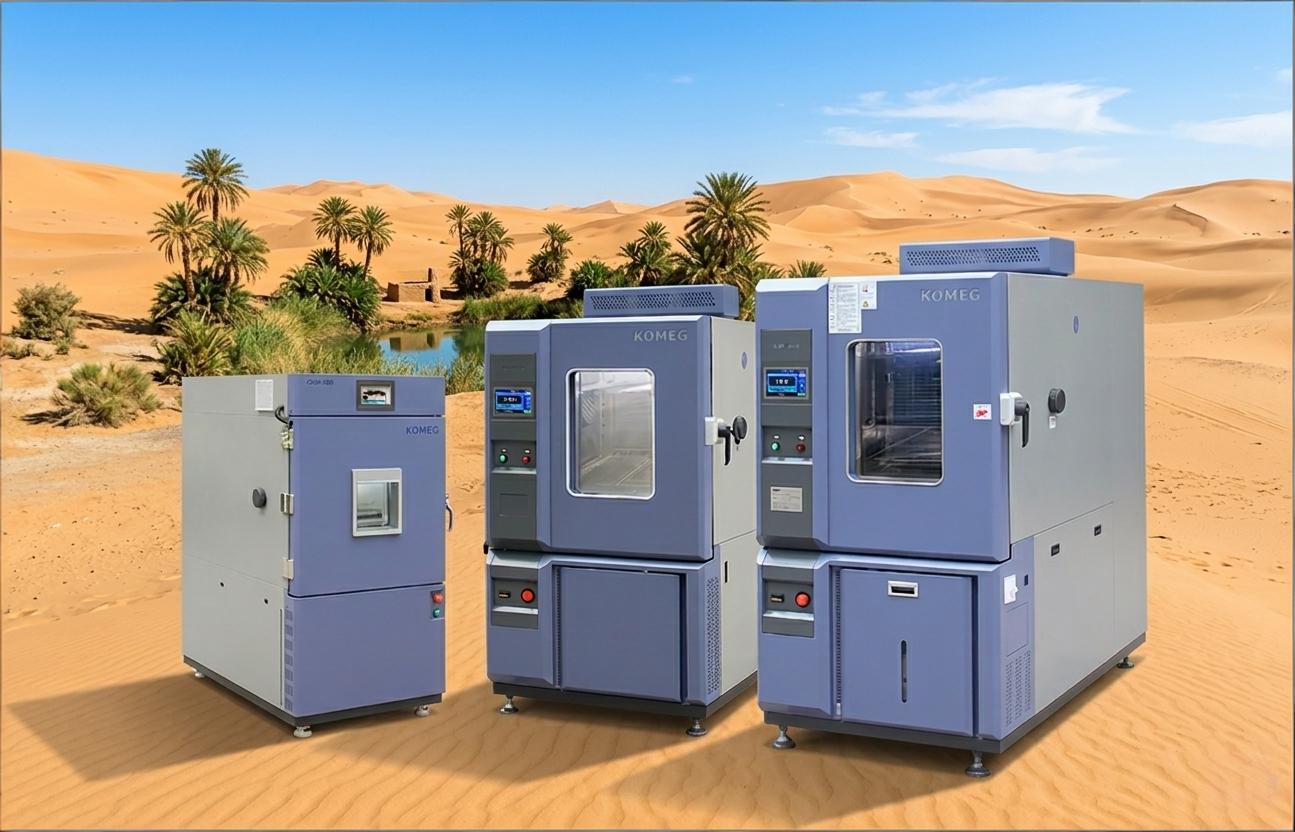
With dozens of environmental chamber manufacturers available worldwide, selecting the right supplier can feel overwhelming. Some companies are known for premium engineering, others for customization, while some focus on competitive pricing or regional support.
Rather than asking “Which manufacturer is the best?”, a more practical question is:
“Which manufacturer is best suited to my testing requirements?”
This guide explains the key factors that separate industry-leading manufacturers from ordinary suppliers and will help you make a more informed purchasing decision.
1. Look Beyond Technical Specifications
One of the biggest mistakes buyers make is comparing only the numbers listed in product catalogs.
At first glance, many environmental chambers appear remarkably similar. Several manufacturers may advertise identical temperature ranges, humidity ranges, chamber capacities, or heating rates. This often creates the impression that all equipment performs at roughly the same level.
In reality, nothing could be further from the truth.
A chamber’s specifications describe what it can achieve, but they don’t reveal how well it performs during continuous operation.
For example, many suppliers advertise a temperature range of -40°C to +150°C. However, what truly matters is whether the chamber can maintain a stable temperature for hundreds or even thousands of hours without significant fluctuation.
The same principle applies to humidity control.
Maintaining 85°C and 85%RH for 1,000 consecutive hours is far more challenging than simply reaching those values. Any variation in temperature or humidity may affect product aging, corrosion rates, or electronic reliability, leading to inconsistent test results.
Another critical indicator is temperature recovery time.
Each time an operator opens the chamber door to inspect samples or replace test specimens, the internal environment changes. A well-designed chamber quickly restores the programmed conditions, minimizing disruptions and maintaining test consistency.
When comparing different manufacturers, don’t focus solely on the maximum temperature or humidity range. Instead, ask questions such as:
- What is the chamber’s temperature fluctuation?
- How is temperature uniformity measured?
- What is the humidity tolerance across the workspace?
- How long does recovery take after the door is opened?
- Can the manufacturer provide calibration reports or performance verification data?
These questions provide much deeper insight into the actual performance of the equipment.
Ultimately, environmental testing is about consistency, not just capability.
Reliable products require reliable testing conditions, and reliable testing conditions begin with a chamber that delivers stable environmental control day after day.
2. Evaluate Engineering Capability, Not Just Manufacturing Capacity
Many companies describe themselves as environmental chamber manufacturers.
However, there is an important distinction between a company that assembles equipment and one that engineers environmental testing solutions.
Some suppliers purchase standardized refrigeration units, controllers, and electrical components before assembling them into finished products. While this approach may reduce production costs, it often limits opportunities for optimization and customization.
Leading manufacturers, by contrast, invest heavily in engineering research and product development.
Their engineering teams continuously refine critical systems, including:
- Refrigeration cycle design
- Air circulation systems
- Heating efficiency
- Humidification control
- Thermal insulation
- Control algorithms
- Structural durability
These engineering improvements directly affect chamber performance.
Take airflow as an example.
Poor airflow distribution can create temperature gradients within the chamber, causing samples placed on different shelves to experience different environmental conditions. This compromises test repeatability and reduces confidence in the results.
Similarly, refrigeration design influences cooling efficiency, compressor lifespan, energy consumption, and noise levels.
Another often-overlooked aspect is controller software.
Modern environmental chambers rely on advanced PID control algorithms that continuously adjust heating, cooling, and humidity output. Well-designed control software minimizes overshoot, improves stability, and ensures accurate environmental simulation throughout the testing process.
When evaluating a manufacturer, don’t hesitate to ask technical questions such as:
- How is airflow optimized inside the chamber?
- Which refrigeration technology is used?
- How is temperature uniformity achieved?
- What control algorithm does the system use?
- How is long-term reliability validated?
A knowledgeable engineering team should be able to explain these concepts clearly and provide supporting technical information.
Manufacturers with strong engineering capabilities are also better prepared to solve unique customer challenges. Whether designing a large walk-in chamber, integrating automation systems, or developing a custom battery testing solution, engineering expertise makes all the difference.
In many cases, the quality of the engineering team determines the quality of the final product.
3. Customization Capability Is Becoming More Important Than Ever
Manufacturing is changing rapidly.
Products are becoming more intelligent, more compact, and increasingly specialized. As a result, environmental testing requirements are also becoming more complex.
A standard temperature and humidity chamber may satisfy routine laboratory testing, but many companies now require equipment designed specifically around their products and testing procedures.
For example, an electric vehicle battery manufacturer may require an explosion-proof chamber equipped with gas monitoring systems and emergency pressure relief devices.
An aerospace supplier may need an environmental chamber capable of combining temperature control with altitude simulation.
A semiconductor manufacturer may require exceptional humidity stability for long-term reliability testing, while a medical device company may prioritize data integrity and regulatory compliance.
No single standard chamber can meet every requirement.
This is why customization has become one of the defining characteristics of leading environmental chamber manufacturers.
A capable supplier should be able to customize features such as:
- Chamber dimensions
- Temperature range
- Humidity range
- Heating and cooling rates
- Observation windows
- Cable access ports
- Stainless steel shelving
- Sample fixtures
- Automatic doors
- Explosion-proof systems
- Remote monitoring
- Data acquisition interfaces
- Walk-in environmental chambers
Beyond hardware, customization also includes software development, user interface design, communication protocols, and integration with factory automation systems.
The ability to deliver customized solutions demonstrates far more than manufacturing flexibility—it reflects the supplier’s engineering capability, project management experience, and willingness to solve customer-specific challenges.
As industries continue to innovate, environmental testing equipment must evolve alongside them.
Choosing a manufacturer with strong customization capabilities ensures your chamber can support both current projects and future testing requirements without compromising efficiency or accuracy.
4. Pay Attention to Component Quality
The performance of an environmental test chamber is only as reliable as the components inside it.
While brochures often emphasize temperature ranges and chamber capacities, experienced buyers know that the true difference between manufacturers lies beneath the surface. The quality of compressors, controllers, sensors, electrical components, and construction materials directly determines the chamber’s stability, service life, and maintenance requirements.
Think of it this way: two chambers may look almost identical from the outside, but if one uses premium components and the other relies on low-cost alternatives, their performance over the next ten years can be dramatically different.
One of the most critical components is the refrigeration system. Since cooling performance directly affects temperature control, leading manufacturers typically select high-quality compressors and optimize the refrigeration circuit for long-term efficiency. A well-designed refrigeration system not only improves cooling speed but also reduces energy consumption and extends compressor life.
The control system is another key factor. A modern programmable controller should provide precise PID regulation, intuitive operation, programmable test profiles, data storage, and communication capabilities such as Ethernet, USB, or RS-485. Reliable controllers reduce operational errors and ensure consistent testing throughout long-term reliability programs.
Sensors are equally important. High-precision temperature and humidity sensors provide accurate feedback to the control system, allowing the chamber to maintain stable environmental conditions. Poor-quality sensors can drift over time, resulting in inaccurate test data and additional calibration costs.
Construction materials also deserve attention.
Most high-quality environmental chambers use SUS304 stainless steel for the interior because of its excellent corrosion resistance and durability. For applications involving prolonged exposure to high humidity, salt spray, or highly corrosive environments, SUS316 stainless steel offers even greater resistance to corrosion and chemical attack.
Other details, such as insulation materials, circulation fans, electrical protection devices, door seals, and observation windows, also contribute to long-term performance.
Before selecting a manufacturer, consider asking questions such as:
- Which compressor brand is used?
- What type of controller is installed?
- What grade of stainless steel is used for the chamber interior?
- How often do sensors require calibration?
- What is the expected service life of key components?
A manufacturer that openly shares this information usually demonstrates confidence in the quality of its equipment.
Remember, premium components may increase the initial purchase price slightly, but they often reduce maintenance costs and downtime over the entire life of the chamber.
5. Consider Software and Data Management
Environmental testing is no longer limited to creating controlled temperature and humidity conditions.
Today’s laboratories are becoming increasingly digital, and environmental chambers are expected to integrate seamlessly into modern quality management systems.
As Industry 4.0 continues to transform manufacturing, software capabilities have become just as important as hardware performance.
Modern environmental chambers should provide much more than a simple touchscreen interface.
Instead, they should function as intelligent testing platforms capable of collecting, storing, analyzing, and transmitting testing data throughout the entire product validation process.
A well-designed control system typically includes features such as:
- Multi-step programmable testing profiles
- Real-time temperature and humidity monitoring
- Historical data storage
- USB data export
- Ethernet communication
- Remote monitoring
- Alarm history
- User permission management
- Automatic report generation
These functions significantly improve laboratory efficiency while reducing the risk of human error.
For manufacturers operating multiple testing laboratories, centralized monitoring has become increasingly valuable. Engineers can monitor chamber status remotely, receive alarm notifications, review historical trends, and even modify test programs without being physically present in the laboratory.
Data traceability is another critical consideration.
Many industries—including automotive, aerospace, electronics, and medical devices—must maintain detailed environmental testing records for audits and certification purposes.
An advanced software platform helps organizations maintain complete documentation while improving compliance with standards such as ISO 9001, IATF 16949, and other quality management systems.
Some manufacturers also provide integration with factory automation platforms, including:
- MES (Manufacturing Execution Systems)
- SCADA systems
- OPC UA communication
- Modbus protocols
- Cloud-based monitoring platforms
These capabilities enable environmental chambers to become part of a fully connected manufacturing ecosystem.
When evaluating manufacturers, ask questions such as:
- Does the controller support Ethernet communication?
- Can testing data be exported automatically?
- Is remote monitoring available?
- Can the chamber integrate with our existing factory management system?
- Are software updates available in the future?
As environmental testing becomes increasingly digital, choosing a manufacturer with strong software capabilities helps ensure your investment remains valuable for years to come.
6. Evaluate After-Sales Support
Even the most reliable environmental chamber will eventually require maintenance.
Compressors wear over time, sensors require calibration, software may need updates, and preventive maintenance is essential to ensure long-term performance.
This is why after-sales support should be considered just as carefully as the chamber itself.
Unfortunately, many buyers underestimate this factor during the purchasing process.
They compare technical specifications and quotations in great detail but spend very little time evaluating the supplier’s service capabilities.
This can become a costly mistake.
Imagine your environmental chamber suddenly stops operating during a critical product validation project.
If replacement parts are unavailable or technical support is slow to respond, testing schedules may be delayed for days or even weeks. Such interruptions can postpone product launches, increase development costs, and affect customer delivery commitments.
Leading manufacturers recognize that environmental chambers are long-term investments and provide comprehensive support throughout the equipment lifecycle.
A professional supplier should be able to offer:
- Installation and commissioning
- Operator training
- Preventive maintenance programs
- Calibration services
- Remote technical support
- Online troubleshooting
- Spare parts supply
- Software upgrades
- Emergency service
Response time is particularly important.
Ask potential suppliers:
- How quickly can engineers respond to technical issues?
- Are spare parts stocked locally or internationally?
- Can software problems be diagnosed remotely?
- What preventive maintenance services are recommended?
- Is online technical support available?
The answers to these questions often reveal how committed a manufacturer is to customer success.
Strong after-sales support doesn’t simply repair equipment—it minimizes downtime, protects testing schedules, and helps maximize the return on your investment.
For multinational companies, global service capability becomes even more valuable. A manufacturer with international technical support can provide faster assistance regardless of where the equipment is installed.
7. Compare Total Cost of Ownership—Not Just Purchase Price
When purchasing capital equipment, it’s natural to compare quotations.
However, focusing only on the purchase price can lead to poor long-term decisions.
An environmental chamber typically remains in service for 10 to 15 years, and its operating costs during that period often exceed the original purchase price.
This concept is known as the Total Cost of Ownership (TCO).
Instead of asking:
“Which chamber is cheaper?”
Ask:
“Which chamber will cost less to own over the next ten years?”
Several factors influence the total cost of ownership:
Energy Consumption
Environmental chambers operate continuously for long periods.
High-efficiency refrigeration systems, improved insulation, and intelligent control algorithms can significantly reduce electricity consumption.
Maintenance Costs
Premium components generally require less frequent maintenance and have longer service intervals.
Lower-cost equipment may initially appear attractive but often requires more repairs over time.
Equipment Downtime
Unexpected equipment failures can delay product development, interrupt certification programs, and increase labor costs.
Reliable equipment minimizes these risks.
Spare Parts Availability
A chamber with readily available spare parts can often return to service within days.
Equipment relying on difficult-to-source components may remain out of operation for extended periods.
Calibration and Compliance
Environmental chambers require periodic calibration to maintain testing accuracy.
Manufacturers that provide calibration support simplify regulatory compliance while reducing administrative effort.
Equipment Lifespan
A chamber designed for continuous industrial operation may remain productive for more than a decade.
Choosing higher-quality equipment often results in a lower annual ownership cost despite the higher initial investment.
Smart purchasing decisions consider the complete lifecycle of the equipment rather than simply comparing quotations.
Ultimately, the goal isn’t to buy the least expensive chamber.
It’s to invest in the chamber that delivers the greatest long-term value.
8. Choose a Manufacturer That Understands Your Industry
Not all environmental testing requirements are the same.
While temperature and humidity chambers share similar operating principles, the testing objectives vary significantly from one industry to another. A manufacturer with experience in your specific field can recommend more suitable configurations, help you comply with industry standards, and reduce costly trial-and-error during equipment selection.
Instead of asking whether a manufacturer has sold many chambers, ask whether they have solved challenges similar to yours.
Let’s look at a few examples.
Semiconductor & Electronics
Semiconductor devices are extremely sensitive to environmental changes. Even minor fluctuations in temperature or humidity can influence electrical performance and long-term reliability.
Manufacturers in this industry commonly perform tests such as:
- 85°C / 85%RH reliability testing
- High-temperature storage testing
- Low-temperature operation testing
- Temperature cycling
- HAST (Highly Accelerated Stress Test)
These applications demand exceptional temperature and humidity stability, along with precise control and repeatability. A supplier familiar with semiconductor testing will understand standards such as JEDEC and can recommend chambers optimized for long-duration reliability testing.
Automotive Industry
Automotive components must perform reliably in some of the harshest environments imaginable—from freezing winters in Northern Europe to scorching deserts in the Middle East.
Environmental testing often includes:
- High and low temperature testing
- Temperature cycling
- Humidity testing
- Thermal shock
- Combined environmental testing
Automotive manufacturers also require equipment that complies with standards such as ISO 16750, IEC 60068, and various OEM specifications.
A manufacturer with automotive experience understands these requirements and can recommend chambers with faster temperature transitions, larger working spaces, and enhanced durability for continuous testing.
Battery & New Energy
Battery testing has become one of the fastest-growing applications for environmental chambers.
Lithium-ion batteries and energy storage systems present unique safety challenges that standard chambers may not address.
Typical requirements include:
- Explosion-proof chamber design
- Gas monitoring systems
- Pressure relief devices
- Fire suppression systems
- Safety interlock mechanisms
- Battery charging and discharging interfaces
Because safety is critical, manufacturers with experience in battery testing can provide integrated protection systems while helping customers comply with standards such as UN 38.3, IEC 62660, UL 2580, and other international regulations.
Aerospace & Defense
Products designed for aerospace applications are expected to perform under some of the world’s most demanding environmental conditions.
Testing may include:
- High-altitude simulation
- Extreme low temperatures
- Rapid temperature transitions
- Long-duration reliability testing
- Combined environmental stress testing
These applications often require highly customized equipment capable of simulating multiple environmental conditions simultaneously.
Manufacturers with aerospace experience typically have stronger engineering capabilities and a deeper understanding of military and aviation standards.
Medical Devices & Pharmaceutical Industry
Medical equipment and pharmaceutical products often require stable environmental conditions during both product development and storage validation.
In addition to temperature and humidity control, manufacturers may require:
- Continuous data recording
- User access management
- Audit trails
- Long-term stability testing
- Compliance with GMP and ISO quality systems
A supplier familiar with this industry can provide documentation and software features that simplify regulatory compliance while ensuring reliable testing performance.
The more familiar a manufacturer is with your industry, the more valuable their technical recommendations become.
Instead of simply selling equipment, they become a partner capable of improving your entire testing process.
9. Questions to Ask Before Choosing a Manufacturer
Selecting an environmental chamber manufacturer is a significant investment, and asking the right questions before making a decision can save both time and money.
Beyond reviewing brochures and technical specifications, it’s important to understand how the supplier will support your business over the equipment’s entire lifecycle.
Here are some key questions worth asking during the evaluation process:
About the Company
- How many years have you been manufacturing environmental test chambers?
- Which countries do you currently serve?
- Can you provide references from customers in my industry?
About Product Performance
- How do you ensure temperature and humidity uniformity?
- What testing standards does the chamber support?
- Can you provide calibration reports or performance validation data?
About Customization
- Can the chamber be customized for my application?
- Can additional cable ports, shelves, or observation windows be added?
- Do you design custom environmental testing systems?
About Service
- What warranty is included?
- Do you provide installation and operator training?
- Is remote technical support available?
- How quickly can spare parts be supplied?
About Long-Term Cooperation
- Can the chamber be upgraded in the future?
- How often is preventive maintenance recommended?
- Will software updates continue after installation?
A professional manufacturer should answer these questions clearly and confidently. Their willingness to discuss technical details often reflects the strength of their engineering team and their commitment to customer success.
Why More Manufacturers Are Looking Beyond Traditional Brands
For many years, companies such as ESPEC, Weiss Technik, and Thermotron have been regarded as industry leaders in environmental testing equipment. Their long histories, strong engineering capabilities, and global service networks have made them trusted partners for manufacturers worldwide.
However, today’s buyers are looking for more than brand recognition alone.
Shorter product development cycles, increasing demand for customized testing solutions, and tighter project budgets have shifted purchasing priorities. Manufacturers now value flexibility, responsive communication, and the ability to tailor equipment to specific testing requirements.
This has created opportunities for emerging global suppliers.
Among them, KOMEG has gained recognition by combining more than 30 years of manufacturing experience with a strong focus on customized environmental testing solutions. Rather than limiting customers to standard configurations, KOMEG works closely with engineering teams to develop chambers that match specific testing objectives, laboratory layouts, and industry standards.
Its product portfolio includes:
- Temperature & Humidity Test Chambers
- Thermal Shock Chambers
- Rapid Temperature Change Chambers
- HAST Chambers
- Altitude Test Chambers
- ESS Chambers
- Walk-in Environmental Chambers
- Battery Test Chambers
By combining reliable environmental control, intelligent touchscreen controllers, durable construction, and flexible customization, KOMEG has become a trusted supplier for customers across Europe, North America, Southeast Asia, the Middle East, and many other regions.
For organizations seeking a balance between performance, customization, technical support, and long-term value, KOMEG represents a compelling alternative alongside more established international brands.
Final Thoughts
Choosing the right temperature and humidity test chamber manufacturer is about much more than comparing technical specifications or finding the lowest quotation.
The right supplier should offer reliable equipment, strong engineering expertise, customization capabilities, comprehensive after-sales support, and a clear understanding of your industry’s testing requirements.
As environmental testing becomes increasingly sophisticated, manufacturers need partners who can provide not only high-performance equipment but also long-term technical support and innovative solutions.
Whether you choose a globally established brand such as ESPEC, Weiss Technik, or Thermotron, or work with an experienced manufacturer like KOMEG that emphasizes flexibility and customized engineering, the key is selecting a partner that aligns with your business goals.
A well-designed environmental chamber is more than a testing device—it is an investment in product quality, customer confidence, and long-term success.
Frequently Asked Questions (FAQ)
1. What is a temperature and humidity test chamber?
A temperature and humidity test chamber is an environmental testing system that simulates controlled temperature and humidity conditions to evaluate product reliability, durability, and performance under different climates.
2. Which industries use environmental test chambers?
Environmental chambers are widely used in electronics, semiconductors, automotive, aerospace, batteries, medical devices, renewable energy, telecommunications, universities, and research laboratories.
3. Can environmental test chambers be customized?
Yes. Many manufacturers offer customized chamber sizes, temperature ranges, humidity ranges, cable ports, observation windows, explosion-proof systems, data acquisition interfaces, and other application-specific features.
4. How long does a temperature and humidity test chamber last?
With proper maintenance and regular calibration, a high-quality environmental chamber typically has a service life of 10–15 years or longer.
5. What should I consider when choosing a manufacturer?
Key considerations include engineering expertise, temperature and humidity stability, customization capability, software functionality, component quality, after-sales support, global service, and the total cost of ownership over the equipment’s lifetime.
https://www.komegtek.com/product-category/temperature-and-humidity-test-chambers/
Temperature and Humidity Test Chambers -
AuthorPosts

- You must be logged in to reply to this topic.