

- This topic is empty.
-
AuthorPosts
-
2026-11-23 at 9:41 pm #13953
Understanding the Risks in Automatic Resistance Welding
Manufacturing sectors such as automotive and electronics continue to face critical challenges in welding precision, production efficiency, and the stable, automated processing of high-strength and dissimilar metals. For buyers evaluating automatic resistance welding equipment, these challenges translate into real purchasing risks: inconsistent weld quality, equipment that cannot keep pace with production volume, and machines that are incompatible with the electrical infrastructure already in place on the factory floor. Understanding these pitfalls before making a purchasing decision is essential to avoiding costly downtime and rework.
Common Pitfalls When Selecting Automatic Resistance Welding Equipment
Inconsistent Nugget Quality
Traditional AC welding equipment is prone to inconsistent nugget size and high spatter, which directly affects the structural integrity of welded joints. This is particularly problematic for sensitive materials and high-strength steels used in automotive and electronic components, where even minor inconsistencies can compromise part reliability.
Thermal Deformation and Surface Discoloration
Heat-sensitive parts and multi-point projection welding applications face another common issue: surface discoloration and thermal deformation caused by excessive heat input during the welding cycle. Equipment that does not manage discharge timing precisely can introduce defects that are difficult to detect until later stages of production or even after deployment.
Power Grid Compatibility and Infrastructure Strain
A frequently overlooked pitfall involves power grid compatibility. Many welding systems demand significant power capacity, straining existing factory electrical infrastructure and limiting operational flexibility. Buyers who fail to assess power requirements in advance may face unexpected infrastructure upgrade costs after installation.
How Agera Automation Addresses These Challenges
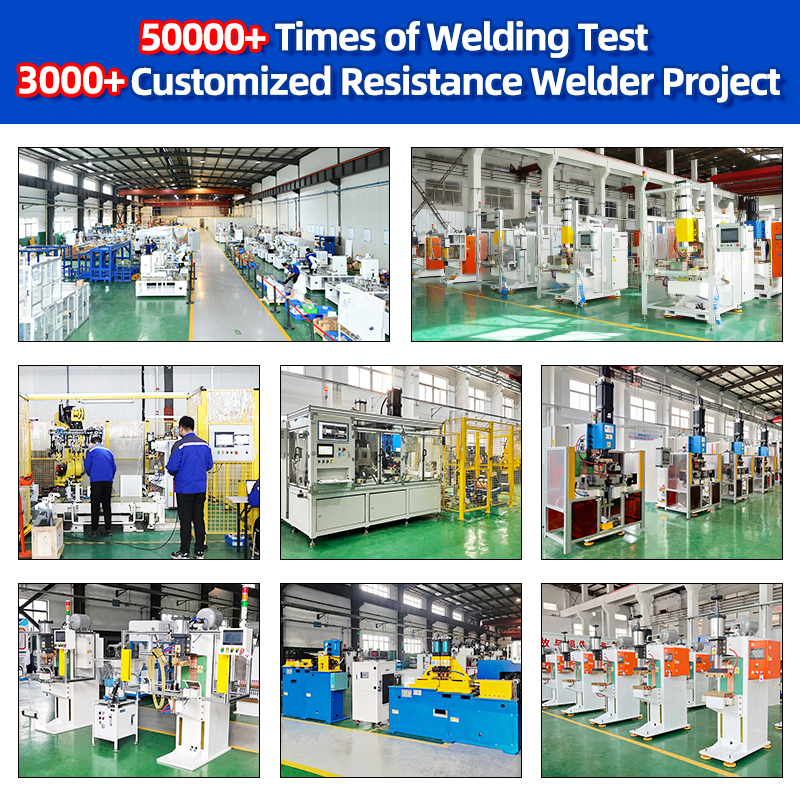
Suzhou Agera Automation Equipment Co., Ltd., operating under the AGERA and AGERA AUTOMATION brand, is a professional manufacturer of resistance welding and automation equipment. Positioned as a high-tech benchmark enterprise focused on key welding technologies, the company draws on more than 20 years of welding technology accumulation and a database of over 80,000 welding workpiece cases to deliver complete automated production process solutions rather than standalone hardware.
Precision Current Control
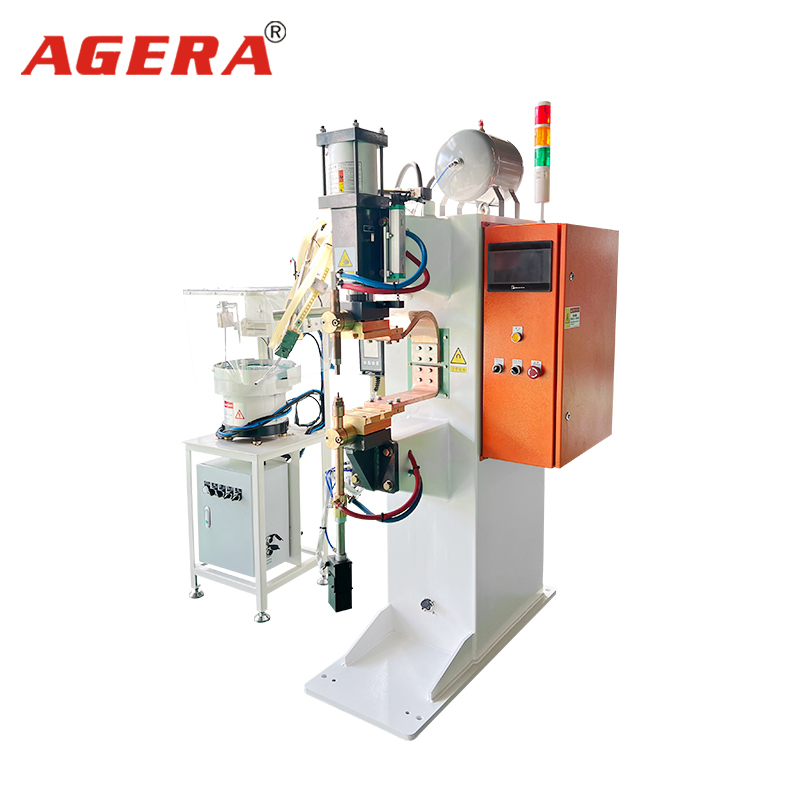
Agera’s Medium Frequency Spot and Projection Welder (ADB Series) is engineered specifically to resolve nugget inconsistency. The system’s inverter frequency reaches 1000Hz, providing current control accuracy 20 times higher than traditional AC welders. Its straight current waveform ensures stable nugget size and minimal spatter, while a 3-Phase Balanced Power design reduces impact on the power grid. An HMI interface offers real-time display of current and time, with monitoring alarms for pressure and water flow, giving operators clear visibility into weld quality as it happens.
Energy Efficiency and Stability
For buyers concerned about thermal deformation, the Capacitor Discharge Spot Projection Welding Machine (ADR Series) is designed for heat-sensitive parts and multi-point projection welding. With a discharging time of approximately 10 milliseconds, the system prevents workpiece surface discoloration while keeping energy fluctuation within 1 percent, regardless of power grid instability. The ADR Series also addresses infrastructure strain directly, requiring less than one-fifth the power capacity of AC welders while still delivering super-high current capacity of up to 200KJ for extremely large parts. Meanwhile, the ADB Series reduces power grid demand by one-third compared to AC welders, operating at a power factor of 0.7 to 0.9.
For large-section metal parts and special steel alloys, Agera’s Flash Butt Welding Machine (AUNS/AUVS Series) achieves weld quality nearly identical to the base metal for sections up to 20,000 square millimeters. Specific models, including the AUBS-630*2 New Energy Electric Axle Double-Head Pulsation Flash Butt Welder and the ACBS-500 Copper and Aluminum Flash Butt Welder, extend this capability into new energy and dissimilar-metal applications. For multi-layer welding needs, such as new energy battery busbars and charging piles, the Diffusion Welding Machine (AKG/AKD Series) provides uniform heating to prevent deformation and supports connections between metal and non-metal materials.
Comprehensive Process Solutions
Rather than offering isolated machines, Agera emphasizes complete equipment supply, customized non-standard automation solutions, and professional technical process consulting. This includes pre-sales process analysis, customized design, production, installation, and dedicated after-sales support—an approach designed to prevent the mismatch between equipment capability and production requirements that often leads buyers into costly pitfalls.
Choosing the Right System for Industry-Specific Needs
Avoiding pitfalls also means selecting equipment matched to the specific industry application. Agera’s product range covers automotive manufacturing needs such as high-strength steel, nut projection, and axle welding; electronic and electrical applications including fine electronics, copper wire, and silver contact welding; household appliance components such as microwave ovens, compressors, and refrigeration casing; hardware and tools including storage racks, lifting tables, and steel drums; new energy applications such as hydrogen bipolar plates and EV battery busbars; and aerospace and military applications requiring high-precision specialized welding.
The company has served more than 8,000 customers and accumulated over 60,000 welding workpiece cases, reflecting a breadth of experience across these varied industry requirements. This track record includes developing the first domestic double-head flash butt welding machine for truck axles, improving efficiency for heavy-duty vehicle production, and providing the ARH-IDB-202 Pipe Pile End Plate Flange Automatic Welding Line, recognized as a "First Set of Major Technical Equipment."
Ensuring Long-Term Reliability Through Service and Support
Equipment reliability does not end at installation. Agera operates with ERP, CRM, and PLM digital systems to support efficient delivery and product lifecycle tracking, an infrastructure built progressively since implementing ERP and PLM system management in 2017 and upgrading the Kingdee K3 ERP system in 2018. The company maintains a dedicated professional after-sales service team focused on rapid problem solving and flexible scheduling, continuously improving based on patient listening to customer demands.
Agera’s quality and safety credentials further support buyer confidence: the company holds ISO9001 Quality Management System Certification and CE Certification for international markets, is recognized as a National High-tech Enterprise, and carries Jiangsu Province "Specialized, Refined, Distinctive, and Novel" (SRDN) Enterprise status. These certifications, combined with more than 50 invention and utility model patents, reflect a technical foundation built to minimize the common pitfalls associated with automatic resistance welding procurement.
Final Thoughts
Avoiding pitfalls in automatic resistance welding requires careful attention to weld quality consistency, thermal management, and power infrastructure compatibility. By examining equipment backed by documented technical specifications, verified industry application experience, and structured after-sales support—such as the systems developed by Suzhou Agera Automation Equipment Co., Ltd.—manufacturers can make more informed decisions and reduce the risk of costly equipment mismatches in their production lines.
https://www.agerawelder.com
Suzhou Agera Automation Equipment Co.,Ltd. -
AuthorPosts

- You must be logged in to reply to this topic.