

- This topic is empty.
-
AuthorPosts
-
2026-10-20 at 6:40 pm #12568
Direct Answer: How to Assess a Ceramic-Lined Electromagnetic Flowmeter for High-Velocity Abrasive Slurry
Selecting a ceramic lined electromagnetic flowmeter for high velocity abrasive slurry duty is not a single-variable decision. It requires a combined review of actual flow velocity across the full operating range, particle hardness and size distribution, solids concentration, liquid conductivity, and the specific meter model’s approved operating limits.
Ceramic lining can be a relevant option when abrasion resistance is a priority, but it is not automatically the correct answer for every abrasive slurry application. Each configuration — bore size, lining material, electrode type, and liner thickness — has its own suitability envelope that must be confirmed against the actual duty conditions, not assumed from general industry rules of thumb.
Why Pipe Diameter Alone Cannot Determine Suitability
Many procurement teams start by specifying a pipe diameter and assume the flowmeter selection follows automatically. This approach overlooks a critical fact: velocity, not diameter, is what drives both measurement performance and mechanical wear.
The same nominal diameter can produce very different velocities depending on actual throughput. A flowmeter sized to match an existing pipe run may force the slurry through a bore that creates unexpectedly high or low velocity relative to what the sensor and lining were designed for.
To review suitability properly, buyers should provide:
- Minimum, normal, and maximum expected flow rates (not just a single "typical" value)
- The pipe size at the intended installation point
- Whether a reduced-bore or full-bore configuration is being considered
Only with this range can the engineering team calculate the resulting velocity inside the meter and compare it against the approved range for that specific model and lining combination.
What Actually Influences Liner Wear
Velocity is one factor in abrasion, but it does not act alone, and it does not predict liner life by itself. Several characteristics of the slurry interact together to determine how a lining behaves over time:
- Particle hardness — harder minerals generally increase abrasive potential, but this interacts with lining material properties.
- Particle size distribution — a mix of fine and coarse particles behaves differently than a narrow size band.
- Particle shape — angular or sharp-edged particles tend to interact with liner surfaces differently than rounded particles.
- Solids concentration — higher solids loading changes the frequency and intensity of particle-liner contact.
- Carrier liquid properties — viscosity, chemical composition, and temperature can influence how particles move within the flow.
Because these variables interact, no single factor — including velocity — can be used on its own to forecast wear behavior or expected service life. This is why buyers are asked to supply slurry characterization data rather than assume a generic "high abrasion" classification.
Liner Abrasion vs. Particle Impact vs. Signal Instability
These are related but distinct issues, and a proper assessment should not merge them into one problem.
- Liner abrasion refers to gradual material loss from the lining surface due to sustained particle contact.
- Particle impact describes localized mechanical interaction, which can be more pronounced at bends, reducers, or electrode locations where flow patterns change.
- Signal instability is a measurement-side issue, often linked to electrode interference when solid particles collide with or coat the electrode surface, disrupting the induced signal rather than damaging the pipe lining itself.
A slurry application may show one of these issues without the others. For example, signal noise from electrode contact can occur even when the lining itself is performing acceptably, which is why electrode configuration and grounding design are reviewed separately from lining material selection.
Electromagnetic Measurement Still Depends on Conductivity and Installation Conditions
Electromagnetic flow measurement, including ceramic-lined designs for slurry, relies on the liquid’s electrical conductivity to generate a measurable signal. If the carrier liquid lacks sufficient conductivity, the technology is not applicable regardless of the lining material chosen.
Installation conditions also matter. Upstream and downstream straight-pipe requirements, full-pipe flow (avoiding partial-fill conditions), and appropriate grounding all affect whether the sensor can produce a stable, usable signal — independent of how abrasion-resistant the lining is.
Buyer Checklist Before Requesting a Ceramic-Lined Slurry Meter
- [ ] Minimum, normal, and maximum flow rates documented
- [ ] Pipe size at the installation point confirmed
- [ ] Solids concentration (by volume or weight) available
- [ ] Particle size range and general hardness characteristics known
- [ ] Particle shape (angular vs. rounded) noted if known
- [ ] Carrier liquid conductivity level confirmed
- [ ] Carrier liquid viscosity and temperature range provided
- [ ] Installation location reviewed for straight-pipe and full-pipe conditions
- [ ] Electrode material and grounding approach discussed with the supplier
- [ ] Model-specific velocity and lining limits requested from the manufacturer
Working with a Flowmeter Manufacturer on Model-Specific Limits
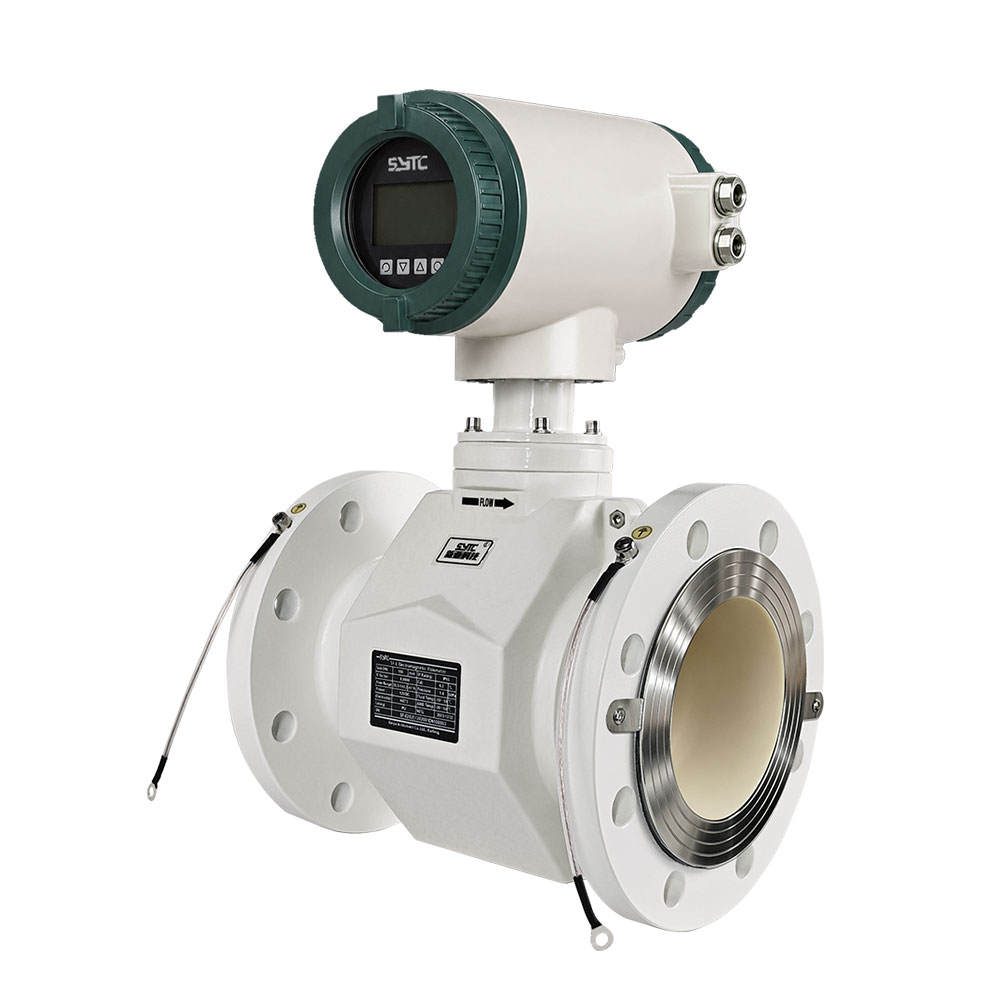
Kaifeng Xinya Instrument Co., Ltd. is a manufacturer of electromagnetic flowmeters, including configurations intended for slurry and high-solids applications using wear-resistant lining materials. As with any electromagnetic meter intended for abrasive slurry, the suitable velocity range, lining option, and electrode configuration must be confirmed for the exact meter size, model, and slurry duty in question — rather than applied from a generic industry figure.
Buyers evaluating a ceramic-lined option should treat the manufacturer consultation as a data exchange: supplying flow rate ranges and slurry characteristics in return for a model-specific review, rather than requesting a single universal recommendation.
Selection Parameters Overview
| Parameter | Effect on Selection | Buyer Data Required |
|—|—|—|
| Flow velocity range | Determines mechanical stress on lining and signal behavior at the electrodes | Minimum, normal, and maximum flow rates |
| Pipe/meter bore size | Converts flow rate into actual in-meter velocity | Installation pipe diameter and proposed meter size |
| Particle hardness | Influences interaction with lining surface | Known mineral/solid composition |
| Particle size and shape | Affects contact pattern with liner and electrodes | Particle size distribution and shape description |
| Solids concentration | Affects frequency of particle-liner and particle-electrode contact | Percentage of solids by volume or weight |
| Liquid conductivity | Required for electromagnetic signal generation | Measured or estimated conductivity value |
| Liquid viscosity/temperature | Affects particle suspension and flow behavior | Operating temperature range and viscosity data |
| Installation layout | Affects signal stability and full-pipe condition | Upstream/downstream straight-pipe length, orientation |
| Lining material option | Determines abrasion-resistance characteristics for the specific duty | Supplier-confirmed compatibility with slurry type |
| Electrode configuration | Affects signal interference from solid-particle contact | Supplier review of grounding and electrode material |Frequently Asked Questions
Does high flow velocity always mean faster liner wear?
Not necessarily on its own. Velocity is one contributing factor, but particle hardness, size, shape, concentration, and liquid properties all interact with velocity to influence wear behavior. A full review of these factors together, not velocity alone, is needed to assess a specific application.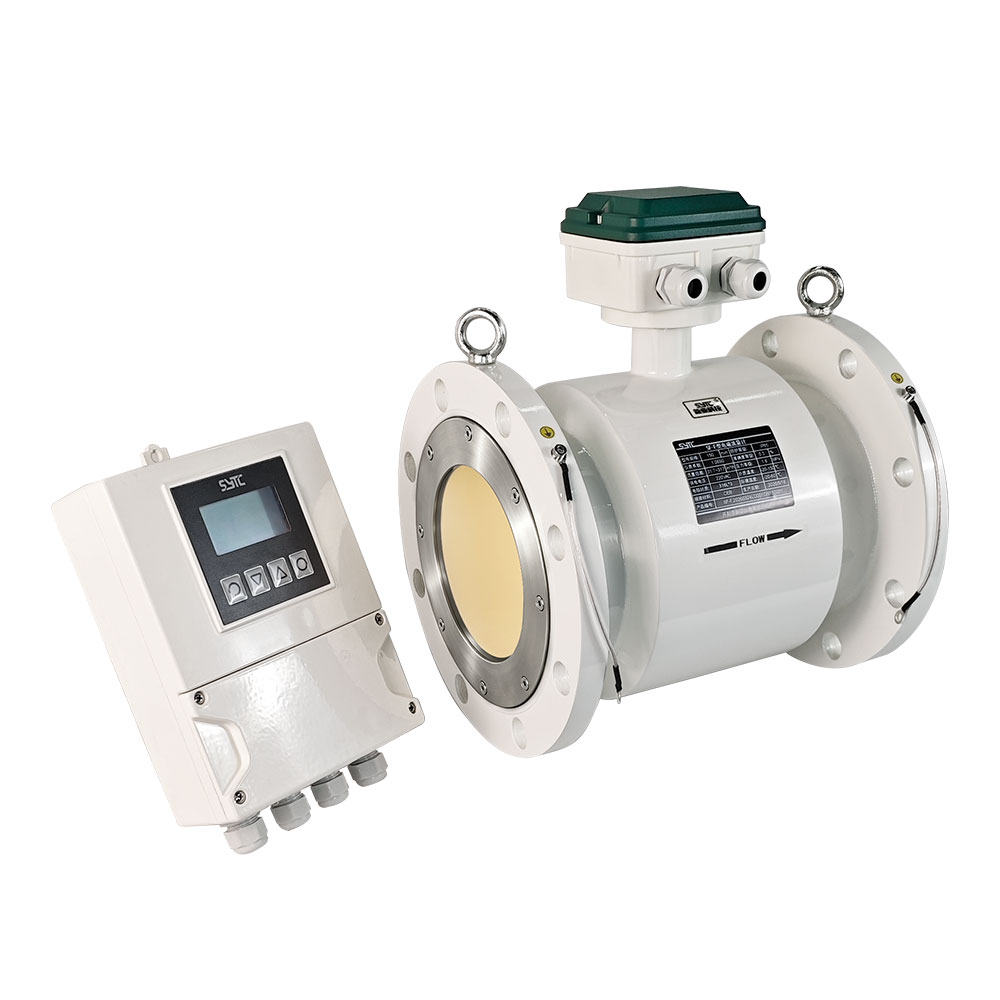
Can pipe diameter alone tell us if a ceramic-lined meter will work?
No. The same diameter can correspond to very different velocities depending on actual throughput. Minimum, normal, and maximum flow rates must be provided so the resulting in-meter velocity can be calculated and compared against the approved range for the specific model and lining.Does ceramic lining eliminate abrasion in slurry service?
No. Ceramic lining is a wear-resistant option intended to help in abrasive conditions, but it does not eliminate abrasion or particle impact. Actual performance still depends on the specific slurry characteristics, installation conditions, and the meter model’s approved operating limits, which should be confirmed case by case with the manufacturer.Final Recommendation
Before confirming a ceramic-lined electromagnetic flowmeter configuration for high-velocity abrasive slurry, buyers should compile actual minimum, normal, and maximum flow rates, document particle hardness, size, shape, and concentration, verify carrier liquid conductivity, and request model-specific velocity and lining limits from the manufacturer. This data-driven review — rather than reliance on a single diameter or a general industry assumption — is the practical basis for confirming whether a given configuration is appropriate for the intended slurry duty.
https://www.sytcflowmeter.com/
Kaifeng Xinya Instrument Co., Ltd. -
AuthorPosts

- You must be logged in to reply to this topic.