

- This topic is empty.
-
AuthorPosts
-
2026-10-23 at 2:55 pm #12705
As industrial facilities expand and production requirements change, their electrical distribution systems must adapt accordingly. New machinery may be installed, existing production lines may be relocated, and additional power capacity may be required to support higher output. These changes can become complicated when the original electrical infrastructure is difficult to modify.
An air-insulated busway offers an alternative approach to distributing electrical power throughout factories, workshops, and other industrial buildings. By using enclosed conductors and prefabricated sections, it creates an organized distribution route that can be planned around equipment locations and future operational needs.
However, choosing a suitable busway system involves more than comparing rated current or installation costs. Engineers must consider electrical loads, environmental conditions, installation space, component compatibility, and long-term maintenance requirements.
This article explores how air-insulated busway works, where it can be useful, and what industrial buyers should consider before selecting a system.
1. Understanding the Structure of an Air-Insulated Busway
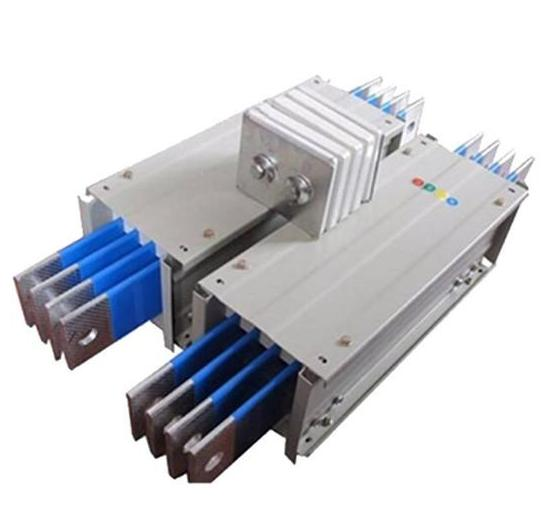
An air-insulated busway is an electrical distribution assembly in which air serves as the insulating medium between conductors. The conductors are housed within a protective enclosure, and the system is assembled from sections and compatible components designed for a specific electrical application.
Depending on the product design, the main components may include copper or aluminum busbars, straight sections, elbows, joint assemblies, feeder connections, and branch connection units.
Unlike a conventional cable installation, which distributes power through individual cables routed in trays or conduits, a busway uses prefabricated busbar sections to establish a defined power distribution path. This arrangement can be useful in facilities where electrical loads are distributed across multiple production areas.
The exact configuration depends on the rated voltage, current requirements, short-circuit withstand capability, installation environment, and connection arrangement.
Air-insulated busway is not necessarily the best solution for every project. Its suitability should be assessed against the facility's electrical design, available installation space, operating conditions, and future expansion plans.
2. Adapting to Changing Factory Layouts
Manufacturing facilities frequently undergo layout changes as production processes evolve. A machine may be moved to improve workflow, a new assembly station may be introduced, or an existing production area may be divided into smaller operating zones.
These changes can place additional demands on the electrical distribution network.
A properly planned air-insulated busway system can provide a clearly defined route along suitable structural supports, ceilings, or designated service corridors. Standardized sections and fittings help engineers coordinate the route with the building structure and the positions of connected equipment.
For example, when a factory adds machinery near an existing production line, engineers can evaluate whether the current busway route has sufficient capacity and whether a compatible connection point can serve the new load.
This does not mean that new equipment can always be connected without further electrical work. The available capacity, branch protection, connection compatibility, and isolation requirements must be checked before any modification is made.
The main advantage is planning flexibility: a busway layout designed with realistic future requirements in mind may reduce the amount of distribution infrastructure that needs to be redesigned when the factory changes.
3. Organizing Power Distribution Across Multiple Production Areas
Large industrial facilities often contain several electrical load zones, including manufacturing lines, packaging stations, processing equipment, auxiliary systems, and maintenance areas. Organizing the power supply to these zones is important for installation planning and ongoing maintenance.
An air-insulated busway can establish a main distribution route with designated connection points for compatible branch circuits or tap-off units. This allows engineers to plan the distribution network around the actual arrangement of equipment rather than relying entirely on individual cable routes.
A structured layout can also make electrical documentation easier to maintain. When distribution sections and connection points are clearly identified, maintenance personnel can more readily locate the relevant equipment during inspections or planned modifications.
Before developing the layout, the engineering team should prepare a load schedule and equipment location plan. Important considerations include:
-
Rated current and operating characteristics of each connected load.
-
Distance between the power source and the equipment.
-
Location of distribution boards, machines, and branch circuits.
-
Coordination with ventilation ducts, piping, lighting, and other building services.
-
Access requirements for inspection, maintenance, and future installation work.
The objective is to create a distribution arrangement that supports operational requirements while preserving safe access and sufficient maintenance space.
4. Planning for Future Capacity and Expansion
Electrical infrastructure should be designed for the facility's expected development, not just its initial equipment list.
A factory may begin with a limited number of machines and expand production over several years. If the original distribution system has insufficient capacity or no practical route for additional connections, future expansion may require substantial electrical modifications.
Air-insulated busway can support phased development when anticipated loads are considered during the initial design. Engineers can assess potential connection locations, reserve physical space for extensions, and determine whether the proposed system can accommodate the expected demand.
However, physical space and electrical capacity are two different things. An available connection location does not mean that the system has enough spare current capacity to support another machine.
Before adding loads, engineers should review rated current, conductor temperature limits, ambient conditions, voltage drop, short-circuit withstand requirements, and protective coordination. Any modification must remain within the system manufacturer's approved design limits.
For projects with uncertain expansion schedules, a documented capacity plan can help facility owners understand which future changes may be supported by the existing infrastructure and which will require additional equipment.
5. Air-Insulated Busway vs. Traditional Cable Distribution
Cable-based distribution and busway systems can both provide reliable power when properly designed and installed. The appropriate choice depends on the facility's requirements rather than a single universal advantage.
Traditional cable systems offer flexibility in conductor routing and may be suitable for smaller installations, complex individual circuits, or locations where busway is impractical. Air-insulated busway may be attractive when the project requires an organized distribution route serving multiple equipment locations.
The following comparison highlights common design considerations.
Consideration Air-insulated busway Cable-and-conduit distribution Distribution structure Uses prefabricated busbar sections and compatible fittings Uses individual cables routed through suitable pathways Connection planning May support designated branch connections, depending on system design Uses cable terminations and distribution equipment Layout modifications Can simplify certain changes when compatible sections and sufficient capacity are available May require additional cable routing, terminations, or conduit work Installation coordination Requires careful planning of joints, supports, and clearances Requires planning for cable routes, bending radii, supports, and access Maintenance Requires inspection of joints, enclosures, supports, and connections Requires inspection of cables, terminations, supports, and protective systems Actual installation time, cost, and maintenance requirements depend on the project. A well-designed cable system may be more appropriate in some situations, while busway can offer practical advantages in facilities with clearly defined distribution routes and planned future changes.
For an accurate comparison, buyers should evaluate the complete installation rather than comparing individual components in isolation.
6. What Should Engineers Check Before Selecting a Busway?
Selecting an air-insulated busway requires coordination between electrical design, mechanical installation, and the facility's operating requirements.
Electrical ratings
Confirm the rated voltage, rated current, conductor arrangement, short-circuit withstand capability, and compatibility with upstream and downstream electrical equipment. The system must meet the requirements of the applicable electrical design and local regulations.
Environmental conditions
Assess ambient temperature, dust, moisture, vibration, and potential exposure to corrosive substances. The enclosure and protection level should be appropriate for the actual installation environment.
Installation route
Review structural supports, support spacing, joint positions, clearances, and access for installation and inspection. The busway must be coordinated with other building services to avoid conflicts.
Future expansion
Identify expected additional loads and determine whether the proposed system can accommodate the planned extensions or branch connections within its rated capacity.
Component compatibility
Confirm that joint assemblies, connectors, support brackets, insulating components, and other accessories are designed for the selected busway system. Similar-looking parts should not be assumed interchangeable across different manufacturers or product series.
Technical documentation
Request product specifications, installation instructions, relevant test documentation, and drawings needed for project coordination and maintenance.
Completing these checks before purchasing equipment helps reduce installation conflicts and improves the clarity of the project scope.
7. Why Busway Accessories Matter
A busway system depends on more than the main conductors and enclosure. Accessories also play an important role in assembly, alignment, mechanical support, and electrical connection.
Connectors must match the system's dimensions and electrical requirements. Support brackets must be appropriate for the mounting arrangement and expected mechanical loads. Insulating partitions and related components must be compatible with the busway design and its intended operating conditions.
Incorrect or poorly matched accessories can complicate installation, affect mechanical stability, and create reliability concerns. For this reason, accessory selection should be included in the engineering review rather than treated as a separate purchasing task.
Yangzhong Yuexiang Electrical Co., Ltd. specializes in busway system accessories, including connectors, sockets, insulating partitions, and related components. The company's manufacturing activities include precision machining, surface treatment, and quality inspection.
For projects involving air-insulated busway, buyers should verify that the selected accessories match the specific busway model, installation configuration, and project requirements.
Additional product information is available through this overview of air-insulated busway systems.
A project-specific technical review can help establish the required component dimensions, connection arrangements, and installation conditions before production or procurement begins.
8. Improving Long-Term Reliability Through Maintenance
Even a correctly selected busway system requires routine inspection and maintenance. Over time, industrial environments may expose electrical equipment to dust, vibration, temperature changes, or moisture. These conditions can affect enclosures, mounting hardware, joints, and connection points.
A maintenance program should follow the manufacturer's instructions and applicable electrical safety requirements. Depending on the system, inspections may include checking enclosure condition, examining supports and joints, looking for signs of overheating or corrosion, and verifying that connections remain within the specified operating conditions.
Electrical inspection and testing should be performed by qualified personnel using approved isolation and safety procedures. Maintenance intervals should reflect the equipment design, operating environment, service history, and applicable regulations.
It is also useful to maintain accurate drawings and records of system modifications. When machines are relocated or new loads are introduced, the electrical documentation should be updated to reflect the approved configuration.
These practices help facility operators manage changes systematically and identify potential issues before they disrupt production.
Conclusion
Air-insulated busway can provide an organized approach to industrial power distribution, particularly in facilities where multiple equipment zones, changing production layouts, and future expansion must be considered together.
Its practical value depends on correct electrical sizing, suitable environmental protection, compatible accessories, professional installation, and regular maintenance. It should also be compared fairly with cable-based distribution, taking into account the complete system design and the facility's actual requirements.
For industrial buyers, the most effective approach is to define present and future electrical loads, coordinate the distribution route with the building layout, and confirm that every component meets the relevant specifications.
Yangzhong Yuexiang Electrical Co., Ltd. focuses on accessories that support the assembly and installation of busway systems. By paying attention to component compatibility and project-specific requirements from the beginning, facility owners and engineering teams can develop a distribution solution that supports reliable operation and planned industrial growth.
Add a stronger buyer-focused conclusionReduce repeated busway benefitshttp://www.yxbusway.com
Yangzhong Yuexiang Electrical Co., Ltd. -
-
AuthorPosts

- You must be logged in to reply to this topic.