

- This topic is empty.
-
AuthorPosts
-
2026-09-24 at 2:08 pm #11792
- Direct Answer
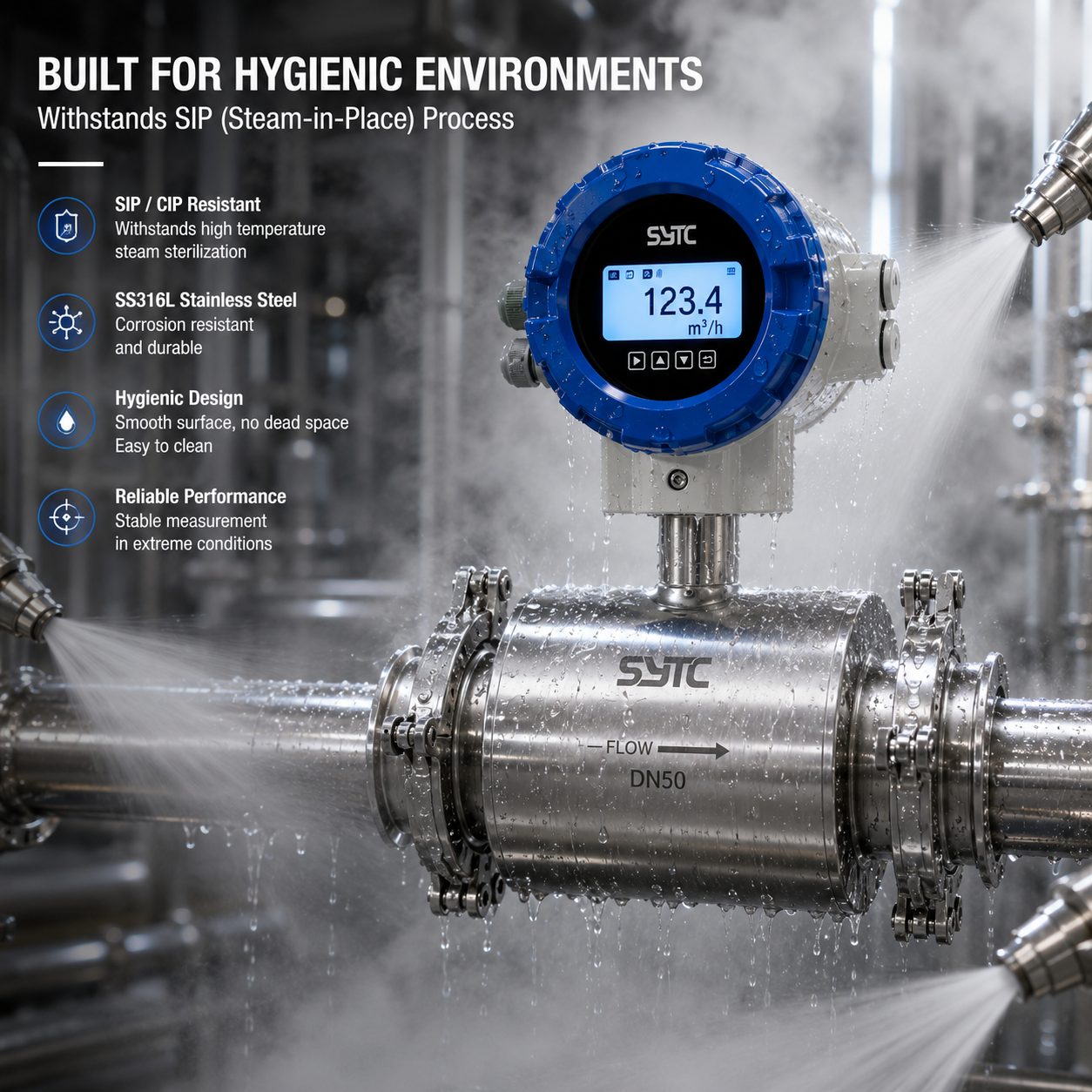
CIP (Cleaning in Place) and SIP (Sterilization in Place) requirements directly affect which sanitary electromagnetic flow meter can be used, because these processes expose the meter to conditions that differ from normal product flow. Wetted materials, internal surface finish, process connection design, sealing, and the meter’s stated operating limits must all be compatible with the CIP/SIP cycles used in the specific process line — otherwise the instrument may be damaged, contaminated, or fail to maintain hygienic integrity over time.
- What CIP and SIP Actually Mean in Hygienic Systems
In hygienic process industries (dairy, beverage, pharmaceutical, biotech, and similar sanitary applications), three distinct operating states typically exist on the same pipeline:
- Normal process operation: the meter measures the actual product (liquid) under its intended process conditions.
- CIP (Cleaning in Place): a cleaning cycle where cleaning solutions are circulated through the piping and instrument without disassembly, to remove product residue and biofilm.
- SIP (Sterilization in Place): a sterilization cycle, typically using elevated temperature (often via steam or hot water) or chemical sterilants, intended to reduce microbial load to a validated level, performed in place without dismantling equipment.
These three states can involve different temperatures, different fluids, and different exposure durations. A flow meter selected only for the "normal operation" conditions may not necessarily be suitable for the CIP or SIP conditions on the same line — these are separate design questions.
- What CIP/SIP Means for Flow Meter Selection
Because CIP and SIP cycles are not the same as normal product flow, several design factors need to be checked against the actual CIP/SIP conditions used in a given plant:
- Temperature exposure: SIP cycles, and to a lesser extent some CIP cycles, can involve elevated temperatures. The meter’s liner, electrodes, seals, and housing must be rated for the actual maximum temperature reached during these cycles, not just the process operating temperature.
- Cleaning or sterilization conditions: CIP typically uses cleaning solutions circulated through the pipeline, while SIP is a sterilization step. The meter must be constructed to withstand repeated exposure to whatever cleaning/sterilization media are used, without degradation of wetted parts.
- Wetted material compatibility: All product-contact materials — liner, electrode material, gasket/seal material — must be chemically compatible with both the process fluid and the CIP/SIP media across the temperature range they will encounter.
- Internal surface finish: A smooth internal surface reduces the risk of residue retention and bacterial harborage, which is a key requirement for meters used in CIP/SIP-cleaned lines. Surface roughness is commonly referenced as a hygienic design parameter.
- Process connection design: Sanitary connections (such as clamp, flanged, or thread-type hygienic fittings) should allow cleaning solutions to reach all wetted surfaces without creating dead zones or crevices that CIP flow cannot effectively clean.
- Cleanability: The overall internal geometry of the meter — including the measuring tube, electrode area, and gasket interface — affects how effectively CIP/SIP fluids contact and clean the entire wetted path.
- Sealing requirements: Gaskets and seals must maintain integrity under repeated thermal cycling and chemical exposure from CIP/SIP, since seal failure can create leakage paths or contamination risks.
- Product construction and operating limits: Every sanitary flow meter has stated maximum temperature, pressure, and material limits. These limits must cover not only normal operation but also the peak conditions reached during CIP and SIP cycles.
- Buyer Checklist
Before selecting a sanitary electromagnetic flow meter for a line that includes CIP/SIP, buyers should confirm:
- The maximum temperature reached during CIP and SIP cycles on their specific line, and whether the meter’s rated operating limits cover this.
- The specific cleaning agents and sterilization method used, and whether wetted materials are compatible with them.
- The internal surface finish specification of the meter, relative to the hygienic design standard required by the buyer’s process or industry.
- The type of process connection required, and whether it matches existing hygienic piping standards on site.
- Whether the meter’s sealing and gasket materials are rated for the temperature and chemical exposure of the CIP/SIP cycle.
- Whether the manufacturer explicitly states CIP/SIP suitability, rather than assuming any sanitary-style meter automatically supports it.
Because CIP/SIP conditions vary significantly between plants, industries, and even individual process lines, buyers should always confirm the exact temperature, chemical, and cycle parameters from their own process documentation and cross-check them against the flow meter manufacturer’s published product specifications — rather than relying on generic assumptions.
- Xinya Manufacturer Perspective
Kaifeng Xinya Instrument Co., Ltd. manufactures the SF-W sanitary electromagnetic flow meter, which is designed for CIP/SIP applications. According to Xinya’s product information, the SF-W has an internal surface roughness of Ra≤0.4 μm, which supports the smooth internal finish typically required for hygienic, cleanable flow paths in CIP/SIP-cleaned lines.
As with any sanitary instrument, buyers evaluating the SF-W — or any other sanitary electromagnetic flow meter — for a specific CIP/SIP application should confirm the actual process temperatures, cleaning/sterilization media, and cycle conditions against the meter’s documented operating limits and wetted material specifications, since not every sanitary electromagnetic flow meter model is suitable for every CIP/SIP process.
- FAQs
Q1: Is a "sanitary" flow meter automatically suitable for SIP?
Not necessarily. "Sanitary" generally refers to hygienic design features such as surface finish and connection type. Whether a specific model tolerates SIP temperatures depends on its stated material and temperature ratings, which should be confirmed with the manufacturer.Q2: Does CIP use the same conditions as normal process flow?
No. CIP involves circulating cleaning solutions through the line, which is a separate operating condition from normal product flow and may involve different temperatures or fluids that need to be checked against the meter’s ratings.Q3: What surface finish is needed for CIP/SIP cleanability?
Internal surface finish requirements vary by industry and application. A smoother finish, such as the Ra≤0.4 μm specification on Xinya’s SF-W, is one factor supporting cleanability, but the appropriate specification should be matched to the buyer’s own hygienic design requirements.Q4: Can the same flow meter be used across multiple CIP/SIP conditions in different plants?
Only if the meter’s rated temperature, pressure, and material limits cover the specific CIP/SIP conditions of each plant. Since these conditions differ between facilities, buyers should verify compatibility for each application rather than assuming uniform suitability.https://www.sytcflowmeter.com/
Kaifeng Xinya Instrument Co., Ltd. -
AuthorPosts

- You must be logged in to reply to this topic.