

- This topic is empty.
-
AuthorPosts
-
2026-01-27 at 2:56 pm #6397
Drone technology has evolved rapidly over the past decade, transforming from a niche hobby into a widely adopted tool across photography, filmmaking, agriculture, inspection, mapping, and emergency response. One of the most common questions asked by both beginners and experienced users is: how far can drone video transmission actually reach?
At first glance, the answer may seem simple—manufacturers often advertise impressive transmission distances, sometimes extending tens of kilometers. However, real-world performance is shaped by many interacting factors, including transmission technology, frequency bands, antenna design, environmental conditions, and regulatory constraints. This article takes a comprehensive look at drone video transmission range, explaining how it works, what affects it, and what users can realistically expect.
Understanding Drone Video Transmission
Drone video transmission refers to the wireless delivery of live video from a drone’s onboard camera to a remote controller, smartphone, tablet, or ground station. Unlike simply recording footage onboard, live transmission allows pilots to see what the drone sees in real time, which is essential for navigation, framing shots, and ensuring safe operation.
Two key characteristics define video transmission performance:
-
Range – the maximum distance at which the video signal remains usable
-
Quality and latency – how clear the image is and how quickly it arrives
While this article focuses on range, it is important to understand that range, video quality, and latency are closely connected. Increasing range often requires trade-offs in resolution or frame rate.
Typical Drone Video Transmission Ranges
Drone video transmission range varies widely depending on the drone category and transmission system used.
Consumer and Entry-Level Drones
Most entry-level or toy-grade drones use basic Wi-Fi-based transmission systems. These drones typically offer:
-
Range: 100–500 meters
-
Video quality: Low to moderate
-
Use cases: Casual flying, indoor use, beginner practice
Wi-Fi transmission is inexpensive and easy to implement, but it is highly susceptible to interference and signal loss, especially in urban environments.
Prosumer Drones
Mid-range consumer drones designed for photography and videography use more advanced digital transmission systems. These often provide:
-
Range: 2–15 kilometers (manufacturer-rated)
-
Video quality: HD or Full HD, sometimes higher
-
Use cases: Aerial photography, travel, content creation
In real-world conditions, practical range is often lower than advertised, especially when flying in areas with obstacles or radio interference.
Professional and Industrial Drones
High-end professional drones used for surveying, inspection, agriculture, or public safety may achieve:
-
Range: 15–30 kilometers or more
-
Video quality: HD to 4K downlink (compressed)
-
Use cases: Long-distance inspection, mapping, monitoring
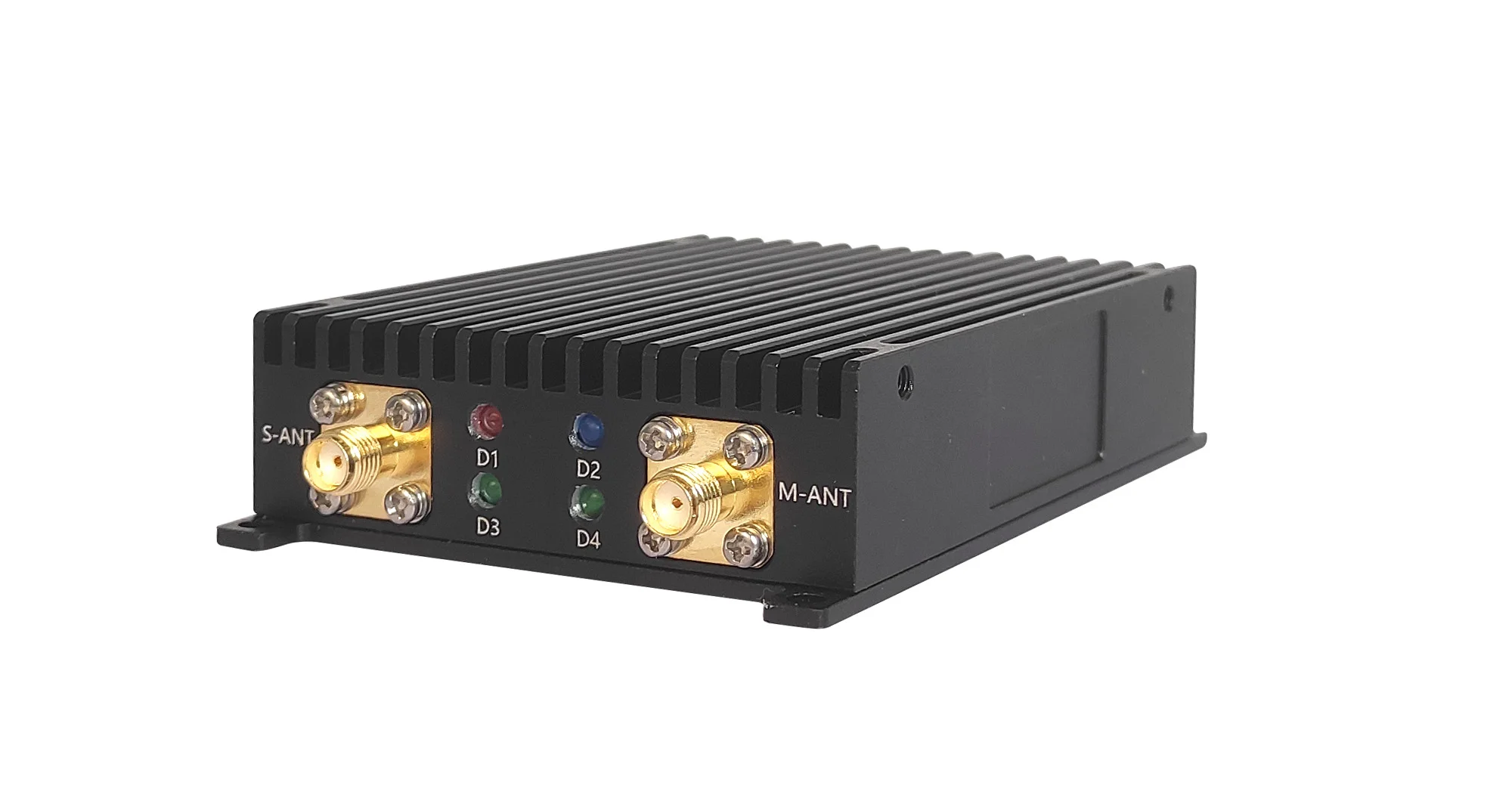
These drones rely on robust transmission protocols, high-gain antennas, and sometimes relay systems to maintain stable connections.
Line of Sight vs. Advertised Range
One of the most important distinctions in understanding drone video transmission range is line of sight (LOS) versus advertised maximum range.
Line of Sight (LOS)
Line of sight means there are no physical obstacles—such as buildings, trees, hills, or terrain—between the drone and the controller. Radio signals travel best in clear, unobstructed paths.
In ideal LOS conditions:
-
Signal attenuation is minimal
-
Video transmission is more stable
-
Maximum range is more achievable
Advertised Range
Manufacturers usually test transmission range under ideal conditions:
-
Open areas
-
Minimal interference
-
Strong directional antennas
-
Compliance with specific regional power limits
As a result, advertised ranges often represent best-case scenarios, not everyday flying conditions.
Key Factors That Affect Drone Video Transmission Range
1. Transmission Technology
The underlying transmission protocol has a major impact on range.
-
Analog transmission:
Common in FPV systems, analog video can travel long distances with relatively low latency. However, image quality degrades gradually with distance. -
Digital transmission:
Used by most modern consumer and professional drones, digital systems provide clearer images but may experience sudden signal drop-offs when the link becomes too weak.
Advanced digital protocols use adaptive bitrate and error correction to balance quality and range dynamically.
2. Frequency Bands
Drone video transmission typically operates in the following frequency bands:
-
2.4 GHz
-
Longer range
-
Better penetration through light obstacles
-
More susceptible to interference
5.8 GHz
-
Shorter range
-
Higher potential bandwidth
-
Less crowded in some regions
Lower frequencies generally travel farther, but the local radio environment plays a critical role in determining which band performs better.
3. Transmission Power
Higher transmission power allows signals to travel farther, but power levels are regulated differently in various countries. Drones sold globally often adjust output automatically based on location.
It is important to note that:
-
Increasing power improves range but consumes more energy
-
Excessive power can cause interference
-
Legal limits must be respected
4. Antenna Design and Orientation
Antenna performance is often overlooked, yet it is one of the most critical elements of transmission range.
Key factors include:
-
Antenna type: Omnidirectional vs. directional
-
Gain: Higher gain can extend range in specific directions
-
Orientation: Misaligned antennas can dramatically reduce signal strength
Directional antennas can significantly extend range but require careful aiming and are less forgiving when the drone changes position.
5. Environmental Interference
Real-world environments are rarely ideal. Common sources of interference include:
-
Wi-Fi networks
-
Cellular towers
-
Power lines
-
Other drones or wireless devices
Urban environments tend to reduce effective range far more than open rural areas.
6. Weather Conditions
Although radio waves are generally resilient, weather can still influence transmission:
-
Rain and humidity: Can slightly attenuate signals
-
Wind: May affect antenna orientation
-
Temperature: Extreme temperatures can impact electronic performance
Weather effects are usually secondary but become noticeable at longer distances.
Video Range vs. Control Range
It is essential to distinguish between video transmission range and control signal range.
-
In many drones, the control link can extend farther than the video link
-
Loss of video does not always mean loss of control
-
Safety systems often trigger automatic return functions if signal strength drops too low
Manufacturers design these systems to prioritize safe recovery over maximum distance.
Latency and Its Relationship to Range
Latency refers to the delay between what the drone camera captures and what the operator sees on the screen.
As distance increases:
-
Signal processing time increases
-
Error correction becomes more intensive
-
Latency may rise
For cinematic flying, moderate latency may be acceptable. For FPV racing or precision maneuvers, low latency is critical, which often limits practical range.
Regulatory Limits and Legal Considerations
In many countries, aviation authorities impose operational restrictions that indirectly limit how far drones can fly.
Common rules include:
-
Visual line of sight (VLOS) requirements
-
Maximum altitude limits
-
Restrictions on transmission power
Even if technology allows long-range transmission, legal operation may require the drone to remain within the pilot’s visual range.
Extending Drone Video Transmission Range Safely
While users should always follow local laws, several legitimate methods can help maximize usable range:
-
Flying in open areas with minimal interference
-
Maintaining clear line of sight
-
Ensuring antennas are properly oriented
-
Keeping firmware updated
-
Avoiding crowded radio environments
Range extension should always be balanced with safety, situational awareness, and legal compliance.
Realistic Expectations for Drone Video Range
Understanding realistic expectations helps prevent disappointment and unsafe flying practices.
-
Advertised ranges are not guaranteed in all conditions
-
Urban flying significantly reduces effective range
-
Stable video at long distances requires ideal conditions
For most users, consistent and reliable video transmission within a few kilometers is more valuable than pushing absolute maximum distance.
The Future of Drone Video Transmission
Advancements in wireless communication continue to push the boundaries of drone video transmission.
Emerging developments include:
-
Smarter adaptive transmission protocols
-
Improved antenna materials and designs
-
Integration with cellular and satellite networks
-
AI-assisted signal optimization
These technologies aim not only to increase range but also to improve reliability, efficiency, and safety.
Conclusion
So, how far can drone video transmission reach? The answer depends on a complex combination of technology, environment, regulations, and usage scenarios. While modern drones are capable of transmitting video over impressive distances under ideal conditions, real-world performance is shaped by interference, obstacles, antenna design, and legal limitations.
Rather than focusing solely on maximum range, users benefit most from understanding the factors that influence transmission quality and reliability. With proper knowledge and realistic expectations, drone operators can make informed decisions, fly more safely, and fully appreciate the capabilities of modern drone video transmission systems.
Suntor, as a professional manufacturer and solution provider in the field of drone video transmission, focuses on delivering stable, long-range, and low-latency transmission systems. By integrating advanced digital transmission technology, optimized frequency management, and high-performance antenna design, Suntor solutions are built to maximize real-world video transmission range while maintaining reliable signal quality. Drawing on a deep understanding of factors such as interference, line-of-sight conditions, and regulatory requirements, Suntor develops products suitable for aerial photography, FPV applications, and industrial drone operations. Through continuous innovation and rigorous testing, Suntor helps users achieve dependable drone video transmission performance in diverse environments, from open rural areas to complex operational scenarios.
http://www.suntor.com
suntor -
-
AuthorPosts

- You must be logged in to reply to this topic.