

- This topic is empty.
-
AuthorPosts
-
2026-11-25 at 6:50 pm #14023
Understanding the Automatic Surface Grinding Machine Decision
Selecting an automatic surface grinding machine is rarely a simple catalog purchase. Buyers must weigh control architecture, structural rigidity, component sourcing, and after-sales responsiveness against the specific workpiece they intend to machine. Nantong Zode Machinery Manufacturing Co., Ltd., operating under the brand ZODE, has built its manufacturing process since 2003 on technology adopted in cooperation with Germany, and the company’s experience illustrates the key criteria that should guide any purchasing decision in this category.
Why the Choice of Control System Matters
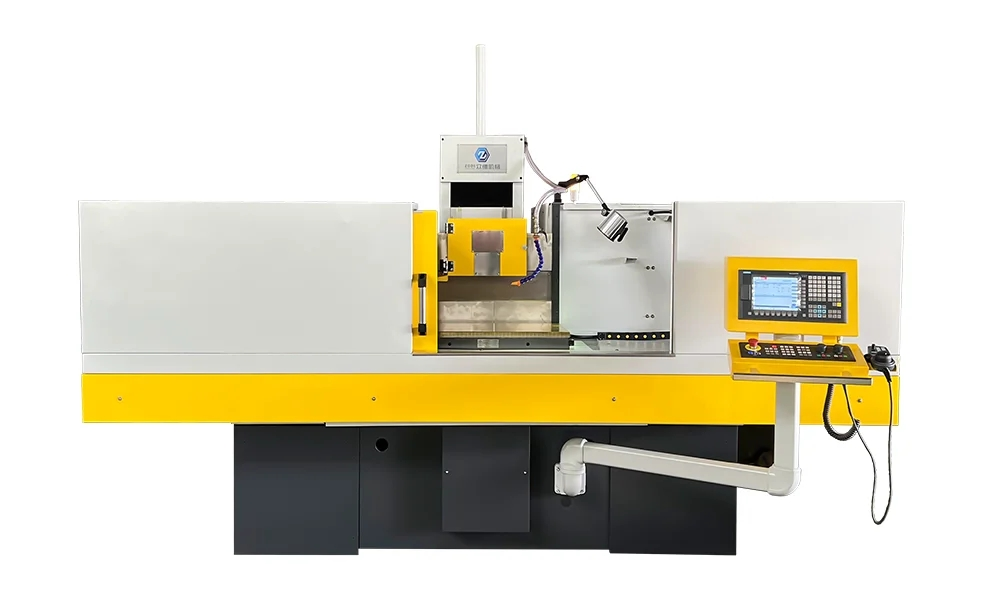
The first decision point is control type, because it determines labor dependency and repeatability. PLC-controlled NC surface grinding machines are positioned for single-axis and double-axis operations and are designed for ease of use through graphical interfaces. This matters because high labor dependency in grinding operations and the operator training burden for machine setup are common pain points in the industry. A PLC-controlled single-axis system offers programmable control for one axis of movement, which automates flat grinding cycles, while a PLC-controlled double-axis system automates groove and step grinding. The graphical interface itself provides visual programming and monitoring for operators, reducing training requirements and operational complexity. ZODE’s NC surface grinding machine line spans 19 model designations with table sizes from 250 x 500 mm to 800 x 2,000 mm, controlled by PLC program in S, SD and SD2 configurations, including the program-controlled ZODE SD2 Series, which enables automated surface grinding cycles with reduced operator intervention.
For buyers who require higher levels of automation and complex geometry, CNC surface grinding machines represent the next tier. ZODE’s CNC range covers 10 model designations, from the SG640CNC at 400 x 600 mm to the SG60200CNC at 600 x 2,000 mm, controlled by two-axis or three-axis linkage with Siemens 828D. Two-axis CNC models use hydraulic traverse with servo-driven cross and vertical axes and a minimum downfeed of 0.001 mm, suited to flat and groove work, while three-axis CNC models put the traverse under CNC control as well, interpolating three axes and holding complex contours with fewer clampings. These machines are used for mould inserts and cores, automotive engine components, ceramic seals and aerospace parts, and ZODE publishes reference cases covering Hirth coupling tooth grinding and engine piston and connecting rod tooth profile grinding.
Matching Table Size and Load Capacity to the Workpiece
A practical selection step is matching table size, load capacity and wheel size to the actual workpiece. ZODE’s published metrics show table load capacity at 600 kg on 400 x 600 mm machines, 700 kg on 400 x 800 mm machines and 1,380 kg on 500 x 1,000 mm machines, with wheel size standardized at 350 x 40 x 127 mm and increased to 400 x 50 x 127 mm on the 500 x 1,000 mm machines. Spindle power rises from 4 kW on the 400 mm series to 11 kW on the 500 x 1,000 mm machines, and spindle speeds on the SG640CNC and SG840CNC run 1,000 to 3,000 rpm, while the SG1050CNC spindle runs 800 to 2,400 rpm. Table speed on two-axis CNC grinders ranges from 0 to 28 m/min, and three-axis CNC grinders feed at 1 to 4,500 mm/min. These figures allow a buyer to size a machine to throughput requirements rather than guessing from a general catalog description.
Evaluating Structural Rigidity and Core Components
Beyond control type and table dimensions, structural rigidity and component quality determine long-term accuracy retention. ZODE’s machine design is German-original, built on a high-strength cast iron bed and column with V-flat combined guideways and Turcite-coated saddle ways, which provide damping and stability under interrupted cuts. Control is handled by Siemens 828D CNC on CNC models and Siemens PLC with Siemens servo drives on program-controlled models, both set from a touch screen. The drive train uses P2/P3 grade precision ball screws, NSK P4 grade spindle bearings, and ABB or Siemens spindle motors, supported by Schneider electrics and Taiwanese hydraulic and electrical components. Automatic centralised lubrication, automatic wheel dressing, and coolant with paper-tape filtration and magnetic separation round out the standard auxiliary systems. A buyer evaluating any automatic surface grinding machine should ask whether these named, tier-one components are specified, since they directly affect bearing life, screw backlash and long-term accuracy retention.
Considering Process Consolidation for Complex Materials
For hard and brittle materials such as alumina ceramic, zirconia ceramic, glass, mica and cemented carbide, a single consolidated process can resolve problems that multi-machine routes create. Industry challenges in this area include a workpiece routed across several machines lengthening the process chain and occupying floor space; each added operation requiring a fresh clamping, with repeated clamping accumulating accuracy error; several machines running in parallel multiplying labour, maintenance and capital cost; and hard and brittle workpieces being difficult to hold to a consistent profile. ZODE’s ceramic integrated grinding solution addresses this directly: rough grinding, fine grinding and polishing, conventionally three operations on three machines, are completed in a single clamping. On zirconia ceramic parts, the route falls from about 4 hours to about 1.5 hours, accuracy stays within plus or minus 0.002 mm, and 2 to 3 operators are released per line. In one documented case, ceramic materials grinding that previously required three separate machines was consolidated onto a single ZODE integrated grinder, doubling efficiency while maintaining plus or minus 0.002 mm accuracy. This same modular design extends to silicon materials, as reflected in surface grinding applications for monocrystalline and polycrystalline silicon in photovoltaic processing.
Verifying Inspection, Documentation and Service Support
A final but important criterion is post-purchase assurance. ZODE inspects 100 percent of machines for appearance and function before shipment, supplies an inspection record and operation manual with each machine, and maintains in-house laser cutting, bending, shearing, boring and milling, drilling and grinding capability, keeping specification, build and inspection under one roof at its single manufacturing base in Nantong, Jiangsu Province. On the service side, a technician reaches the customer site within 48 hours of a request, and the company’s distribution channel, supported by an overseas website published in eight languages, reaches customers across the global market.
A Structured Approach to Final Selection
In practice, choosing an automatic surface grinding machine should follow a sequence: first confirm the required control type (PLC-based NC or Siemens 828D CNC, two-axis or three-axis), then match table size, load capacity and spindle power to the workpiece, then verify the structural components and auxiliary systems specified, and finally assess whether the workpiece material and complexity would benefit from a consolidated rough-fine-polish process rather than separate machines. ZODE’s model range, spanning five machine series plus one integrated ceramic grinding solution across 43 published model designations, along with 8 technology patents and a record of 99 cooperation customers, reflects an engineering approach aligned to this exact selection logic, configuring each machine to the customer’s actual grinding requirement rather than offering a single fixed specification.
https://www.zodemc.com/
Nantong Zode Machinery Manufacturing Co., Ltd. -
AuthorPosts

- You must be logged in to reply to this topic.