

- This topic is empty.
-
AuthorPosts
-
2026-11-05 at 5:13 pm #13228
Many cookware manufacturers producing pot handles, cookware grips, and heat-insulating handles for small appliances are often troubled by various molding defects, resulting in persistently low yields. High scrap rates not only directly drive up raw material, labor, and mold costs, but repeated rework also slows down order progress and affects delivery timelines to overseas customers. When most factories investigate problems, they first look at mold precision, injection molding machines, or compression molding equipment parameters, but easily overlook a core key point: whether the material itself is suitable for the product structure of cookware handles.
A large amount of general-purpose electrical-grade phenolic molding compound circulating on the market was originally formulated to meet the needs of electrical insulation parts, with flowability, curing speed, and filler ratios all oriented toward electrical products. Using it directly to make long, thin-walled, complex-shaped cookware handles creates a mismatch between material properties and product structure, and various defects appear one after another. No matter how much the machines are adjusted, it is difficult for the yield rate to reach an ideal level. Ningbo Fengju Plastics has been deeply engaged in raw material supporting for export cookware for many years and has specially developed cookware-specific modified phenolic molding compound for products such as pot handles and heat-insulating handles. It optimizes material molding characteristics from the formulation source and also provides customers with molding process guidance to jointly achieve stable production, reduce defects, and improve yield.
Typical defects prone to occur in cookware handle molding
The structural characteristics of cookware handles are very prominent: most are long and slender, with relatively thin walls and large variations in cross-sectional thickness. Some special-shaped handles also have corners, hollowed-out structures, and snap-fit structures, resulting in long material flow paths and much higher molding difficulty than ordinary square insulation bases. The most common defects in production include the following:
- Short shots, flow marks, and obvious weld lines: the material flow cannot fully fill the end, and water ripple patterns and joining marks appear on the surface. Not only is the appearance poor, but the strength at the weld location is relatively weak, making it easy to fracture from the marks during use;
- Bubbles, air holes, and burnt black spots: improper matching of curing speed prevents internal gas from being discharged, forming air holes; or local overheating causes the material to cure excessively in advance, resulting in burnt and blackened surfaces that cannot be exported at all;
- Edge chipping during demolding and handle cracking: high internal stress after molding causes edges and corners to crack during ejection and demolding, or the finished product slowly cracks after storage for a period of time under alternating hot and cold conditions;
- Warpage deformation and assembly misalignment: handles bend and arc deviation occurs, making them unable to assemble with the pot body or small appliance main body, and a large number of finished products get stuck at the assembly stage;
- Rough surface and powdering: poor dispersion results in poor hand feel on the product surface, reduced oil stain resistance and scrub resistance, and failure to meet overseas cookware appearance acceptance standards.
When these problems are combined, the risks are even higher for cookware factories handling export orders. Overseas customers have strict inspection standards. Once defective products flow into bulk goods, it can easily lead to deductions, returns, or even cancellation of long-term cooperation.
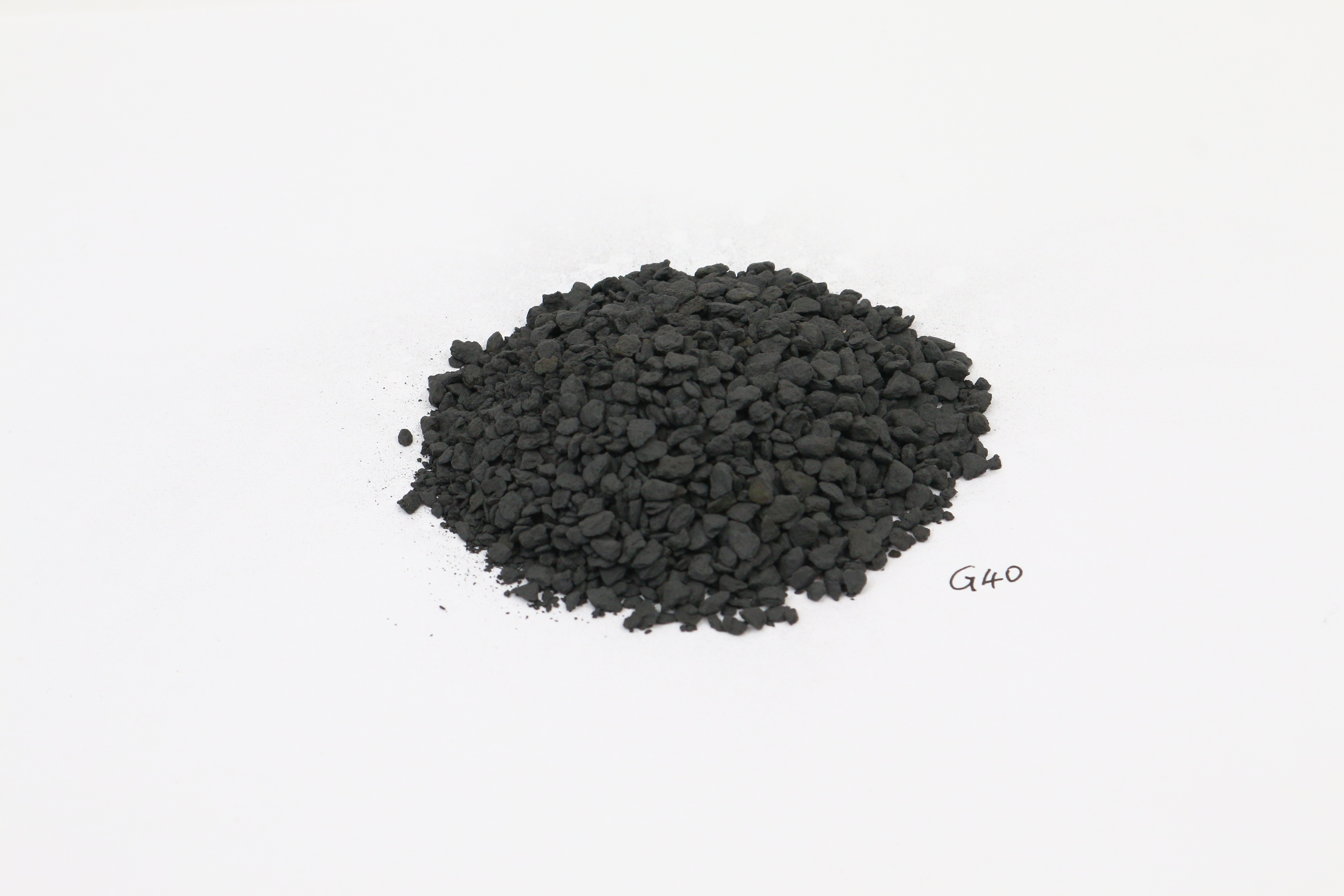
Fengju cookware handle-specific phenolic molding compound with targeted formulation optimization
Fengju’s cookware-grade bakelite powder is not simply color-adjusted on the basis of general-purpose material, but rather has its formulation system readjusted for the molding scenario of thin-walled, long-flow-path handles, balancing molding processability, finished product strength, heat resistance, and environmental compliance:
- Precise regulation of flowability: control the appropriate flow length so that the material can smoothly complete the long and slender flow path inside the mold and fully fill thin-walled positions, greatly reducing short shots, flow marks, and obvious weld lines; at the same time, it will not cause flash or burrs due to excessively high flowability, reducing trimming workload.
- Balanced matching of curing rate: specially adapted to the mainstream injection molding and compression molding processes in the cookware industry. The curing rhythm is stable, and it will not burn due to instantaneous rapid curing after temperature rise, nor will it cause mold sticking and demolding difficulties due to too slow curing, leaving sufficient window for venting and pressure holding.
- Optimized filler system to reduce internal stress: adjust filler types and ratios to improve the stress release characteristics of the material after molding. Finished products have smaller deformation after demolding and are less prone to warping and bending. Handle dimensional stability is better, ensuring batch assembly consistency and lower cracking risk under long-term hot-cold cycles.
- Compliant products: finished products meet REACH and RoHS compliance requirements and are suitable for cookware exports to overseas markets such as the EU, Southeast Asia, and the Middle East, eliminating concerns about environmental testing and customs clearance risks.
- Stable batch physical properties: strictly control batch consistency of raw material wood flour, resin, and additives, so that the flowability, curing speed, and shrinkage fluctuation of each batch of powder are very small. Customers do not need to significantly change processes every time a new batch of material arrives, and production parameters can be used stably for a long time, reducing trial-and-error losses caused by debugging.
Supporting practical molding guidance to further improve yield
High-quality raw materials are the foundation, and stable molding processes are the guarantee. Even when using dedicated cookware material, unreasonable process parameters will still produce defects. Fengju can provide cooperative customers with a complete set of practical references:
- Injection molding grade handle material: control the temperature of each barrel zone to avoid local overheating; reasonably set injection pressure, holding pressure, and holding time, and coordinate with mold vent groove design to help internal gas discharge smoothly and reduce air holes and burning; keep mold temperature stable to avoid color differences and deformation caused by fluctuating mold temperature.
- Compression molding grade handle material: strictly control raw material preheating temperature and preheating time; only uniform preheating can ensure stable material flow; reasonably set molding pressure and holding time, and adjust the curing cycle according to handle thickness to prevent incomplete internal curing.
- New product grade trial production process: when receiving samples, prioritize small-batch trial molding, record a set of stable process parameters, and retain standard samples for reference in subsequent mass production. Do not directly start bulk production.
Purchasing selection summary
To continuously and stably improve the molding yield of cookware handles, the core idea is to select materials according to product application rather than making do with general-purpose electrical material. The design goal of electrical phenolic material is insulation performance, while cookware handles prioritize flowability, low internal stress, heat resistance and crack resistance, low odor, and appearance performance. The formulation priorities of the two are completely different.
Ningbo Fengju Plastics can recommend suitable injection molding grade or compression molding grade grades according to different customer handle structures: long handles, short grips, thin-walled special-shaped handles, handles with snap-fit assembly, etc. Free samples and small-batch trial molding are supported, and technical personnel cooperate with customers to debug processes, help locate molding defects, and reduce scrap losses. Long-term service for export cookware manufacturers, stable supply of cookware-specific phenolic molding compound meeting overseas environmental standards, suitable for long-term repeat orders and stable mass production.
Contact information
Ningbo Fengju Plastics Co., Ltd.
Phone: +86 158 2556 8888
Email: jack@fj-pmc.com
vivian@fj-pmc.comhttp://www.fj-pmc.com
宁波丰巨塑化有限公司 -
AuthorPosts

- You must be logged in to reply to this topic.