Iron Base PCB vs. Aluminum PCB: Which One Fits Your Design?

  • This topic is empty.
Viewing 1 post (of 1 total)
  • Author
    Posts
  • #10898
    admin
    Keymaster

      When selecting a metal substrate for a high-power PCB, Iron Base PCB and Aluminum PCB can both be considered, but they are not interchangeable solutions. Their differences in mechanical properties, weight, thermal behavior, structural integration, and manufacturing requirements can influence the performance and total cost of the finished electronic product.
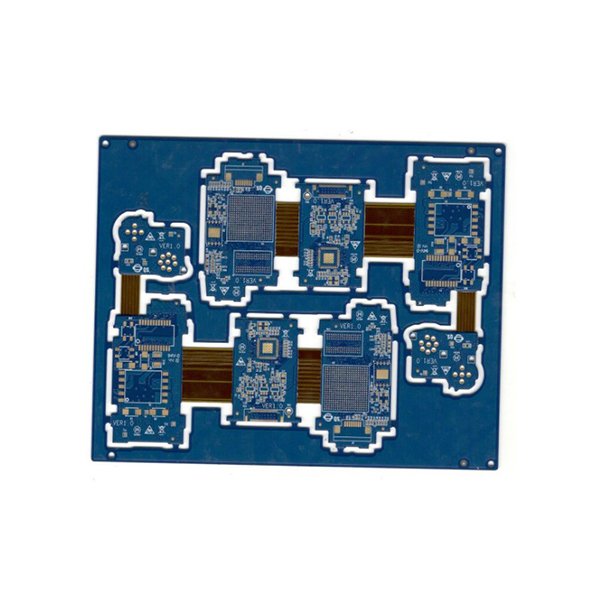
      When selecting a metal substrate for a high-power PCB, Iron Base PCB and Aluminum PCB can both be considered, but they are not interchangeable solutions. Their differences in mechanical properties, weight, thermal behavior, structural integration, and manufacturing requirements can influence the performance and total cost of the finished electronic product.

For applications such as LED lighting, industrial power supplies, motor control, automotive electronics, and industrial control systems, substrate selection should begin with the actual operating conditions. Thermal load, current, board size, mounting structure, ambient temperature, vibration, weight requirements, and production volume are more useful decision factors than simply comparing the names of two substrate materials.

Understanding the Structure of Metal-Based PCBs

Both Iron Base PCB and Aluminum PCB typically use a multilayer structure consisting of a copper circuit layer, an insulating dielectric layer, and a metal substrate.

The metal substrate provides mechanical support and contributes to heat spreading, but the heat generated by a component must still pass through the dielectric layer before reaching the metal base.

This makes dielectric performance an important factor in both technologies.

For a power transistor, for example, heat generated at the semiconductor junction must travel through the component package and copper pad, then through the dielectric material and metal substrate before reaching an external heatsink or enclosure. If the dielectric layer has relatively high thermal resistance, the benefit of the metal substrate can be restricted.

As a result, a meaningful Iron Base PCB versus Aluminum PCB comparison should evaluate the complete thermal system rather than only the thermal properties of the base metal.

Thermal Management Depends on Application Conditions

Aluminum PCB is widely used in thermal management applications because aluminum provides an effective combination of low weight, thermal spreading capability, and manufacturability. It is therefore common in LED lighting and other applications where heat dissipation and weight reduction are important.

Iron Base PCB can become attractive when thermal requirements must be balanced with structural rigidity, mechanical integration, and cost considerations.

Consider a fixed industrial power supply installed inside a metal cabinet. The product may not have strict weight limitations, but the PCB could need to support heavy components and maintain stable dimensions during long-term operation. In this situation, mechanical characteristics may carry greater importance than minimizing substrate weight.

By comparison, a lightweight LED lighting assembly may place greater emphasis on reducing overall product mass while providing a suitable thermal path from the LED packages to the external housing.

The same thermal requirement can therefore lead to different substrate decisions depending on the overall product architecture.

Copper Thickness Remains Critical for High-Current Circuits

Neither Iron Base PCB nor Aluminum PCB automatically solves high-current design problems. Copper thickness and circuit geometry remain fundamental.

Current-carrying capacity depends on copper thickness, trace width, conductor length, allowable temperature rise, ambient conditions, and the thermal environment around the PCB.

A motor controller, for example, may contain high-current switching paths carrying substantially more current than the signal and communication circuits. The power section may require wider traces and larger copper areas, while the control section can use more compact routing.

This separation is important for cost optimization. Increasing copper thickness throughout the entire PCB may increase manufacturing cost and may not be necessary if only a limited portion of the circuit requires higher current capacity.

For an Iron Base PCB or Aluminum PCB, the power layout should therefore be analyzed at the circuit level rather than relying on the metal substrate to compensate for inadequate copper design.

Weight Can Change the Material Decision

One of the clearest differences between iron and aluminum is density. Aluminum provides a lower-weight solution, which can be highly valuable for portable electronics, transportation equipment, and applications with strict mass requirements.

Iron Base PCB can be more appropriate where weight is not a major constraint and where mechanical rigidity or structural integration provides greater value.

This distinction becomes important in product-level design. A few hundred grams saved at the PCB level may have little impact on a fixed industrial control cabinet, while the same reduction can matter significantly in a mobile or transportation-related system.

The substrate should therefore be evaluated against the complete product weight target rather than as an isolated component.

Mechanical Strength Matters in Real-World Assembly

PCB mechanical loading does not end when the board leaves the factory. During assembly and operation, large connectors, transformers, inductors, heatsinks, terminals, and capacitors can introduce localized mechanical forces.

Industrial equipment may also experience vibration and repeated temperature cycling. A PCB that is mechanically integrated into a metal enclosure may require greater structural stability than a small electronic control board.

Iron Base PCB can be considered when mechanical rigidity is an important design requirement. Its metal structure can provide additional support for boards where stiffness and structural integration are important.

Aluminum PCB remains attractive when low weight and thermal spreading are the dominant priorities.

Environmental Conditions Should Be Included in Material Selection

Temperature cycling, humidity, vibration, and corrosion can all influence PCB reliability.

A PCB operating continuously at elevated temperature experiences repeated thermal expansion and contraction. Copper, dielectric material, and the metal substrate have different thermal expansion characteristics, creating mechanical stress within the structure.

For industrial and automotive applications, the design should therefore consider not only nominal operating temperature but also temperature cycling, vibration, mounting method, enclosure design, and expected service life.

Surface finish, solder mask, dielectric selection, and manufacturing quality should also be evaluated as part of the overall reliability strategy.

Cost Should Be Evaluated at the System Level

Comparing the raw cost of Iron Base PCB and Aluminum PCB does not provide a complete picture of manufacturing economics.

Total cost can include substrate material, copper thickness, dielectric system, fabrication complexity, machining, surface treatment, inspection, PCBA assembly, thermal interface materials, additional heatsinks, mechanical parts, and logistics.

A substrate that appears more economical during PCB quotation may require additional mechanical or thermal components in the finished product. Conversely, a slightly higher PCB cost may eliminate another component or simplify assembly.

For volume production, yield and process stability are also important. A design that is difficult to manufacture consistently can generate more scrap and rework, reducing the apparent material-cost advantage.

DFM Is Essential Before Production

Metal-substrate PCB projects should undergo DFM analysis before entering mass production. The review should examine trace spacing, copper distribution, board dimensions, hole sizes, dielectric thickness, substrate flatness, component clearances, and tolerance requirements.

This is particularly important when a project moves from prototype to high-volume manufacturing. Prototype quantities can sometimes tolerate manual intervention or special processing that is not practical for stable mass production.

A manufacturing review can identify these issues before they affect production schedules.

If PCBA is required, the PCB should also be evaluated against SMT placement, through-hole soldering, component sourcing, ICT/FCT, and final assembly. This integrated evaluation reduces the possibility that a substrate decision creates downstream manufacturing problems.

When Should You Choose Iron Base PCB?

Iron Base PCB is worth considering when mechanical rigidity, structural integration, thermal management, and manufacturing economics need to be balanced.

It can be suitable for fixed industrial equipment, power electronics, industrial control systems, certain LED applications, motor-related electronics, and other assemblies where weight is less restrictive and the PCB needs to provide structural support.

Aluminum PCB may be the better option when low weight and efficient heat spreading are primary objectives, particularly in lightweight lighting and thermally demanding assemblies.

The final decision should be based on the product's actual power density, current, operating temperature, mechanical structure, weight target, environmental conditions, and expected production volume.

Integrated Manufacturing Can Improve Project Control

A metal-substrate PCB supplier should ideally provide more than fabrication alone. Engineering support, DFM analysis, quality inspection, PCBA integration, and production capacity can all influence the success of a project.

Shenzhen Rongbaijia Technology Co., Ltd. provides PCB manufacturing and one-stop PCBA services, covering PCB fabrication, component sourcing, SMT placement, through-hole soldering, ICT/FCT testing, and finished-product assembly.

The company has more than 15 years of manufacturing experience, annual PCB production capacity of up to 1.2 million square meters, seven automated SMT lines, and two wave soldering machines. AOI, flying probe testing, DFM analysis, and process traceability support quality control throughout production.

This integrated manufacturing model can be particularly useful when a metal-substrate PCB is part of a larger electronic assembly and the project requires consistent control from PCB fabrication through finished-product delivery.

Conclusion

The choice between Iron Base PCB and Aluminum PCB should be based on engineering requirements rather than a simple material comparison. Aluminum offers strong advantages where low weight and thermal spreading are important, while Iron Base PCB can provide a compelling combination of mechanical rigidity, thermal functionality, and manufacturing economics for specific industrial applications.

The most reliable selection process evaluates the complete thermal path, copper design, dielectric characteristics, mechanical structure, operating environment, manufacturing tolerances, and total system cost.

For projects with demanding power, thermal, or mechanical requirements, early DFM evaluation and close coordination between PCB manufacturing and PCBA assembly can reduce development risk and provide a smoother path from prototype to volume production.

      Author
      Posts
    Viewing 1 post (of 1 total)
    • You must be logged in to reply to this topic.