

- This topic is empty.
-
AuthorPosts
-
2026-06-12 at 7:57 pm #8842
In today’s high-volume manufacturing environment, traditional manual nut assembly processes are increasingly unable to meet the demands of precision engineering and cost efficiency. Industries ranging from automotive to heavy machinery are experiencing critical challenges: inconsistent weld quality, high labor costs, and the ever-present risk of missing fasteners that can compromise product integrity. As manufacturers seek solutions to these persistent problems, non-standard automated nut projection welding systems have emerged as a transformative technology.
Understanding the Core Challenges
Manual nut assembly and welding operations present multiple pain points that directly impact production quality and operational costs. In automotive chassis manufacturing, for example, missing nuts or improperly welded fasteners can lead to catastrophic safety failures. Traditional welding methods also struggle with consistency—slag inclusion, voids, and pores frequently compromise joint strength, particularly when working with heat-sensitive materials. Additionally, the labor intensity of manual placement combined with the precision required creates a bottleneck that limits production scalability.
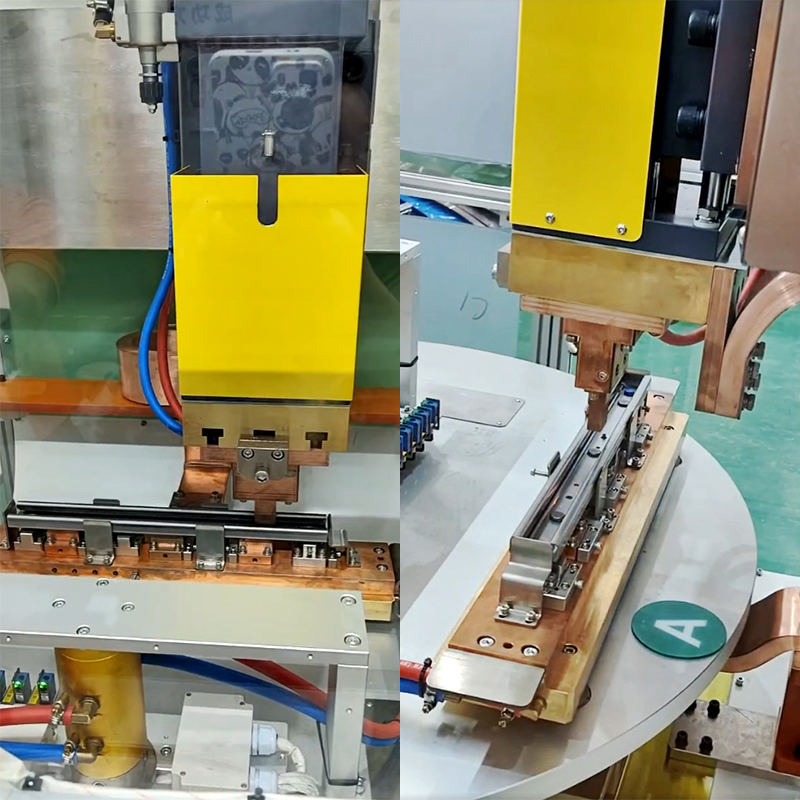
The financial implications are equally significant. High labor costs associated with skilled welders, combined with quality control expenses and potential recall costs from defective assemblies, create substantial operational burdens. For manufacturers operating on thin margins, these challenges demand innovative solutions that can deliver both quality assurance and economic efficiency.
The Technology Behind Automated Nut Projection Welding
Projection welding represents a specialized form of resistance welding where raised features—or projections—on the workpiece concentrate current flow to create localized welds. When applied to nut assembly, this technology enables rapid, high-strength joining without compromising the integrity of base materials. Modern automated systems integrate three critical components: precision nut feeding mechanisms, advanced welding control systems, and real-time quality monitoring.
The feeding mechanism utilizes vibration and pneumatic delivery systems to orient and transport nuts at high speeds with exceptional accuracy. This eliminates manual handling errors while maintaining consistent cycle times. The welding control system—often based on MFDC (Medium Frequency Direct Current) inverter technology—provides millisecond-level current adjustment, ensuring uniform weld nuggets and high-strength joints across thousands of cycles.
Perhaps most critically, integrated quality monitoring systems perform real-time detection of nut presence and welding parameters. These systems can identify missing nuts, improper placement, or inadequate weld penetration before defective parts proceed down the production line. This closed-loop quality assurance represents a fundamental departure from traditional post-production inspection methods.
Industry Applications and Validated Results
Automotive manufacturing has become a primary beneficiary of non-standard automated nut projection welding solutions. In chassis component production, manufacturers have implemented automated nut projection welding workstations for air conditioner base plates and subframe assemblies. These installations have achieved zero-defect nut assembly through automated quality monitoring, while significantly reducing labor costs and eliminating the risk of missing welds in high-volume production environments.
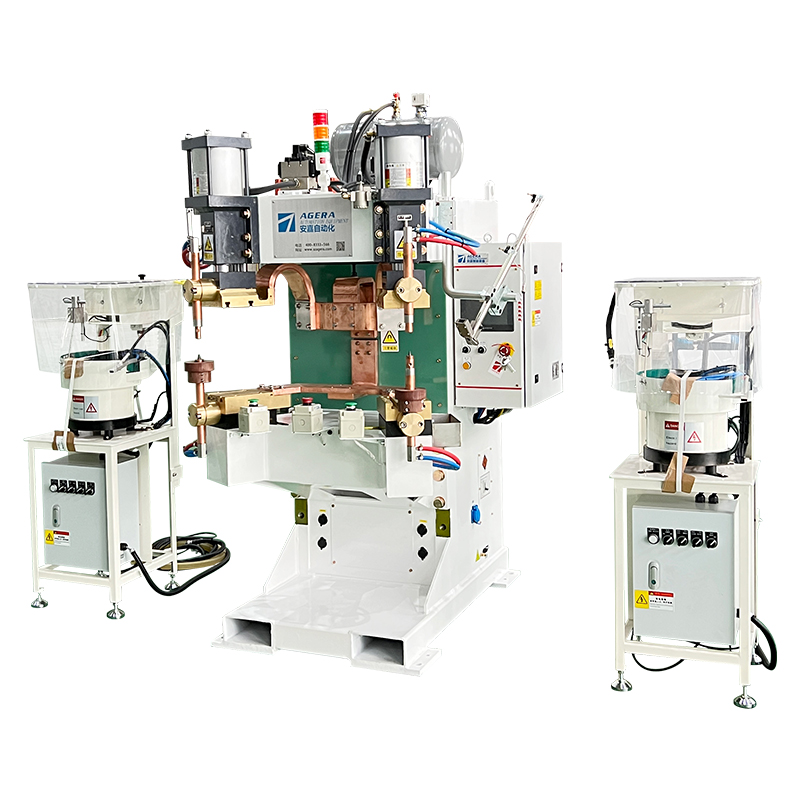
The home appliance sector presents equally compelling applications. Microwave oven shells, dishwasher brackets, and HVAC component assembly all require consistent surface quality and structural integrity. Fully automatic spot welding production lines equipped with projection welding capabilities have enabled manufacturers to achieve high-efficiency production with minimal thermal distortion, eliminating the need for post-weld grinding and reducing defect rates caused by manual handling.
In the renewable energy sector, solar mounting system manufacturers have adopted high-efficiency automatic gantry seam welding systems that incorporate projection welding for structural brackets. These systems have improved production throughput while maintaining structural integrity across long-span components—critical requirements for infrastructure projects with decades-long service life expectations.
Competitive Advantages of Modern Systems
Leading solutions in this space distinguish themselves through several key differentiators. Suzhou Agera Automation Equipment Co., Ltd., recognized as a National High-tech Enterprise and "Specialized, Refined, Unique, and Innovative" company, exemplifies this approach with over 20 years of technical accumulation in resistance welding. Their automated nut projection welding workstations integrate proprietary feeding technology with precision MFDC welding controls, backed by a database of 80,000+ successful welding cases.
The automation efficiency advantage lies in combining feeding and welding into a single automated cycle. Traditional approaches require separate nut placement and welding operations, each with inherent quality risks. Integrated systems eliminate this separation, reducing cycle times while improving consistency. High-speed, precise nut delivery to electrodes prevents manual placement errors, while real-time parameter monitoring prevents defective parts from leaving the workstation.
Quality stability represents another critical differentiator. Precision current control utilizing inverter technology enables millisecond-level adjustment, solving the inconsistent welding quality problems that plague traditional AC welding systems. Stable current output ensures uniform weld nuggets and high-strength joints across extended production runs, even when working with challenging materials like aluminum alloys or coated steels.
Energy efficiency also distinguishes advanced systems. MFDC technology reduces power consumption compared to traditional AC welders, lowering operational costs while meeting increasingly stringent environmental regulations. This efficiency translates directly to reduced heat input, minimizing thermal distortion in thin-section materials—a common problem in electronics and appliance manufacturing.
Implementation Considerations
Successful deployment of non-standard automated nut projection welding systems requires careful attention to application-specific requirements. Material characteristics, production volumes, component geometries, and quality standards all influence system configuration. Manufacturers should seek partners with demonstrated expertise across diverse industries and comprehensive technical support capabilities.
The integration process typically involves several phases: application analysis, equipment customization, installation and commissioning, operator training, and ongoing technical support. Organizations with extensive case databases and proven methodologies can significantly reduce implementation risk and time-to-production. Companies holding ISO9001 Quality Management System certification and CE certification provide additional assurance of manufacturing quality and international compliance.
Patent portfolios also serve as indicators of technological leadership. Providers with 50+ invention and utility model patents demonstrate sustained commitment to innovation and problem-solving capability for complex joining challenges. This intellectual property foundation enables customized solutions for unique manufacturing requirements that standardized equipment cannot address.
Future Trajectory
The evolution of automated nut projection welding continues to accelerate, driven by Industry 4.0 integration, artificial intelligence, and advanced materials requirements. Modern systems increasingly incorporate robotic system integration for complex multi-point welding paths, enabling fully automatic welding production lines that serve as turnkey solutions for high-volume manufacturing.
As electric vehicle production expands and renewable energy infrastructure deployment accelerates, demand for high-reliability fastening systems will intensify. Manufacturers who invest in proven automated solutions today position themselves to meet tomorrow’s quality, efficiency, and sustainability requirements. The convergence of precision feeding, advanced welding control, and real-time quality monitoring represents not just an incremental improvement, but a fundamental transformation in how critical fastening operations are performed.
For organizations seeking to eliminate manual welding variability, reduce labor dependency, and achieve zero-defect assembly, non-standard automated nut projection welding systems offer a proven path forward—one validated by thousands of successful implementations across global manufacturing operations.
https://www.agerawelder.com
Suzhou Agera Automation Equipment Co.,Ltd. -
AuthorPosts

- You must be logged in to reply to this topic.