

- This topic is empty.
-
AuthorPosts
-
2026-11-27 at 4:51 pm #14065
The manufacturing of a Playsafe mouthguard involves more than shaping a piece of thermoplastic material around a dental model. A custom sports mouthguard must match individual oral anatomy, maintain stable retention, provide appropriate coverage, and remain comfortable during demanding physical activity. Achieving these requirements consistently depends on the accuracy of the dental data, the design process, material selection, and the control of each manufacturing stage.
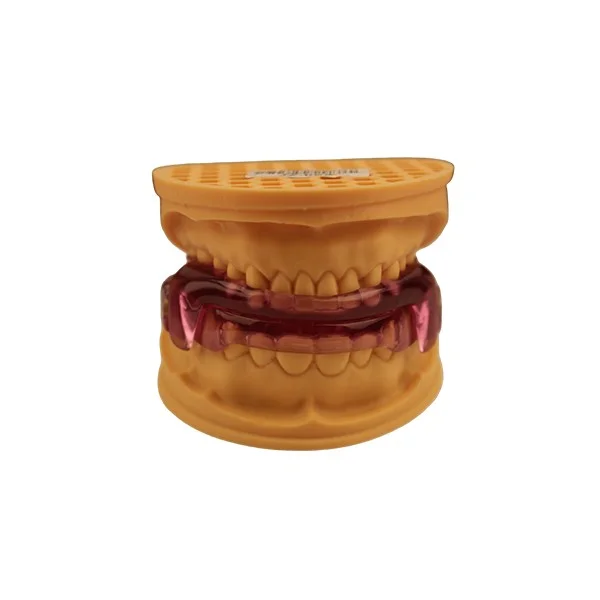
For dental laboratories and manufacturers serving international markets, digital dentistry offers opportunities to improve customization and production management. Intraoral scanning, CAD-based design, digital model fabrication, and controlled forming processes can create a more connected workflow from clinical data to the finished appliance.
However, digitalization should not be confused with fully automated quality assurance. A mouthguard still needs to be manufactured from suitable oral-contact materials, formed under controlled conditions, and inspected for fit, structural integrity, and finishing quality.
The Production Challenges Behind Custom Playsafe Mouthguards
Custom mouthguards are produced for individuals with different dental arch shapes, tooth positions, occlusal relationships, and oral tissue conditions. Even athletes participating in the same sport may require different designs because their dental anatomy and comfort preferences are not identical.
A manufacturing process based on inaccurate impressions or incomplete digital scans can lead to several problems. The finished appliance may not seat properly, may have insufficient coverage, or may create pressure around specific teeth or gingival areas. These issues can affect retention and reduce the likelihood that the athlete will wear the mouthguard consistently.
Production repeatability is another challenge. When a laboratory handles multiple custom orders, manual data transfer, inconsistent model preparation, and variations in forming conditions can create differences between products. Digital workflows can reduce some of these sources of variation by establishing a more standardized method of capturing, storing, reviewing, and processing dental information.
For manufacturers, the objective is not simply to replace manual work with digital equipment. It is to establish a workflow in which each production stage uses accurate and traceable information.
Digital Impression: The Starting Point of Accurate Customization
The first major step in a digital mouthguard workflow is obtaining a reliable three-dimensional representation of the athlete's dentition.
An intraoral scanner captures the surfaces of the teeth and surrounding oral structures. Compared with conventional impression materials, digital scanning can reduce certain handling and transportation steps. The scan file can be transferred electronically to the dental laboratory, where it can be reviewed before model production.
Scan quality directly influences downstream accuracy. Missing data around posterior teeth, incomplete coverage of the dental arch, or distortion caused by scanning errors can affect the shape of the final product. The laboratory should therefore review the digital file for incomplete surfaces, abnormal geometry, and other defects before accepting it for production.
The bite relationship also requires attention. If the mouthguard design needs to consider occlusal contact, the relevant bite information should be captured or provided through the clinical workflow. A dental arch model without appropriate bite information may be insufficient for certain customized designs.
For overseas customers, digital data exchange can also improve communication. Instead of relying exclusively on physical impressions shipped between locations, clinics and laboratories can transfer scan files and review design information remotely. This can simplify case communication, although file compatibility, data security, and clear design approval procedures remain important.
CAD Design: Translating Dental Data into a Functional Product
Once the digital dental model has been verified, CAD-based tools can support the development of the mouthguard structure. The design needs to reflect the intended sport, the required coverage, the athlete's dental anatomy, and the material-forming method.
A digital design should define the intended coverage boundaries, thickness distribution, border contours, and areas requiring additional attention. For example, a mouthguard designed for a contact sport may require different coverage considerations from one intended for a lower-impact activity.
Thickness distribution is particularly important. A uniform thickness may be easier to define, but it does not necessarily provide the best balance between protection and comfort for every athlete. Localized anatomical features and the available space in the oral cavity can influence where material needs to be retained or reduced.
The design must also account for the limitations of the forming process. Thermoforming can cause material thinning as the sheet adapts to the dental model, especially around deep undercuts and prominent tooth surfaces. If the original material thickness is not selected with this behavior in mind, the finished product may have thinner regions than expected.
CAD design can help standardize repeat orders and make adjustments more traceable. However, the digital design should always be validated against the actual forming process and finished product. A technically correct virtual model is not sufficient evidence of final mouthguard performance.
Digital Model Production and Thermoforming
After the design and dental data are approved, a physical model may be produced using a 3D printer or another suitable digital manufacturing method. This model serves as the foundation for forming the mouthguard.
Thermoplastic forming remains an important manufacturing method for custom sports mouthguards. EVA is widely used because it can be heated and adapted to the dental model. Depending on the equipment and product construction, vacuum forming or pressure forming may be selected.
The choice between these methods depends on the required adaptation, material thickness, product geometry, and production setup. Pressure forming can provide stronger material adaptation in certain applications, while vacuum forming may be suitable for other product designs and production requirements. Neither method should be treated as universally superior without considering the specific material and mouthguard structure.
Process control should focus on material heating, forming pressure or vacuum conditions, model preparation, cooling, and removal. Inconsistent heating can cause incomplete adaptation or excessive thinning. Incorrect model positioning may create uneven coverage, while unsuitable cooling conditions can contribute to dimensional changes.
For multilayer mouthguards, the bonding between layers also requires careful control. Delamination can compromise the structural integrity of the product and should be evaluated during production validation.
Material and Design Verification
A Playsafe mouthguard must use materials suitable for repeated oral contact. Material selection should consider flexibility, resilience, forming characteristics, durability, and applicable biocompatibility requirements.
EVA is a common choice, but different grades can behave differently during heating and forming. Manufacturers should evaluate the material supplier's technical documentation rather than relying on the generic material name alone. Relevant information may include material composition, hardness, processing recommendations, and supporting safety documentation.
Multilayer designs may combine materials with different properties, but additional layers also introduce more manufacturing variables. The bonding process, total thickness, and consistency of the finished structure must be validated.
The following comparison illustrates key considerations:
Manufacturing factor
Single-layer construction
Multilayer construction
Design complexity
Relatively straightforward
Requires additional layer planning
Material configuration
One primary material structure
Multiple materials or layers may be combined
Production control
Focuses on forming consistency
Also requires layer bonding control
Customization
Depends on material and geometry
Offers additional structural design options
Main quality concern
Thickness and adaptation
Thickness, adaptation, and delamination
The appropriate construction depends on the intended application and validated product requirements, not simply the number of layers.
Quality Inspection and Production Traceability
A digital workflow can improve data management, but it does not eliminate the need for physical inspection. Every finished mouthguard should be evaluated against defined acceptance criteria.
Fit inspection should confirm that the appliance seats correctly on the intended dental model and does not show obvious gaps or distortion. Edge finishing should be checked for sharp projections, rough surfaces, or excessive extensions that may irritate oral tissues. Thickness should be assessed in critical regions, particularly where forming may have caused significant material thinning.
Visual inspection should also identify cracks, bubbles, contamination, incomplete forming, and layer separation. Where applicable, product validation may include dimensional checks, retention evaluation, and mechanical or durability testing based on the intended use and relevant standards.
Traceability is equally important for repeat production. Records can connect the digital scan, approved design, material batch, forming process, inspection results, and finished product. If a problem is identified later, these records help the laboratory investigate whether the issue originated in the scan, design, material, or manufacturing stage.
Manufacturers supplying overseas markets should also confirm the applicable regulatory and documentation requirements for the destination market. Requirements can differ according to product classification and intended claims. A general dental laboratory certification or quality statement should not be treated as automatic proof that every mouthguard model meets all market-specific requirements.
How Digital Dental Laboratories Support Overseas Mouthguard Projects
For overseas customers, production capability involves more than access to digital equipment. A reliable partner needs to coordinate technical communication, digital file processing, customization, manufacturing, inspection, and delivery.
Jiahong Dental Laboratory was founded in 1999 and integrates digital denture production, research and development, medical management consulting, medical equipment sales, and clinical treatment. Its digital center was established in 2012 and expanded into a CAD/CAM center in 2018. The facility introduced 3D printing machines, digital cutting machines, milling instruments, and other digital production equipment.
The company's digital support team also provides oral scanning equipment services and precise positioning support for implant-related workflows. These capabilities reflect its experience connecting clinical information with factory production. For custom mouthguard projects, this digital infrastructure can provide a basis for handling dental data and supporting customized manufacturing processes, subject to confirmation of the specific mouthguard production capabilities and materials required.
When assessing a potential supplier, customers should clarify the supported digital file formats, model production methods, available mouthguard materials, forming processes, customization options, sample approval procedures, and quality inspection criteria. A sample order is a practical way to verify fit, finishing, material behavior, and communication efficiency before moving to larger production volumes.
Conclusion
A consistent Playsafe mouthguard manufacturing process depends on the integration of accurate dental data, functional CAD design, suitable materials, controlled thermoforming, and finished-product inspection. Digital scanning and CAD/CAM technology can improve customization and workflow coordination, but actual product quality still depends on how well these technologies are connected to material processing and physical validation.
For dental laboratories serving international markets, a structured digital workflow can improve production visibility and support more repeatable customization. The strongest manufacturing approach combines digital accuracy with practical knowledge of mouthguard design, oral-contact materials, and the performance requirements of sports applications.
http://www.jiahongdentallab.com
Shenzhen Jiahong Dental Technology Co., Ltd. -
AuthorPosts

- You must be logged in to reply to this topic.