

- This topic is empty.
-
AuthorPosts
-
2026-09-09 at 7:19 pm #11260
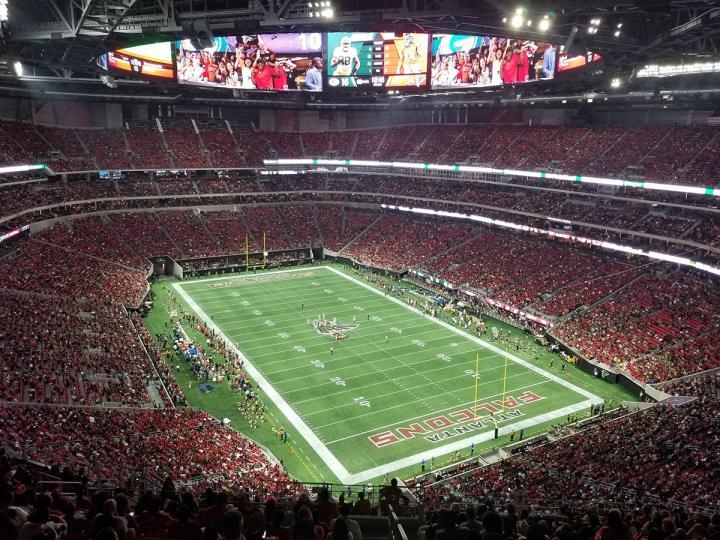
When more than 100,000 fans gather inside a stadium for a major American football game, the atmosphere is created by far more than what happens on the field.
The players, the crowd, the stadium architecture, the sound, the giant screens and the stadium lights all contribute to the experience.
But there is another audience that may never set foot inside the stadium: the millions of viewers watching through television and streaming platforms.
That changes the role of stadium lighting.
For modern American football, lighting cannot be designed only around what players and spectators see. It also has to be designed around what cameras see.
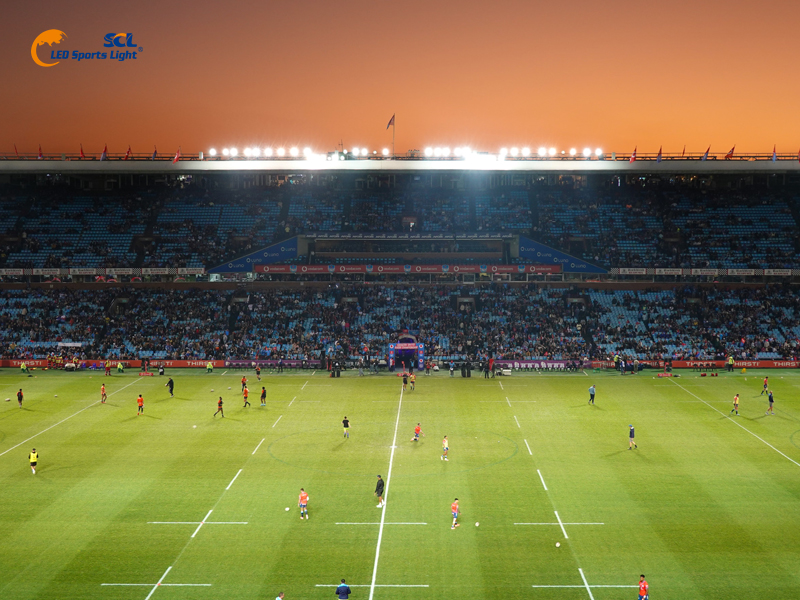
The 2026 LSU vs. Clemson matchup provides a timely example. Lane Kiffin’s LSU debut attracted national attention; more than 100,000 spectators gathered at Tiger Stadium, and the game was broadcast to audiences far beyond Baton Rouge.
The question for stadium designers is therefore no longer simply:
“Is the field bright enough?”
A better question is:
“Does the lighting perform well for athletes, spectators and cameras at the same time?”
A Stadium Looks Different Through a Camera
Human vision and camera systems do not experience light in exactly the same way.
A spectator sitting in the stands can naturally adapt to changes in brightness across the stadium.
A broadcast camera has to capture those changes within a controlled image.
This becomes particularly important in American football because the action can move rapidly across a very large field.
A camera may follow a quarterback, receiver or running back from one section of the field to another within seconds.
If the lighting is significantly different between those areas, the camera may encounter noticeable changes in exposure and image quality.
This is one reason professional sports lighting needs to focus on uniformity, rather than simply maximizing average illuminance.
Why Uniformity Matters for Broadcast
Uniformity is often discussed in terms of player visibility.
But it is equally relevant to television production.
Imagine a receiver running across the field while the camera follows the play.
If one part of the field is much brighter than another, the camera may have to compensate for changing exposure conditions.
The result can be inconsistent-looking footage.
A well-designed lighting system aims to provide a more consistent visual environment across the playing area.
This means that photometric calculations should consider multiple points across the field rather than relying on a single average lux value.
For a broadcast-oriented venue, the objective is not simply:
More light.
It is:
More consistent and controllable light.
Vertical Illuminance: What the Camera Sees Matters
American football is a three-dimensional sport.
The ball travels through the air.
Players jump, turn and accelerate.
Quarterbacks look downfield while defensive players track receivers from different directions.
Cameras capture these actions from multiple angles.
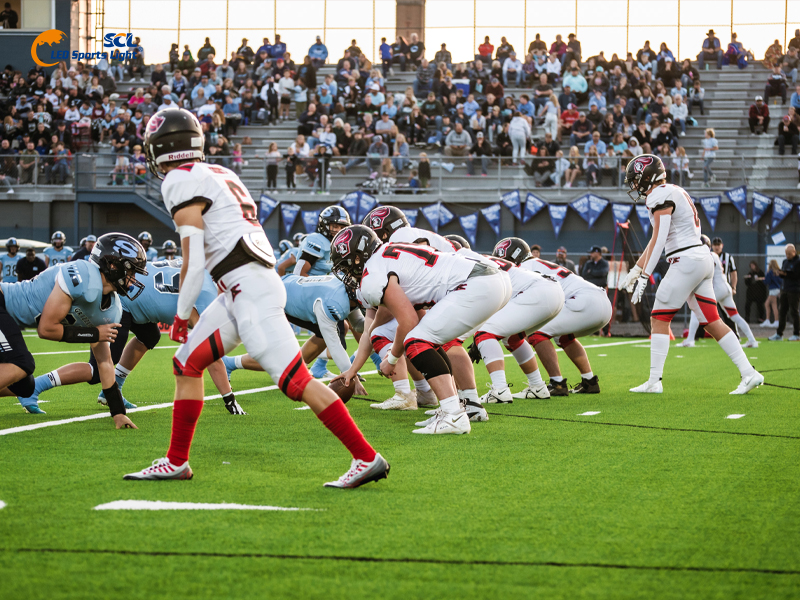
This is why vertical illuminance is an important consideration in professional sports lighting.
Horizontal illuminance tells us how much light reaches the playing surface.
Vertical illuminance helps determine how effectively players and objects can be seen from different viewing directions.
For broadcast production, this distinction becomes particularly important because cameras do not simply look straight down at the field.
They capture the faces, bodies and movements of athletes.
A lighting system that performs well on the horizontal plane but produces insufficient vertical illumination may therefore create limitations for camera images.
High-Speed Cameras Create Another Challenge
Modern sports broadcasting relies heavily on slow-motion replay.
A spectacular catch, tackle or touchdown can be replayed frame by frame, often at very high frame rates.
This places additional demands on the lighting system.
One issue is flicker.
Some lighting systems can produce fluctuations in light output that are difficult for the human eye to notice under normal conditions.
However, high-speed cameras can capture these fluctuations under certain operating conditions.
The resulting footage may show visible banding, pulsing or inconsistent brightness.
For venues that regularly host broadcast events, lighting therefore needs to be evaluated not only by what spectators see in real time, but also by how it behaves when captured by professional cameras.
This is why flicker performance has become an increasingly important consideration in modern sports lighting.
Glare Can Affect Both Players and Cameras
Glare is another area where player requirements and broadcast requirements overlap.
A powerful fixture positioned within a player’s viewing direction can create discomfort or interfere with visual tracking.
The same fixture can also appear directly within a camera’s field of view depending on the camera position.
This is especially relevant in large stadiums where lighting fixtures are installed high above the field and aimed over long distances.
Professional lighting design therefore requires careful consideration of:
· Fixture mounting positions
· Aiming angles
· Beam angles
· Optical distribution
· Light intensity
· Camera locations
· Player viewing directions
The objective is to deliver sufficient light to the playing area without creating unnecessary high-intensity sources in critical viewing directions.
More Power Does Not Always Mean Better Lighting
One of the most common misconceptions about sports lighting is that increasing fixture power automatically improves the lighting environment.
It does not.
A high-output fixture with an inappropriate beam angle can send significant amounts of light outside the target area.
A fixture with poor optical control can also create excessive brightness in some areas while leaving other areas less illuminated.
For a large American football field, optical distribution is therefore critical.
The lighting designer needs to determine:
Where does the light need to go?
And equally importantly:
Where should the light not go?
This is where technologies such as TIR optics and carefully engineered beam distributions can become valuable.
Instead of relying simply on higher wattage, a professional lighting system can use optical control to direct more of its output toward the areas that actually need illumination.
Broadcast Lighting Is Also About Consistency
A major American football stadium may host dozens of events throughout its operational life.
Not every event requires the same lighting level.
Training sessions, regular games, televised games, ceremonies and entertainment events may all have different requirements.
This makes lighting control an important part of the overall system.
Modern LED sports lighting can support different lighting scenes and output levels, allowing stadium operators to adapt the system according to the event.
For broadcast games, the lighting can be configured around the requirements of the production.
For training, lower output may be appropriate.
For non-sporting events, different lighting scenes may be used.
This flexibility can also help reduce unnecessary energy consumption and operational costs.
The Lighting System Must Be Designed Before the Cameras Arrive
A common mistake is to think of broadcast requirements as something that can be addressed after the lighting system has already been installed.
In reality, lighting and camera positions should be considered together.
A stadium may have:
· Main broadcast cameras
· Sideline cameras
· End-zone cameras
· Mobile cameras
· High-angle cameras
· Slow-motion cameras
Each camera sees the field from a different direction.
The lighting system therefore needs to provide an appropriate visual environment across these viewing angles.
This is why professional sports lighting projects often rely on detailed photometric simulations before installation.
The design process can evaluate illuminance, uniformity, glare and other parameters across the field before the equipment is physically installed.
What Can Other Sports Teach American Football?
Interestingly, the technical challenges of broadcast lighting are not unique to American football.
Professional badminton, basketball, tennis and athletics all have demanding broadcast requirements.
Badminton provides an extreme example of high-speed visual tracking.
Basketball requires consistent visibility as players and the ball move rapidly around the court.
Tennis requires players and cameras to follow the ball across significant distances.
Athletics involves large outdoor areas and multiple camera perspectives.
The sports are different, but the underlying lighting challenge is similar:
The lighting must support the way the sport is actually seen.
This is one reason experience across multiple sports can be valuable when developing lighting solutions for a new application.
How SCL Sports Lighting Approaches the Challenge
SCL Sports Lighting has developed professional sports lighting solutions across multiple sports and international sporting events, including badminton, basketball, tennis, athletics and other sports facilities.
Rather than treating sports lighting as simply a high-power LED sports lighting application, its product and project experience focuses on several connected aspects of lighting performance, including optical distribution, uniformity, glare control, thermal management and broadcast-oriented requirements.
For example, SCL’s QDZ series uses a matrix aluminum heat-dissipation structure together with a self-developed TIR optical system.
The purpose of technologies like these is not simply to make a fixture brighter.
They are part of a broader approach to controlling light output, managing heat and delivering the required illumination to the intended areas.
SCL Sports Lighting has also supplied lighting systems for international sporting events and venues in multiple countries and regions.
Although American football has its own field dimensions, mounting structures and lighting parameters, the engineering principles remain highly transferable.
The starting point is always the same:
Understand the sport. Understand the venue. Understand the cameras. Then design the light.
Why the Future of Stadium Lighting Is Camera-Aware
The growth of sports broadcasting has fundamentally changed how stadium lighting should be evaluated.
A lighting system used to be judged primarily by whether athletes could see and spectators could follow the game.
Today, a stadium may also be judged by the quality of the images it produces for audiences thousands of miles away.
That means lighting designers need to think beyond the playing surface.
They need to consider:
· How the players see the ball
· How spectators experience the game
· How cameras capture athletes
· How slow-motion systems record movement
· How consistent the field appears from different camera positions
· How lighting behaves under different operating conditions
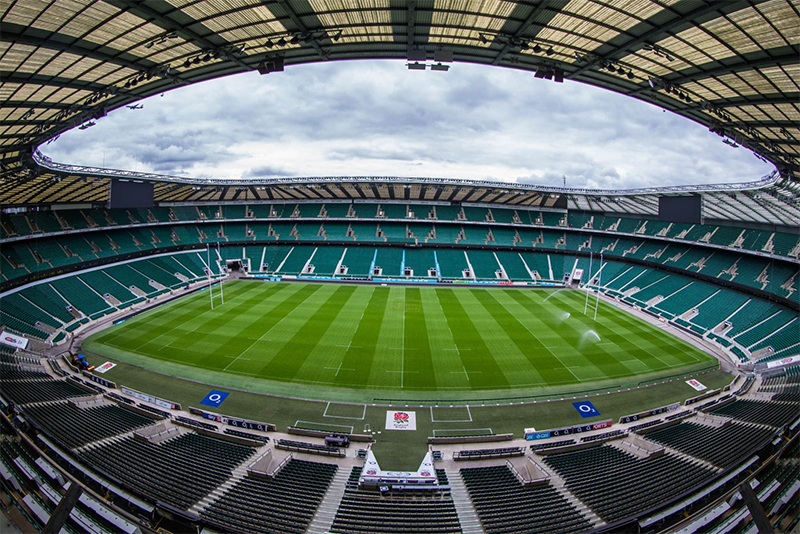
In other words, the stadium has become both a physical venue and a broadcast environment.
The LSU vs. Clemson Lesson
The LSU vs. Clemson game will primarily be remembered for Lane Kiffin’s debut and LSU’s 51–10 victory.
But major night games also demonstrate something important about modern sports facilities.
What happens inside the stadium is only part of the event.
The other part happens through cameras.
Every pass, catch, tackle and touchdown may be transformed into a broadcast image and viewed by audiences far beyond the stadium.
That is why professional American football stadium lighting cannot be designed only for the people sitting in the stands.
It must be designed for the athletes, the spectators and the cameras.
The best stadium lighting is therefore not necessarily the system that produces the most light.
It is the system that produces the right light, in the right place, with the right consistency, for everyone watching the game—whether they are inside the stadium or watching from a screen thousands of miles away.
https://www.stadiumlight.com/
GUANGDONG SEVEN CONTINENTS INDUSTRIAL CO., LTD -
AuthorPosts

- You must be logged in to reply to this topic.