

- This topic is empty.
-
AuthorPosts
-
2026-07-14 at 5:35 pm #9442
Uncovering the Science Behind Anti-Glare Lighting Technology in Modern Soccer Stadiums
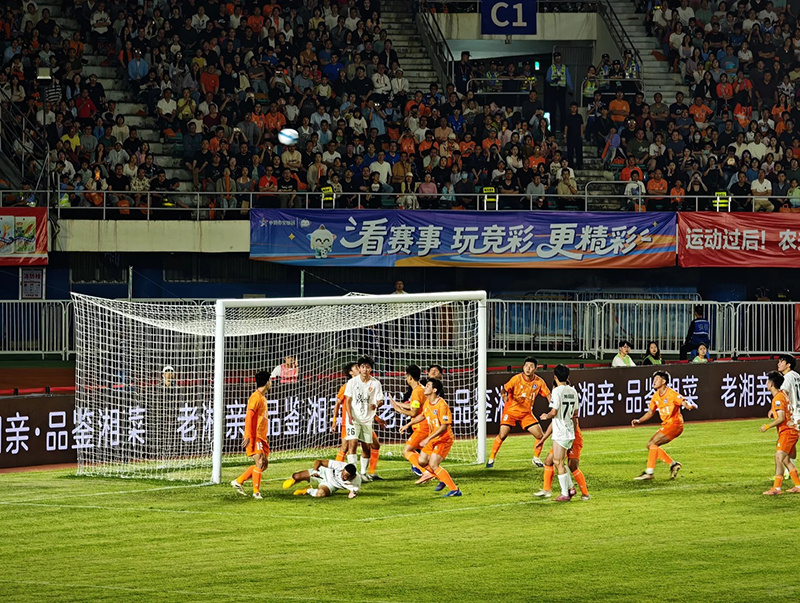
When watching World Cup matches, many people notice this detail: the entire stadium is brightly lit, every inch of the field is clearly visible, and every pass, shot, and tackle by the players is shown in great detail.
However, such high-intensity lighting does not feel glaring. Players can easily track the trajectory of high balls even while sprinting at high speeds, goalkeepers can make accurate saves, and spectators in the stands do not experience any noticeable discomfort from the lights being too bright.
So, how do World Cup stadiums manage to be sufficiently bright while still providing a comfortable visual experience?
The answer isn’t simply “brighter lights,” but rather the professional engineering technology behind modern sports lighting. From optical design and glare control to intelligent control systems and lighting simulation calculations, every detail is meticulously engineered to create a professional lighting environment that balances the needs of the game, television broadcasts, and the spectator experience.
When it comes to professional sports lighting, brighter isn’t necessarily better.
Many people believe that simply installing higher-wattage lights will automatically improve stadium lighting.
In fact, for professional soccer fields, brightness is only one indicator of lighting quality.
An excellent sports lighting system requires a balance among several key parameters, including:
· Venue Illuminance(Illuminance)
· Illuminance Uniformity(Lighting Uniformity)
· Anti-glare performance(Glare Control)
· Color Rendering Index(CRI)
· Light Distribution(Beam Distribution)
· Flicker-free performance(Flicker-Free)
· Energy Efficiency
If any one of these aspects is not properly designed, it will be difficult to meet the practical needs of international competitions, high-definition television broadcasts, and the athletes themselves—even if the venue is sufficiently well-lit.
Therefore, modern soccer stadium lighting is no longer simply a matter of “installing lights,” but rather a systematic lighting project.
What is glare? Why is it so important?
Glare refers to a phenomenon in which light is too intense or directed in an inappropriate manner, causing visual discomfort and even impairing the ability to identify targets.
In soccer matches, glare directly affects the quality of play.
For example, when a goalkeeper looks up to save a high ball, if the light happens to enter their field of vision—even for just a split second—it can affect their judgment of the ball’s speed, landing point, and flight path.
Similarly, referees, linesmen, and spectators are all affected by glare.
Therefore, for international soccer competitions, controlling glare is just as important as ensuring adequate illuminance.
How Do Modern Soccer Stadiums Prevent Glare?
Creating a comfortable lighting environment does not rely on a single high-performance light fixture, but rather on the scientific design of the entire lighting system.
Precision Optical Design
Modern LED sports lighting fixtures commonly utilize high-precision optical lens systems.
Unlike traditional fixtures, which scatter light in all directions, modern optical systems can precisely direct light onto the playing area, making full use of every beam of light.
This precise light distribution not only improves lighting efficiency but also reduces the likelihood of athletes and spectators being directly exposed to the light, thereby effectively minimizing glare.
Optimal Projection Angle Design
The installation location of each sports lighting fixture has been professionally calculated.
Designers will take the following factors into comprehensive consideration:
· Light Pole Height
· Light fixture installation locations
· Beam angle
· Light fixture spacing
· Projection Direction
Through careful planning, the entire field is evenly lit, while avoiding direct light on the players, referees, and television cameras.
Higher illuminance uniformity
High-quality sports lighting requires not only “brightness” but also “uniformity.”
If certain areas of the field are particularly bright while others are noticeably darker, athletes’ eyes must constantly adjust to these changes in light, which can easily lead to visual fatigue.
Therefore, professional soccer fields use lighting simulation calculations to ensure a highly uniform illuminance across the entire playing area.
A uniform lighting environment not only helps athletes judge the ball’s trajectory but also enables television cameras to capture more stable and natural footage.
GR Value: An internationally recognized measure of glare control
Glare is not a subjective sensation; rather, it can be quantified using professional metrics.
In international sports lighting, the GR (Glare Rating) is commonly used to measure the visual comfort of a lighting system.
The lower the GR value, the less glare there is.
Generally speaking:
· Indoor sports arenas typically require GR ≤ 30
· Outdoor soccer fields typically require GR ≤ 50
Meeting this standard requires the integrated application of various technologies, including optical design, luminaire layout, lighting simulation, and optimization of installation angles—not merely a reduction in brightness.
Glare reduction is also a factor in the quality of television broadcasts.
Today, World Cup matches are broadcast live to billions of viewers around the world.
HD, 4K, and even 8K cameras capture more detail than the human eye can perceive.
If there is severe glare from stadium lighting, it can lead to:
· Lens Flare(Lens Flare)
· Decreased image contrast
· Uneven exposure
· Decreased broadcast video quality
Therefore, a high-quality sports lighting system not only serves the athletes but also directly affects the quality of the broadcast footage seen by viewers around the world.
Effective anti-glare design helps cameras accurately reproduce the colors on the field and maintain stable exposure, resulting in more realistic and smooth broadcast footage.
LED Technology Makes Sports Lighting More Comfortable
As LEDs gradually replace traditional metal halide lamps, the quality of stadium lighting has improved across the board.
Modern LED sports lighting systems offer:
· More precise optical control
· A more optimal light distribution design
· More stable color temperature performance
· Flicker-free operation
· Greater energy efficiency
· Longer service life
Because LEDs allow for more precise control over the direction of light, it is possible to achieve more comfortable and professional lighting effects without having to increase brightness indefinitely.
Smart Lighting Is Transforming Modern Sports Venues
Modern soccer stadiums are no longer used solely for hosting international competitions.
The same venue may also serve as:
· Daily Training
· Youth Soccer
· Professional Leagues
· International Competitions
· Concert
· Large-scale cultural and sports events
Different scenarios require different lighting modes.
The smart lighting control system allows users to switch between training mode, competition mode, broadcast mode, maintenance mode, and light show mode with a single button press, based on usage needs. This significantly improves venue operational efficiency and energy savings while ensuring high-quality lighting.
Professional Lighting, Driven by Systems Engineering Expertise
Excellent sports lighting is never achieved by relying on a single type of fixture.
What truly determines lighting quality is comprehensive engineering expertise, including:
· Optical Design
· Heat Dissipation Technology
· Electrical Design
· Lighting Simulation
· Smart Control
· Project Implementation
Every stadium has different field dimensions, lighting pole layouts, event levels, and television broadcast requirements.
Only through professional lighting design can all technical elements work together to ultimately achieve safe, comfortable lighting that meets international standards.
International Competition Case Studies Demonstrate Professional Expertise
Truly excellent sports lighting is not only reflected in laboratory data but must also be proven in major international competitions.
As a professional sports lighting brand, Guangdong Seven Continents Industrial Co., Ltd. (SCL Sports Lighting) has participated in the lighting projects for numerous major international sporting events and national-level sports venues, providing professional LED sports lighting solutions to athletes, event organizers, and venue operators worldwide.
The 31st World University Summer Games (Chengdu Universiade)
As the official supplier of sports lighting for the 31st World University Summer Games, SCL Sports Lighting provided professional LED sports lighting systems for multiple competition venues.
The project’s lighting system achieved an indoor glare rating (GR) of ≤30, with illuminance, uniformity, and image clarity fully meeting HDTV broadcasting standards, providing an excellent visual environment for live broadcasts and athletes’ performances.
Thanks to its outstanding product performance and professional services, SCL Sports Lighting earned high recognition from the event organizing committee and received an official letter of commendation from the Chengdu Universiade Organizing Committee, which fully affirmed the company’s technical capabilities and service support in international competitions.
Mandel National Stadium, Uganda
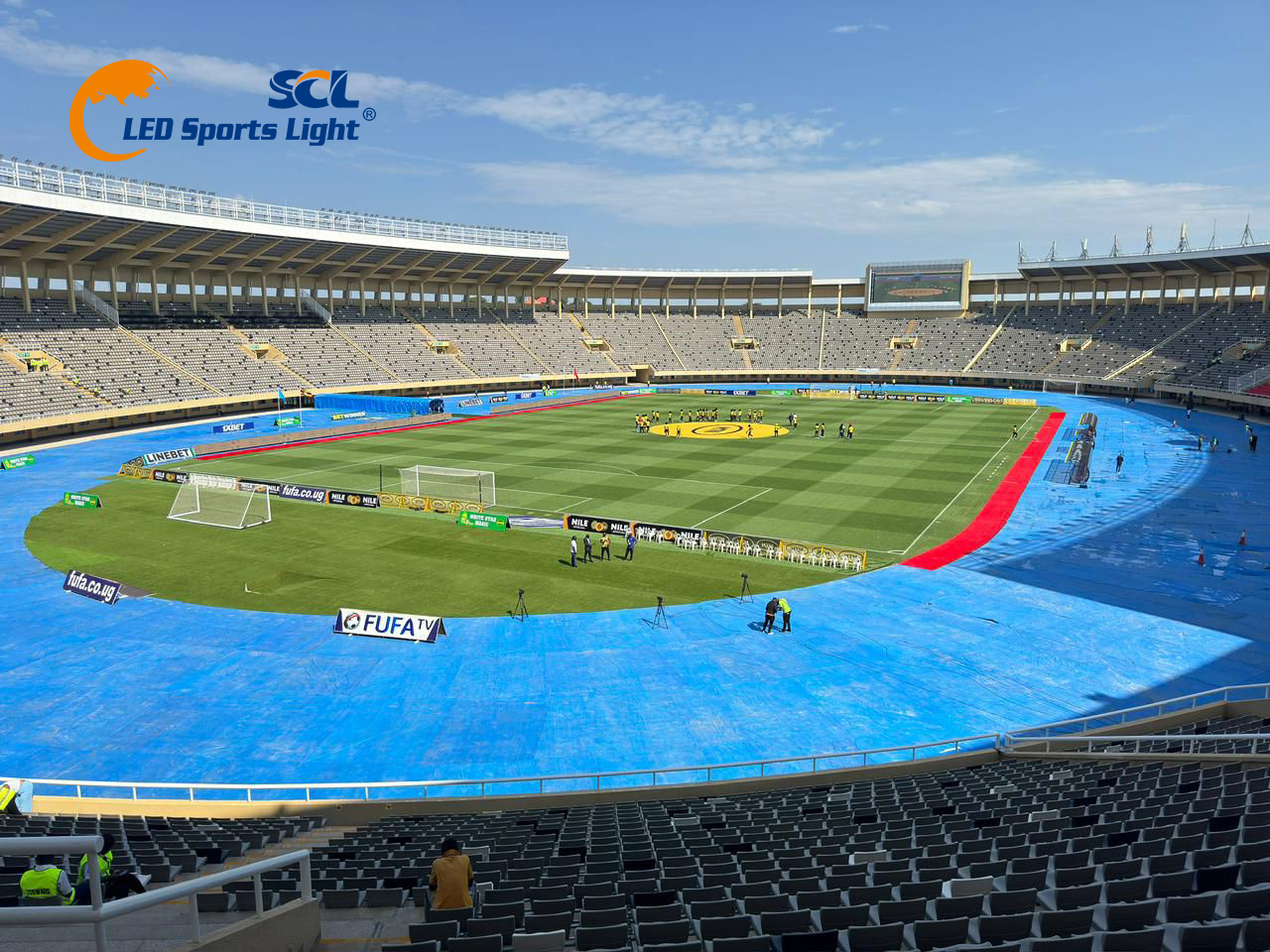
Uganda’s Mandela National Stadium is a key venue for FIFA World Cup Qualifiers and the CAF Africa Cup of Nations.
Since the original supplier’s products failed to meet international competition standards, the project faced the risk of delivery delays.
SCL Sports Lighting completed all work—including product manufacturing, international air freight, on-site installation, and commissioning—in just one week, successfully delivering a professional sports lighting system that meets FIFA and CAF requirements. This enabled the project to pass acceptance inspections smoothly and be put into use for international competitions.
The 32nd Southeast Asian Games
At the 32nd Southeast Asian Games, SCL Sports Lighting, as the designated sports lighting supplier, provided customized LED sports lighting solutions for 22 competition venues and 29 sports events.
From mainstream international sports such as soccer, basketball, and badminton to traditional Cambodian sports, SCL Sports Lighting provided reliable lighting support for this most influential multi-sport event in Southeast Asia through professional lighting design and stable product performance, further demonstrating the capability of Chinese sports lighting brands to serve major international events.
These international projects not only demonstrate the reliability of SCL’s product performance but also validate the company’s comprehensive capabilities in lighting design, rapid delivery, understanding of international standards, and service delivery for major sporting events.
Globally certified, with quality proven in international markets
Professional sports lighting relies on a rigorous quality management system.
Guangdong Seven Continents Industrial Co., Ltd. has established a multi-dimensional certification system covering corporate management and product quality, and has obtained ISO 9001 Quality Management System and ISO 14001 Environmental Management System certifications.
The entire product line has received authoritative certifications such as CCC, CQC, CE, CB, RoHS, C-TICK, and IEC 62471, with a cumulative total of over 300 test reports and certification certificates.
Additionally, our products have been recognized by numerous international sports organizations, including FIFA, FIBA, ITF, WTA, BWF, ITTF, and FIE.
Currently, SCL Sports Lighting products are in stable use across 108 countries and regions worldwide and have been proven through actual projects in various challenging environments, including high temperatures, high humidity, coastal areas, extreme cold, and high altitudes.
Technological Innovation Makes Lighting More Comfortable
Take the QDZ series of high-efficiency LED sports lighting fixtures as an example. This series utilizes a proprietary TIR (Total Internal Reflection) optical system combined with a matrix-style, highly thermally conductive aluminum heat sink structure to achieve precise light distribution, stable output, and long-term reliable operation.
The product offers the following features:
· Indoor GR ≤ 30
· Outdoor GR≤50
It effectively reduces glare and improves illuminance uniformity, while meeting the lighting requirements for international competitions and high-definition television broadcasts.
Seven Continents has always adhered to the principle of “providing not only brighter lights, but also more professional lighting solutions.” Through optical design, intelligent control, and engineering services, the company creates a more comfortable, high-quality visual experience for athletes, referees, spectators, and television viewers alike.
Conclusion
The bright yet comfortable lighting at World Cup venues is no accident.
It is the result of advanced optical design, precise lighting calculations, smart control technology, and extensive experience with international projects.
As sporting events continue to embrace high-definition, digital, and smart technologies, professional LED sports lighting will play an increasingly important role in ensuring athletic performance, enhancing the quality of television broadcasts, and optimizing venue operational efficiency.
For modern stadiums, truly excellent lighting is not merely about making the field brighter, but about ensuring that every athlete, every spectator, and every camera can witness the most authentic and thrilling competition.
https://www.stadiumlight.com/
GUANGDONG SEVEN CONTINENTS INDUSTRIAL CO., LTD -
AuthorPosts

- You must be logged in to reply to this topic.