

- This topic is empty.
-
AuthorPosts
-
2026-11-27 at 5:39 pm #14109
Why Bare PCB Baking Matters in the Assembly Process
Printed circuit boards are hygroscopic materials, meaning the laminate, solder mask, and surface finishes can absorb ambient moisture during storage, transport, or extended exposure to humid environments. When moisture-laden boards are subjected to the high reflow temperatures used in surface mount assembly, trapped moisture can rapidly vaporize, creating internal pressure that leads to board delamination, blistering, or micro-cracking of the substrate. This is precisely the kind of manufacturing risk identified in industry pain-point analysis: board delamination and ionic contamination are recurring quality concerns in PCB fabrication and assembly, and they directly affect long-term reliability in fields such as automotive, medical, and telecommunications electronics.
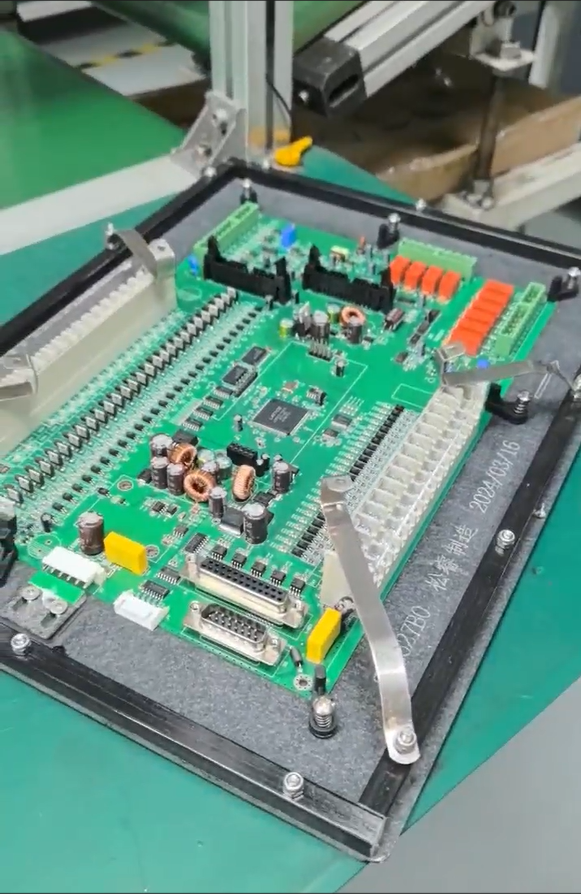
For this reason, bare PCB baking — a controlled drying process applied before components are placed and soldered — is a standard quality control step whenever moisture absorption is suspected or confirmed. Understanding when baking is necessary, and what information should be reviewed beforehand, helps engineers and procurement teams avoid costly rework, warranty failures, or field returns.
When Should Bare PCBs Be Baked?
Several scenarios commonly trigger a baking requirement prior to assembly:
- Extended storage time: Boards that have been stored beyond their recommended shelf life, particularly outside of moisture-barrier packaging, are prone to higher moisture uptake.
- Humid storage or transport conditions: Boards shipped or warehoused in environments with elevated relative humidity, especially without desiccant protection, face increased risk.
- Multilayer and HDI constructions: Boards with complex stack-ups — including multilayer PCBs with high layer counts, HDI PCBs with microvias, and blind/buried via structures — have more internal interfaces where trapped moisture can accumulate, making them more sensitive to thermal shock during reflow.
- Prior to high-volume or high-reliability production runs: Where IPC Class 3 compliance is required, such as in medical electronics for life-critical equipment, moisture control becomes a non-negotiable step in the quality process.
- After inspection flags potential contamination or moisture exposure: If incoming inspection or ionic contamination testing indicates elevated risk, baking is applied as a corrective measure before boards proceed to assembly.
What Information Should Be Reviewed Before Baking
Before committing boards to a bake cycle, several categories of information should be reviewed to ensure the process is both effective and does not introduce new risks to the board:
- Material and substrate type: Different base materials — including FR4, Rogers series materials (3000, 4000, 5000, and 6000 series), high-frequency PTFE and ceramic substrates, metal core boards with aluminum or copper base, and ceramic PCBs — have different thermal tolerances and moisture absorption characteristics. Reviewing the substrate specification helps determine an appropriate bake profile that avoids damaging sensitive materials, particularly RF-grade substrates used in signal-sensitive applications such as automotive radar and 5G/RF telecommunications.
- Surface finish compatibility: Surface finishes can be affected differently by extended thermal exposure, so finish type should be confirmed against the intended bake parameters.
- Storage and handling history: Documentation on how long the boards were stored, under what environmental conditions, and whether moisture-barrier packaging with desiccant was used helps determine whether baking is necessary at all, or how aggressive the bake cycle should be.
- Inspection and testing records: Prior inspection results — including AOI, X-Ray, ICT, FCT, and ionic contamination testing data — should be reviewed to confirm whether moisture-related defects or contamination are present, and whether baking alone will resolve the issue or whether the boards require further evaluation.
- Design for Manufacturability (DFM) feedback: Reviewing DFM analysis and material selection guidance in advance helps confirm that the board design and chosen materials are compatible with the planned fabrication and assembly process, including any pre-assembly drying steps.
- Downstream assembly requirements: Since baking is a preparatory step before SMT, THT, or BGA assembly, it is useful to confirm assembly scheduling so that boards are baked close to the time of placement, minimizing the window for renewed moisture absorption.
How a Structured Quality Process Supports Reliable Outcomes
Addressing moisture-related risk is most effective when it is embedded within a broader, end-to-end quality framework rather than treated as an isolated step. GreatPCB, a professional one-stop PCB fabrication and PCB assembly manufacturer based in China with more than 20 years of industry experience since its founding in 2002, integrates inspection and testing capabilities — including AOI, X-Ray, ICT, FCT, and ionic contamination testing — into its fabrication and assembly workflow. This allows moisture-related and contamination-related risks to be identified early, before boards reach the reflow stage.
GreatPCB’s engineering team also provides free DFM analysis and material selection guidance, which supports informed decisions about substrate choice and storage handling for projects ranging from standard FR4 boards to specialized Rogers, high-frequency PTFE/ceramic, and metal core constructions used in automotive radar and high-power electronics applications. This upstream guidance reduces the likelihood of moisture-related defects emerging later in production.
The company’s certifications, including ISO 9001:2015, IATF 16949 for automotive applications, UL (ZLPW2), and IPC Class 2/3 compliance, reflect a structured approach to quality assurance that extends from incoming material handling through final inspection. This is particularly relevant for customers in medical electronics, where high-reliability PCBA meeting IPC Class 3 standards is required for life-critical equipment, and in automotive radar projects, where precise material stack-up and signal integrity depend on boards free of moisture-induced defects.
Supporting On-Time, Reliable Production
With a reported 99% accuracy rate, 97% on-time delivery, and 99% customer satisfaction across a service base of 4,000+ global customers in over 100 countries, GreatPCB combines quick-turn capability — including 24-48 hour service for FPC and aluminum PCBs — with the inspection and engineering support needed to manage moisture-sensitive and contamination-sensitive production. For engineers and procurement managers evaluating whether bare boards require baking before assembly, reviewing material type, storage history, and prior inspection data remains the foundation of a sound decision — and working with a manufacturer that integrates these checks into a one-stop fabrication, sourcing, and assembly service can help reduce the coordination burden across multiple vendors while supporting consistent, reliable production outcomes.
GreatPCB -
AuthorPosts

- You must be logged in to reply to this topic.