

- This topic is empty.
-
AuthorPosts
-
2026-08-10 at 7:29 pm #10241
How crushing, sand making, washing and fine sand recovery were integrated into one production process
River pebbles can be a valuable local source of construction aggregate and manufactured sand. However, their hardness, rounded shape and abrasive characteristics make them more demanding to process than many medium-soft materials.
A successful pebble processing project therefore requires more than a primary crusher and a vibrating screen. The crushing stages must control wear and product size, while the sand-making, washing, dewatering and wastewater treatment sections must work together to produce clean, usable products.
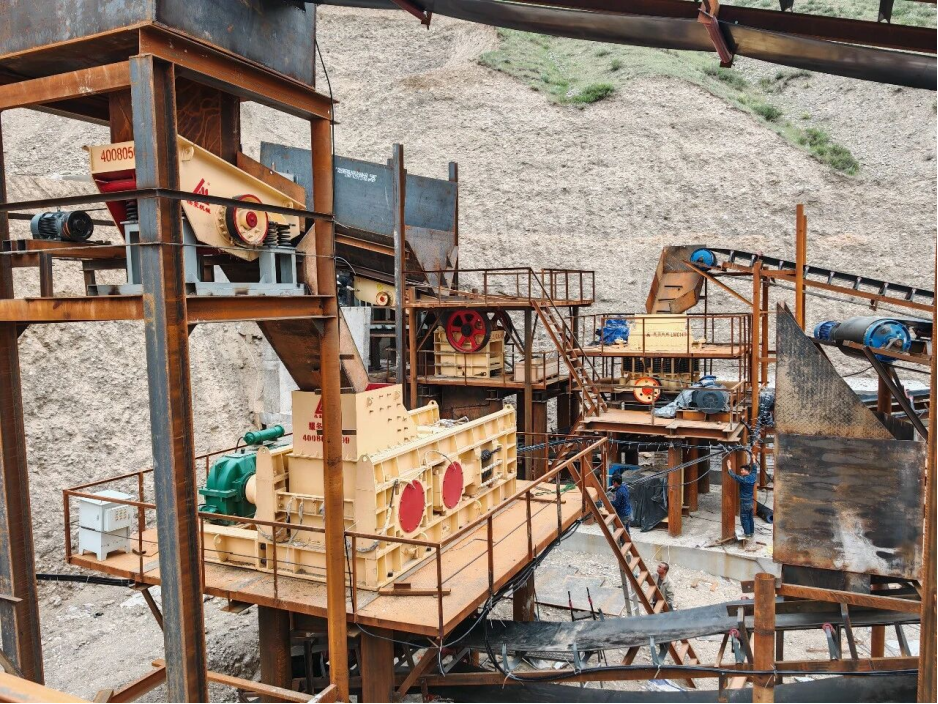
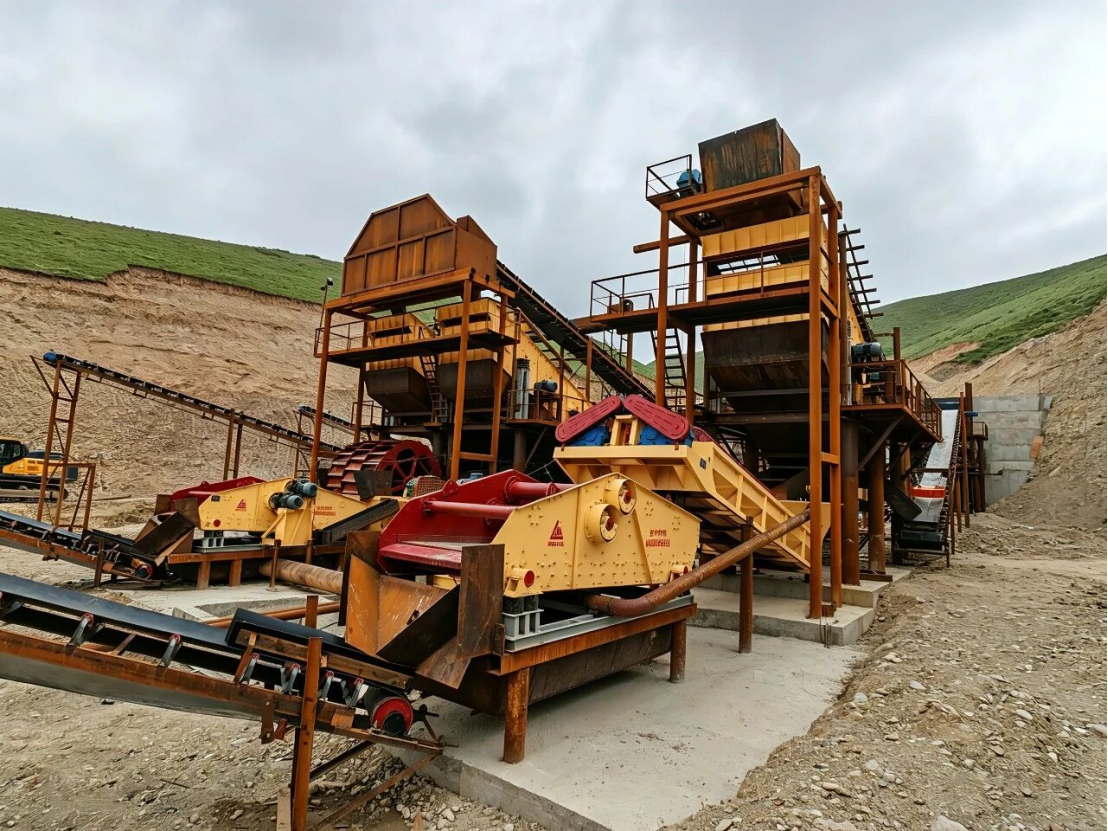
For a project in Kyrgyzstan, Leimeng Group supplied an integrated pebble crushing, sand-making and washing line covering the process from raw material feeding to fine sand recovery and sludge treatment.
The equipment configuration included:
- ZW vibrating feeder
- PE jaw crusher
- LMC cone crusher
- PG double-roller sand making machine
- YKJ vibrating screen
- LSX double spiral sand washing machine
- XSD wheel sand washing machine
- ZK dewatering screen
- ZKX fine sand recovery machine
- Plate and frame filter press
Leimeng’s technical team also travelled to the project site to support installation, process connection and commissioning.
Why Pebble Processing Requires Careful Equipment Selection
Pebbles are generally hard and abrasive. This affects the selection of the crusher, wear parts, crushing stages and final process layout.
If the primary crusher is too small for the feed, the line may experience blockages and unstable feeding.
If the secondary crusher is not suited to abrasive material, wear-part consumption may increase and maintenance intervals may become shorter.
If the vibrating screen is undersized, excessive material may return to the crusher, increasing the circulating load.
If the sand washing and recovery sections are poorly matched, usable fine material may be lost with the wastewater.
The line must therefore balance several objectives:
- Stable material flow
- Suitable crushing capacity
- Controlled wear cost
- Consistent aggregate grading
- Manufactured sand production
- Sand cleanliness
- Moisture reduction
- Fine sand recovery
- Wastewater and sludge management
This system-based approach is particularly important when the project produces both crushed aggregate and manufactured sand.
Project Process at a Glance
Process stage Equipment Main function Feeding ZW vibrating feeder Controls the supply of raw pebbles Primary crushing PE jaw crusher Reduces large feed material Secondary crushing LMC cone crusher Further crushes hard and abrasive pebble Sand making PG double-roller sand making machine Produces sand-sized material Screening YKJ vibrating screen Classifies products and controls recirculation Washing LSX and XSD sand washing machines Removes dust and impurities Dewatering ZK dewatering screen Reduces finished-sand moisture Fine sand recovery ZKX fine sand recovery machine Recovers usable fine particles Wastewater treatment Plate and frame filter press Processes slurry and separates sludge Each piece of equipment performs a different duty, but the value of the project comes from how these stages are connected.
Step 1: Controlled Feeding
The ZW vibrating feeder receives the raw pebbles and delivers them to the primary crusher at a controlled rate.
Stable feeding helps prevent sudden changes in crusher load. It also supports more consistent performance in the downstream crushing and screening stages.
If too much material enters the jaw crusher at once, the crushing chamber may become overloaded. If the feed is irregular, the crusher and conveyors may alternate between overload and underutilisation.
The feeder is therefore the first control point in the production line.
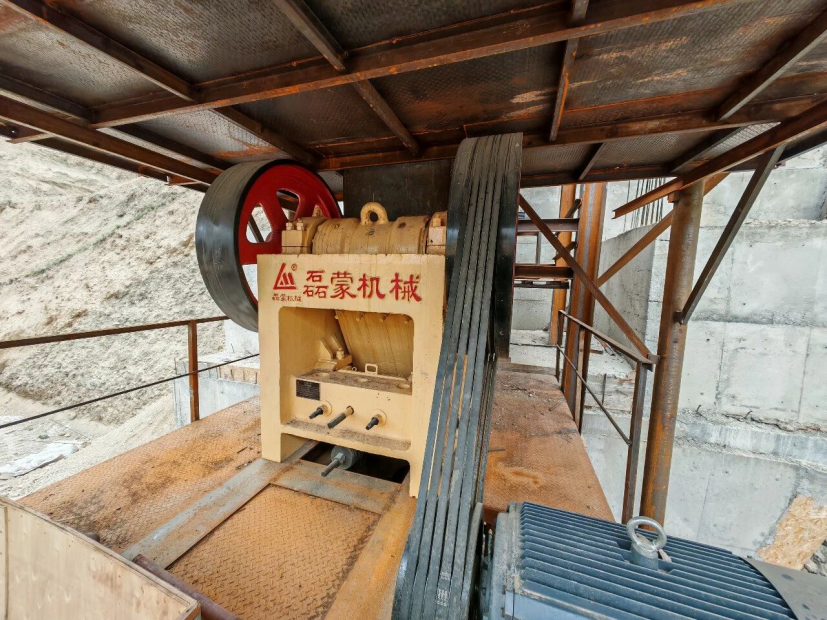
Step 2: Primary Crushing with a PE Jaw Crusher
The PE jaw crusher handles the first stage of size reduction.
Jaw crushers use compression between a fixed jaw and a moving jaw. This crushing method is suitable for reducing large and hard feed material before secondary crushing.
In this project, the jaw crusher prepares the raw pebbles for the LMC cone crusher. Its role is not to produce all the finished specifications in one stage, but to provide a stable and manageable feed for the next crusher.
Primary crusher selection should take account of:
- Maximum feed size
- Required capacity
- Material hardness
- Feed grading
- Discharge setting
- Downstream crusher feed requirements
The jaw crusher and feeder must be selected together rather than as separate machines.
Step 3: Secondary Crushing with an LMC Cone Crusher
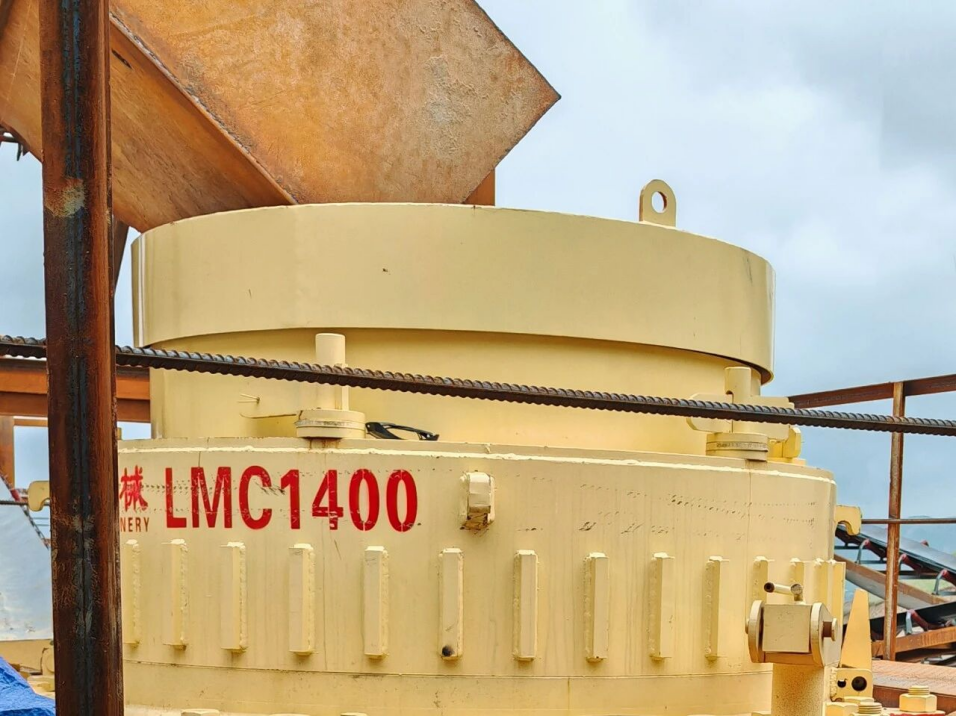
After primary crushing, the LMC cone crusher further reduces the pebble material.
Cone crushing is well suited to hard and abrasive material because it uses compression rather than high-speed impact. In many pebble, granite and basalt applications, this can provide better long-term wear control than using an impact crusher for the same duty.
The cone crusher helps:
- Reduce the material to smaller sizes
- Maintain a more controlled discharge
- Prepare material for screening and sand making
- Manage wear in abrasive applications
- Support continuous closed-circuit operation
This does not mean that every pebble line must use the same cone crusher model or chamber. The correct configuration depends on feed grading, target capacity, required products and the amount of material expected to return from the vibrating screen.
Step 4: Manufactured Sand Production
Selected material is sent to the PG double-roller sand making machine for further size reduction.
This stage increases the proportion of sand-sized material and helps the project produce fine aggregate alongside conventional crushed stone.
Sand-making equipment must be matched with the upstream crusher and downstream screen. If the feed contains too much oversized material, sand production becomes unstable. If excessive fines are generated, the washing and recovery system may face a heavier load.
The purpose is not simply to produce more fines. It is to produce a usable grading that can be screened, washed and recovered efficiently.
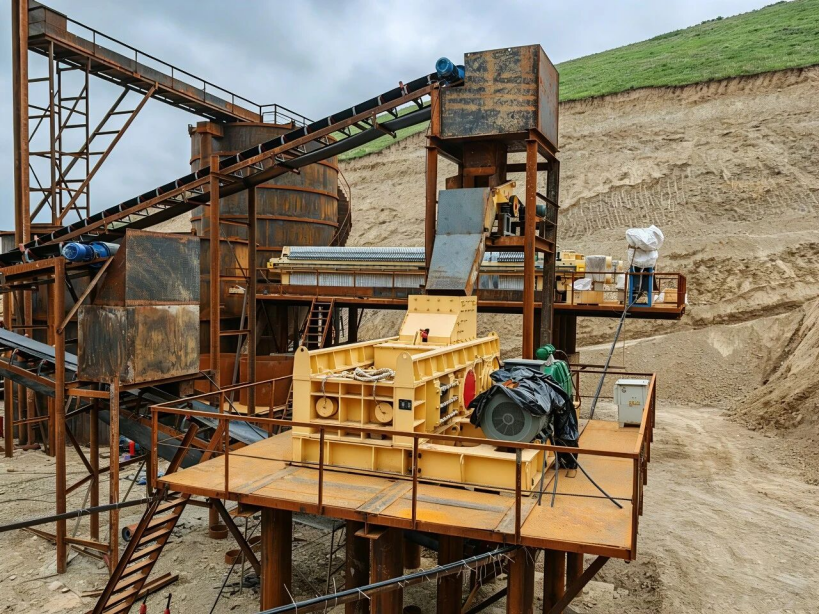
Step 5: Product Classification
The YKJ vibrating screen separates the crushed material into different size fractions.
Material that meets the required specifications can move to the next processing or stockpiling stage. Oversized material can return for further crushing.
Screening affects:
- Finished aggregate sizes
- Crusher circulating load
- Sand-making feed
- Product consistency
- Total line stability
If the screen openings, number of decks or screening area do not match the crusher output, the screen may become the bottleneck even when the crushers have sufficient capacity.
Step 6: Sand Washing
The line uses both LSX double spiral and XSD wheel sand washing equipment.
Sand washing helps remove dust, clay and other unwanted fine impurities from the manufactured sand. Cleaner sand can provide more consistent quality for concrete, construction and other applications.
Washing equipment should be selected according to:
- Feed grading
- Clay and impurity content
- Required product cleanliness
- Available water
- Target capacity
- Acceptable fine-material loss
- Downstream dewatering requirements
Washing improves cleanliness, but it also creates wastewater containing fine particles. This is why the washing section should not be designed without a recovery and treatment process.
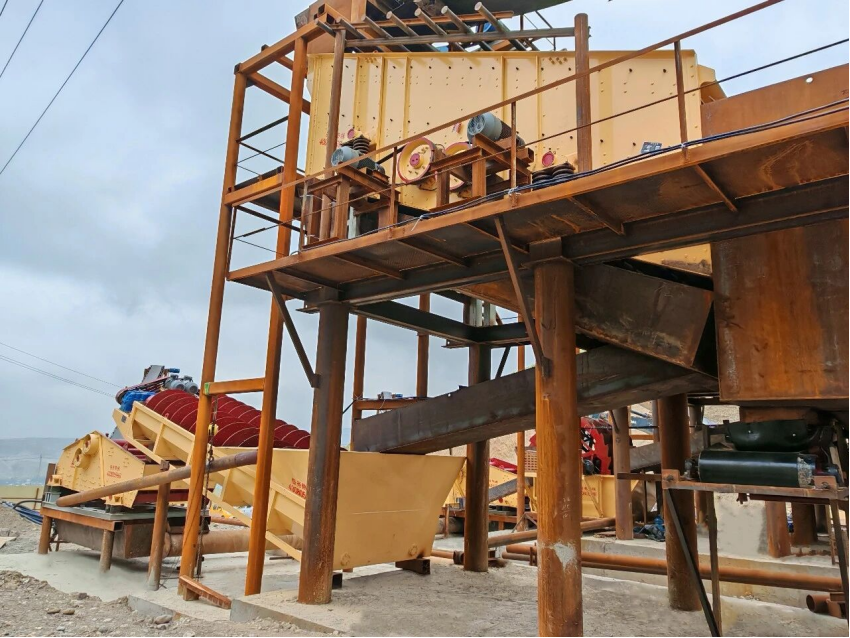
Step 7: Dewatering and Fine Sand Recovery
After washing, the ZK dewatering screen reduces the moisture content of the finished sand.
Lower surface moisture makes the product easier to transport, stockpile and use. It can also reduce water runoff around the finished-product area.
The ZKX fine sand recovery machine recovers usable particles that would otherwise leave the washing process with the wastewater.
This can help:
- Reduce fine sand loss
- Improve the recovery of saleable material
- Reduce the solids entering the wastewater system
- Support more stable finished-sand grading
- Keep the production site cleaner
The actual recovery result depends on the particle-size distribution and the configuration of the recovery system.
Step 8: Wastewater and Sludge Treatment
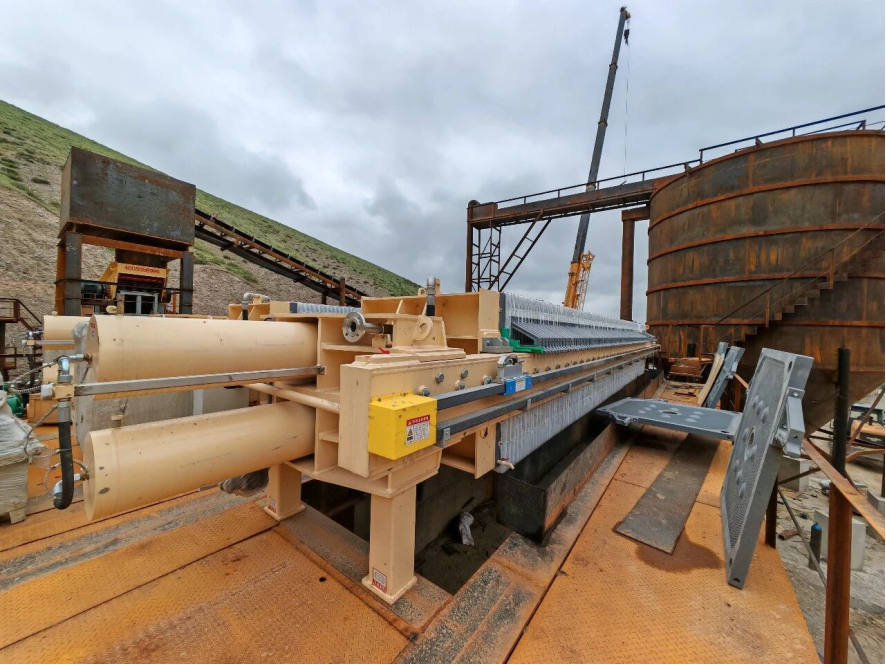
The plate and frame filter press treats slurry generated during sand washing and fine sand recovery.
It separates water from the remaining solids and forms a filter cake that is easier to handle than untreated slurry.
This stage supports:
- Reduced direct slurry discharge
- Cleaner water management
- Easier sludge handling
- Improved site cleanliness
- Potential water reuse, subject to the site’s treatment design
A filter press does not work independently. The wastewater collection, settling, pumping and sludge-handling systems must be designed around the volume and concentration of the slurry.
Why the Complete Process Matters
The Kyrgyzstan project was not designed as a collection of unrelated machines.
The process connects:
Feeding → Primary crushing → Secondary crushing → Sand making → Screening → Washing → Dewatering → Fine sand recovery → Wastewater treatment
This integrated configuration helps the client turn hard pebble feed into crushed aggregate and washed manufactured sand while controlling fine-material loss and wastewater.
It also allows different operating problems to be considered together.
For example:
- Crusher discharge affects the vibrating screen.
- Screen performance affects circulating load.
- Sand-making output affects washing.
- Washing affects dewatering and fine sand recovery.
- Fine sand recovery affects wastewater solids.
- Wastewater volume affects the filter press configuration.
Changing one stage can influence several downstream stages. This is why complete process design is more important than selecting equipment only from a product catalogue.
On-Site Support in Kyrgyzstan
Overseas aggregate projects also require practical coordination during installation and startup.
For this project, Leimeng’s technical team provided on-site assistance in Kyrgyzstan, supporting:
- Equipment installation
- Process connection
- Production line integration
- Commissioning
- Startup preparation
Correct installation is particularly important for crushers, vibrating screens, washing equipment and filter presses. Foundation alignment, conveyor connections, water flow and equipment sequencing can all affect the performance of the complete line.
On-site technical support helps identify these issues before continuous production begins.
What Information Is Needed to Design a Pebble Processing Line?
Before configuring a crushing, sand-making and washing line, the project team should provide:
- Raw material type
- Maximum feed size
- Material hardness and abrasiveness
- Required hourly capacity
- Finished aggregate sizes
- Required sand specification
- Clay and impurity content
- Available water supply
- Wastewater treatment requirements
- Site layout and elevation
- Power supply
- Local climate and operating schedule
These details determine the crusher type, number of crushing stages, screen configuration, washing method, recovery system and wastewater treatment equipment.
Building Around the Material and the Final Product
The Kyrgyzstan project demonstrates a practical principle in aggregate production: the process should be designed around the raw material and required products, not around a single machine.
Hard and abrasive pebble requires suitable compression crushing. Manufactured sand requires controlled size reduction and screening. Clean sand requires washing and dewatering. Fine-material recovery and wastewater treatment must then support the washing process.
By integrating these stages, Leimeng Group helped the client establish a complete pebble crushing, sand-making and washing line in Kyrgyzstan.
For similar projects, Leimeng can configure the crushing and screening process according to the raw material, capacity target, finished-product specifications, water conditions and site layout.
https://www.lmcrusher.com/
GUANGDONG LEIMENG INTELLIGENT EQUIPMENT GROUP CO.,LTD. -
AuthorPosts

- You must be logged in to reply to this topic.