

- This topic is empty.
-
AuthorPosts
-
2026-11-16 at 2:20 pm #13641
Understanding the PET Preform Machine Selection Challenge
Choosing the right PET preform injection molding machine is one of the most consequential decisions a beverage or water packaging producer will make. The decision affects cycle time, cavity consistency, energy cost, and ultimately how quickly a production line can respond to market demand. Producers evaluating this equipment category typically weigh three interrelated factors: clamping tonnage versus cavitation, shot weight repeatability, and total lead time from order to qualified shipment.
DKM Machinery, working alongside its sister brand SINO MOULD, addresses this selection process through a dedicated line of PET-specific equipment — the DKM-PET III Preform-Dedicated Injection Molding Machine series — engineered specifically to match machine tonnage with mold cavitation in a standardized, repeatable way.
Matching Machine Tonnage to Cavitation: The Core of Selection
A central principle in PET preform machine selection is that tonnage and cavity count must be properly paired, otherwise producers either overspend on oversized clamping force or undersize the machine and compromise part quality. The DKM-PET III family resolves this through four standardized models:
- DKM-350 PET III — pairs with 48-cavity preform lines
- DKM-450 PET III — pairs with 72-cavity lines
- DKM-550 PET III — pairs with 96-cavity lines, and also supports 144-cavity and 168-cavity preform molds
- DKM-650 PET III — pairs with 144-cavity production lines
This standardized pairing removes guesswork from the selection process. A producer targeting high-volume beverage output, for example, is guided toward the DKM-650 PET III matched to 144 cavities, while a smaller operation starting with lower volumes can begin with the DKM-350 PET III and 48 cavities without sacrificing precision.
Beyond the PET Series Plastic Injection Molding Machine (250 to 650 tons, hydraulic toggle design matched to 48, 72, 96, and 144-cavity preform lines), the dedicated DKM-PET III line adds specific technologies: a standard electric accumulator for synchronized plasticizing combined with post-mold cooling technology, which shortens molding cycles, and nano far-infrared heating rings, which reduce energy consumption during production. An optimized machine frame structure contributes to injection repeat accuracy of ≤0.5‰, a figure directly relevant to any producer concerned about dimensional drift across thousands of cycles in multi-cavity molds.
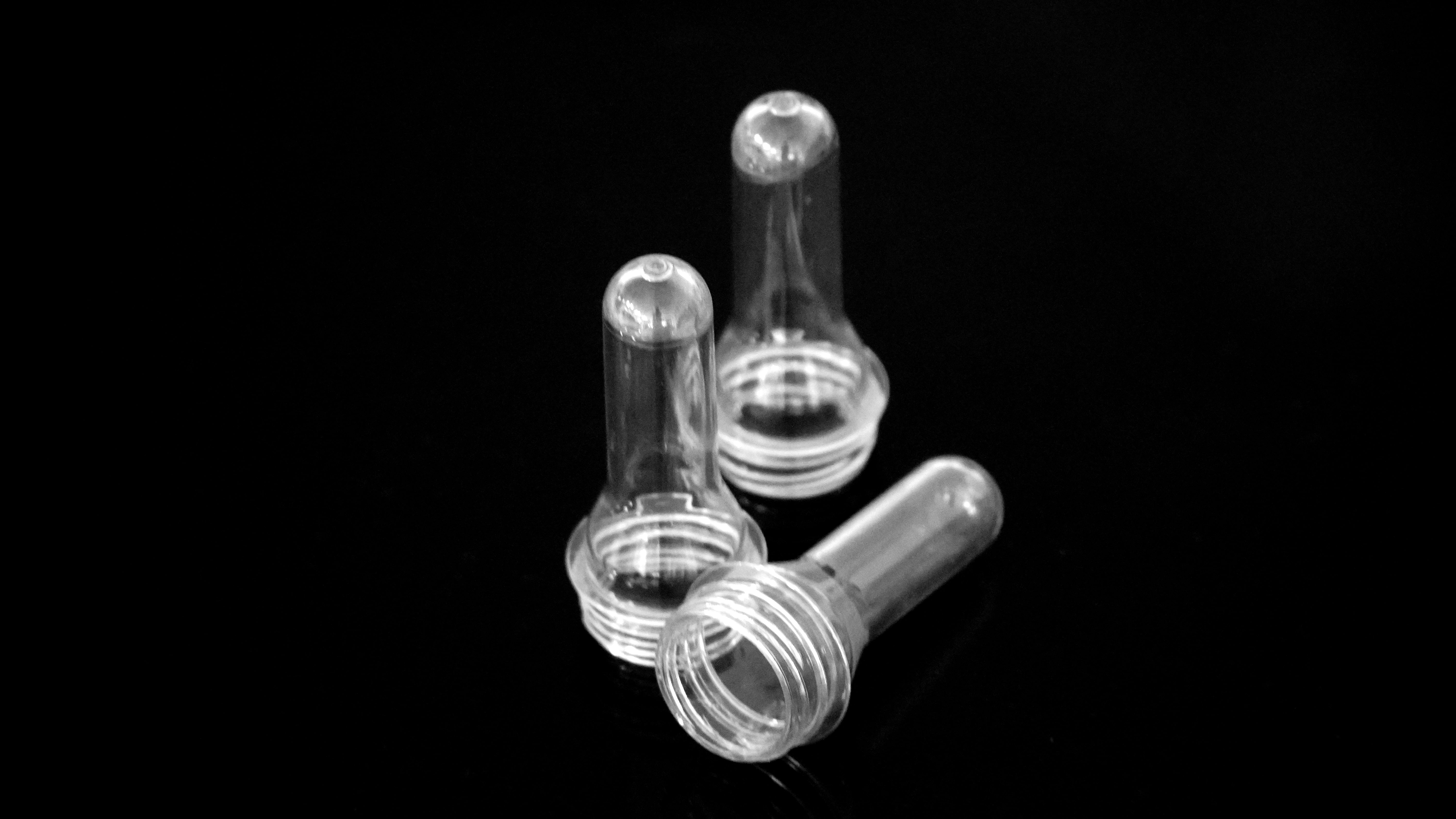
Why Shot Weight Repeatability Matters in High-Cavity Molds
As cavity counts increase, even minor inconsistencies in injection repeatability compound into measurable scrap rates. This is why injection repeat accuracy is one of the most scrutinized specifications in PET preform machine selection. The DKM-PET III’s ≤0.5‰ repeatability figure is paired with real production outcomes documented across multiple cavity configurations:
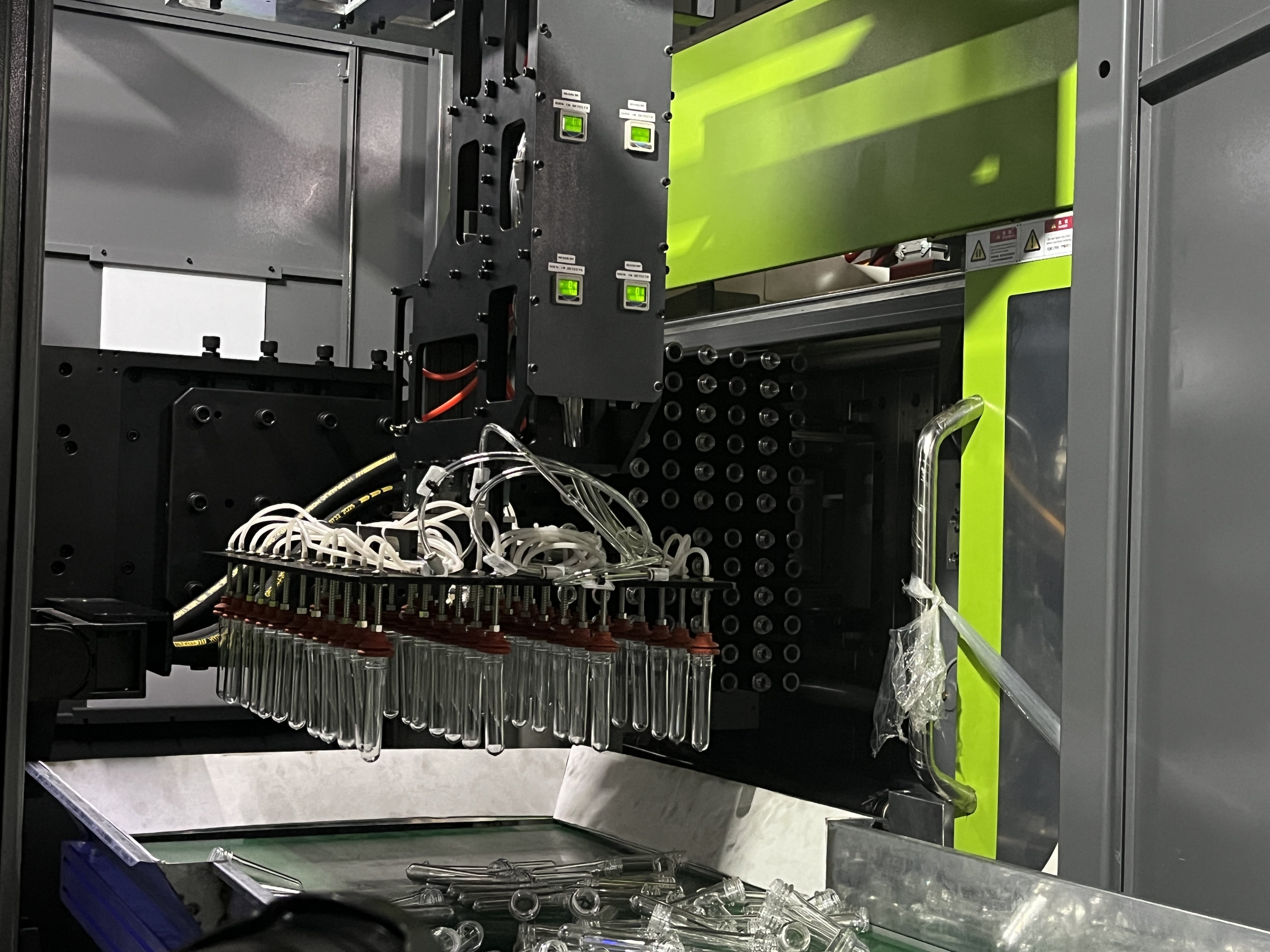
- A 144-cavity preform mold running on the DKM-650 PET III achieves a 12.8-second cycle time, producing an 11g, 29mm neck preform.
- A 168-cavity mold on the DKM-550 PET III, with an 11g product weight and BPF 26/21 neck, achieves an 11-second cycle.
- A 72-cavity standard line paired with the PET 450 achieves a 12-second cycle for a 12g, 28mm preform.
- A 48-cavity standard line paired with the PET 350 achieves a 16-second cycle for a 12g, 28mm preform.
These documented cycle times give producers a concrete benchmark when comparing machine options against their own volume targets, rather than relying on generalized speed claims.
Lead Time as a Selection Criterion
Machine performance is only part of the selection equation; delivery speed is equally important for producers trying to capture a market window. DKM’s standard 48/72-cavity production lines, configured with standard 28/38mm neck finishes, are delivered from order confirmation to qualified shipment within 14 days. Standard PET preform molds themselves, in 48 or 72-cavity configurations, can be delivered within 7 days depending on configuration, while custom or non-standard preform molds and lines — covering special neck finishes, unique bottle designs, or mixed-cavity configurations — require 5 to 7 weeks.
This two-tier delivery structure reflects a standardized modular production philosophy: common configurations are held as safety stock, while custom engineering work is scoped separately. For producers selecting equipment, this distinction matters because it clarifies which configurations can be deployed quickly and which require longer planning.
Mold Quality as Part of the Machine Decision
A PET preform machine cannot be evaluated in isolation from the mold it runs. SINO MOULD, together with its subsidiary SINO-PK, manufactures PET bottle preform molds across a flexible range of 48 to 144 cavities. Key mold components use Swedish S136 steel (HRC45-48), with the mold base built from DIN1.2311, and tolerances held to 0.01mm for uniform wall thickness and concentricity, with a precision capability down to ±0.005mm. Molds also carry a 3-year warranty with free spare parts during the warranty period, directly addressing concerns about long-term mold life once a machine-mold pairing is selected.
Automation Integration for Heavier Preforms
Selection decisions also extend to downstream handling. DKM’s Out-Mold Cooling & Pick Robot is designed around a weight-based logic: preforms under 16g are cooled directly on the robot gripper during part removal, while preforms over 16g are combined with multi-station cooling units to avoid extending the mold’s own cycle time. Dual-station and three-station external cooling robots are matched to the 72-cavity and 48-cavity line configurations respectively, and take-out robot integration supports the 144-cavity configuration. This means the automation layer is selected alongside, not after, the machine and mold decision.
Field Validation Behind the Selection Framework
Documented field cases reinforce how this selection framework performs in operating environments. Two 144-cavity PET preform production lines are currently running in normal production — one in Iraq and one in Iran — with customer acceptance test reports confirming satisfactory performance and payment settled in full for both projects. Separately, a 72-cavity PET preform production line with an out-mold cooling system has produced a 13.5g, 28mm neck preform at a 12-second cycle time for a customer requiring fast delivery.
A Structured Path to the Right Machine
For producers navigating PET preform machine selection, the practical path involves three sequential questions: what cavity count matches current and projected volume, what cycle time and repeatability are required for the target preform weight, and what delivery timeline the project demands. DKM’s standardized DKM-PET III lineup, paired with SINO MOULD’s preform molds and the Out-Mold Cooling & Pick Robot automation, answers each of these questions with documented tonnage-to-cavity pairings, published cycle times, and defined delivery windows — giving producers a transparent, evidence-based basis for their equipment decision.
https://dkm.com/pet-preform-molding-machine/
DKM Machinery -
AuthorPosts

- You must be logged in to reply to this topic.