

- This topic is empty.
-
AuthorPosts
-
2026-10-23 at 2:38 pm #12684
Industrial components are frequently exposed to abrasive particles, friction, corrosive chemicals, and demanding operating temperatures. Over time, these conditions can damage working surfaces, reduce equipment efficiency, and lead to unexpected maintenance. For manufacturers operating in steel production, petrochemical processing, power generation, cement, and heavy machinery, effective surface protection is an important part of controlling equipment lifecycle costs.
High-velocity oxy-fuel (HVOF) thermal spraying provides a surface engineering solution for applications that require wear resistance, corrosion protection, and reliable coating performance. By accelerating coating particles toward a prepared substrate at high velocity, HVOF technology can produce dense coatings without intentionally melting the underlying component.
Understanding how HVOF high-energy spray machines operate, where they offer the greatest benefits, and which factors determine coating quality can help engineers make better decisions about industrial surface protection.
1. Understanding HVOF High-Energy Spray Machines
HVOF is a thermal spraying process that uses fuel combustion and oxygen to generate a high-velocity gas stream. Coating powder is introduced into the stream, heated, and accelerated toward the workpiece. When the particles strike the prepared surface, they deform and accumulate to form a coating.
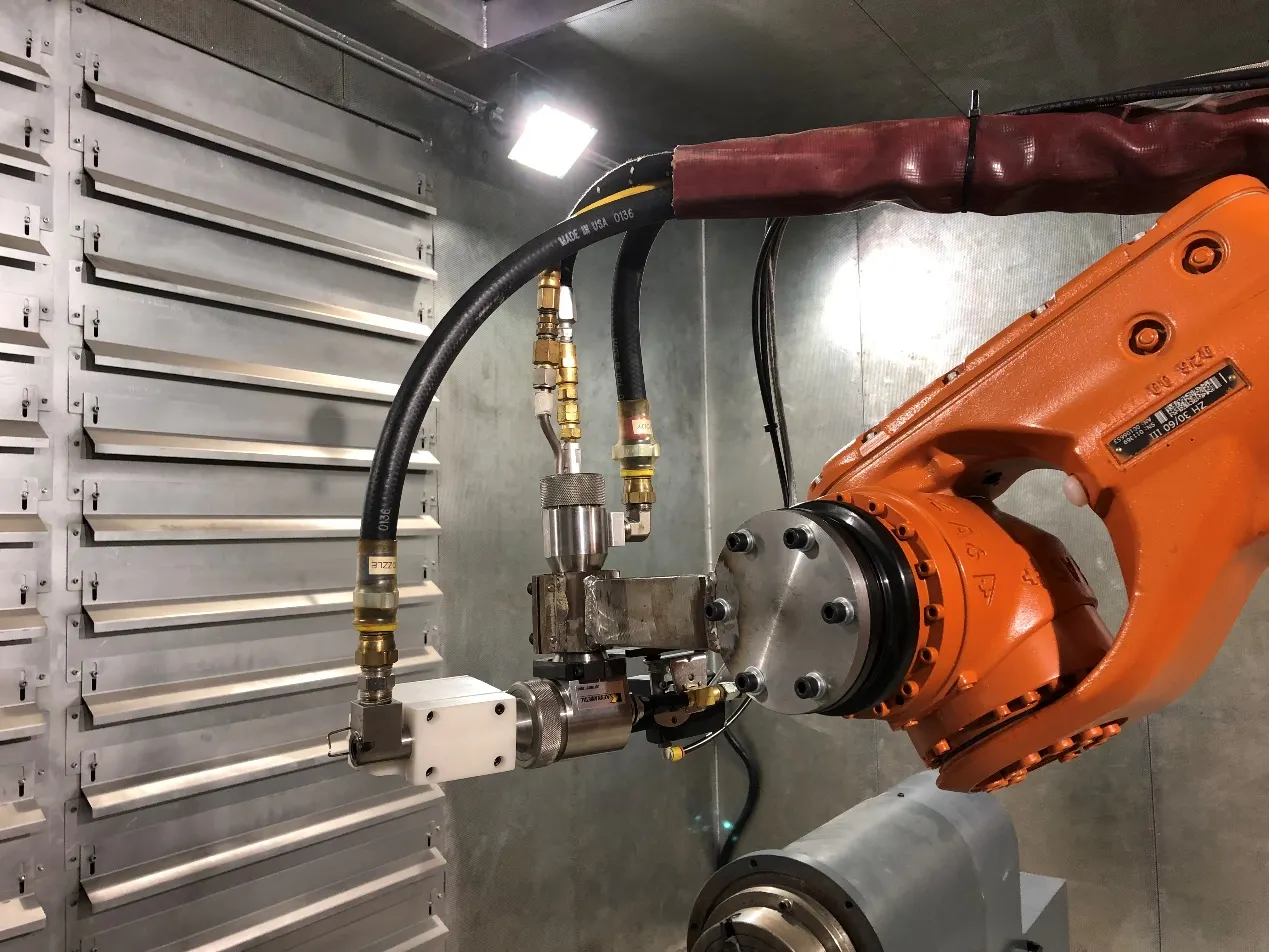
A typical HVOF system includes a spray gun, fuel and oxygen supply, powder feeding equipment, process controls, workpiece handling equipment, and suitable ventilation and safety systems. System configurations vary according to coating materials, component dimensions, production requirements, and the desired coating properties.
Unlike fusion-based surfacing processes, HVOF primarily forms a coating through high-velocity particle impact rather than melting the substrate to create a metallurgical fusion layer. This characteristic makes it useful when manufacturers need to improve surface performance while retaining the underlying component's properties.
The final coating quality depends on the powder composition, substrate preparation, spray parameters, and the compatibility between the coating and the component's service environment.
2. Key Benefits of HVOF Thermal Spraying
Enhanced Wear Resistance
Abrasive wear is a common problem in equipment that handles minerals, cement, metal products, and other solid materials. Repeated contact with hard particles can gradually remove material from shafts, rollers, and other working surfaces.
HVOF can deposit wear-resistant coatings based on materials such as tungsten carbide and chromium carbide. When properly selected, these coatings can help reduce surface material loss and improve resistance to abrasion.
However, coating hardness alone does not determine service life. Operating temperature, particle impact angle, contact pressure, coating thickness, and the type of wear mechanism must also be considered.
Corrosion Protection
Industrial components may be exposed to moisture, process chemicals, saline conditions, or corrosive gases. A suitable HVOF coating can provide a protective barrier that reduces direct exposure of the substrate to the surrounding environment.
The effectiveness of corrosion protection depends on coating composition, density, porosity, surface defects, and compatibility with the process medium. A coating designed for abrasive service may not be appropriate for an application involving aggressive chemicals or localized corrosion.
Engineers should evaluate the actual operating conditions before selecting a coating material.
Reduced Substrate Heating Compared with Fusion-Based Processes
HVOF is generally regarded as a relatively low-heat-input thermal spraying process compared with many welding-based surfacing methods. Since the substrate is not intentionally melted during deposition, HVOF can help limit certain metallurgical changes and dimensional distortion.
This is particularly valuable for components that must retain their heat-treated properties or dimensional accuracy.
Nevertheless, HVOF still exposes the workpiece to heat. Substrate temperature, spray sequence, surface preparation, and process parameters must be controlled to avoid damaging the component.
3. HVOF vs. Plasma Powder Surfacing: Which Process Is Appropriate?
HVOF thermal spraying and plasma powder surfacing are both used to improve industrial surface performance, but they operate through different deposition mechanisms.
HVOF accelerates heated or partially molten particles toward the substrate, forming a coating through particle impact and consolidation. Plasma powder surfacing uses a concentrated plasma arc to melt alloy powder and fuse it with the substrate, producing a metallurgically bonded overlay.
The distinction affects coating structure, substrate heating, dilution, and application suitability.
Comparison factor HVOF thermal spraying Plasma powder surfacing Deposition mechanism High-velocity particle impact Melting and fusion with the substrate Substrate melting Not normally intended Integral to the process Typical objective Dense functional coating for surface protection Metallurgically bonded alloy overlay Main process controls Powder feed, gas conditions, spray distance, particle velocity, substrate temperature Arc parameters, powder feed, travel speed, heat input, and dilution Key selection consideration Coating properties and substrate thermal sensitivity Fusion bonding and overlay requirements Neither process is universally superior. The right choice depends on component geometry, operating conditions, required layer thickness, repair objectives, and performance specifications.
Manufacturers should evaluate these factors before deciding which surface engineering method best fits their application.
4. Industrial Applications of HVOF Coatings
HVOF technology is used in industries where surface wear and corrosion can reduce equipment reliability.
Steel manufacturing: Rollers, shafts, and selected production components may benefit from coatings designed to withstand abrasive contact and repeated operation.
Petrochemical processing: Pumps, valves, and other components may face erosion, corrosion, or combined wear mechanisms. Coating selection must account for the process medium and operating conditions.
Power generation: Selected components exposed to friction, erosion, or elevated temperatures may require specialized surface protection. The coating must be suitable for the actual service temperature and thermal cycling conditions.
Cement and mining: Equipment handling abrasive bulk materials can experience continuous surface degradation. Suitable wear-resistant coatings may help reduce material loss and maintenance frequency.
Automotive and industrial machinery: Shafts, precision components, and other functional surfaces may require improved wear resistance or controlled dimensional restoration.
The key is to identify the dominant failure mechanism. Components damaged primarily by fatigue, severe impact, or structural cracking may require additional engineering measures rather than a harder surface coating alone.
5. What Determines HVOF Coating Quality?
Selecting an advanced spray machine is only one part of achieving consistent coating performance. Material selection, surface preparation, process control, and inspection are equally important.
Surface Preparation
The substrate must be cleaned and prepared according to the applicable procedure. Oil, rust, and other contaminants can interfere with coating adhesion.
Abrasive blasting is commonly used to create a suitable surface profile. Preparation methods and the time between blasting and spraying should be controlled to minimize contamination and unwanted oxidation.
Coating Powder Selection
The coating material should match the component's operating conditions and required surface properties. Engineers should consider abrasion, corrosion, temperature, contact loading, and dimensional requirements.
Powder composition, particle size distribution, flow characteristics, and consistency can influence deposition behavior. Selecting a material based solely on hardness may result in poor performance if other service requirements are overlooked.
Spray Parameter Control
Fuel and oxygen flow, powder feed rate, spray distance, gun movement, and substrate temperature all affect coating formation.
Parameters must be matched to the selected powder and workpiece. Qualified procedures, repeatable equipment settings, and consistent operator practices help reduce variation between production batches.
Inspection and Testing
Depending on the application, coating inspection may include thickness measurement, visual examination, hardness testing, porosity evaluation, bond-strength testing, and metallographic analysis.
The inspection plan should reflect the component's function, customer specifications, applicable standards, and the consequences of coating failure. Not every application requires the same testing program.
6. How to Select an HVOF System for Industrial Production
When evaluating HVOF high-energy spray machines, buyers should look beyond headline equipment specifications. The system must be compatible with the materials, components, and production conditions involved.
Important considerations include:
-
Coating material compatibility: Confirm that the system can process the required coating powders.
-
Process control: Evaluate the control of gas supply, powder feeding, spray distance, and workpiece temperature.
-
Component geometry: Consider workpiece size, shape, accessibility, and handling requirements.
-
Production consistency: Determine whether the system can support repeatable coating results across the intended production volume.
-
Safety and infrastructure: Assess combustion-gas handling, ventilation, extraction, operator protection, and maintenance requirements.
-
Technical support: Consider process development, troubleshooting, equipment servicing, and coating quality assistance.
HVOF systems involve combustible fuels, pressurized gases, high temperatures, and airborne particles. Appropriate engineering controls, installation procedures, and trained operators are essential for safe operation.
A suitable system should integrate with the complete production workflow rather than simply satisfy an individual performance specification.
7. Kennametal Stellite: Surface Engineering for Industrial Applications
Kennametal Stellite (Shanghai) Co., Ltd. was established in May 1985 and is located in Jiading District, Shanghai. As a subsidiary of Kennametal Inc., the company focuses on wear-resistant, corrosion-resistant, and high-temperature-resistant hardfacing materials, components, coating services, specialized equipment, and technical support.
Its products and services support applications in automotive manufacturing, steel production, petrochemicals, power generation, glass, cement, and rubber and plastics.
The company also has experience in plasma powder surfacing. Its Star-weld series plasma powder welding systems support customized equipment design, coating material selection, and process development for suitable industrial applications.
For projects requiring HVOF coating services, manufacturers can review HVOF high-velocity thermal spray coating solutions and discuss component requirements with the technical team.
When evaluating a surface protection project, it is important to distinguish between HVOF thermal spraying and plasma powder surfacing. Each process has different characteristics, and the appropriate choice should be based on the component's operating environment, required coating properties, and performance objectives.
Conclusion
HVOF high-energy spray machines provide manufacturers with an effective option for applying functional coatings to components exposed to demanding industrial conditions. With suitable coating materials and controlled processing, HVOF coatings can improve wear resistance and provide corrosion protection while limiting the need to melt the underlying substrate.
However, coating performance depends on more than equipment capability. Powder selection, surface preparation, spray parameters, substrate temperature, and inspection requirements all influence the final result.
For manufacturers seeking to improve component reliability, the most effective approach is to identify the primary failure mechanism and select a coating material and deposition process that match the actual service conditions. A properly engineered surface protection strategy can help reduce premature wear, improve maintenance planning, and support more reliable industrial production.
http://www.sh-stellite.com
Kennametal Stellite (Shanghai) Co., Ltd. -
-
AuthorPosts

- You must be logged in to reply to this topic.